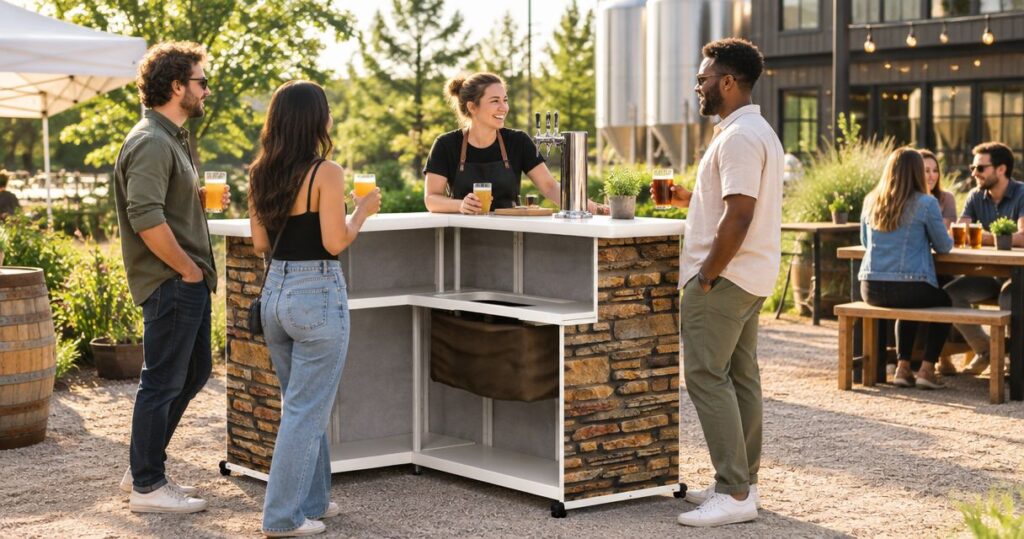

Choose a portable event bar that fits your serving layout, storage space and vehicle, then look for swappable covers so you can change the design without replacing the bar. This 2026 buying guide explains how to compare those practical details before choosing a setup for home parties, seasonal gatherings and tailgating.
- Choose a portable event bar by its working layout, packed dimensions and transport requirements—not its party photo alone.
- Build a Bar suits hosts who want swappable fabric covers for different party and gameday themes.
- Compare folding bars, permanent bars and event rentals against your actual hosting routine.
- Plan storage for covers, accessories and serving supplies alongside the bar itself.
Why this matters
A bar has to work before guests arrive and after they leave. A display that looks right at a party still needs a place in your vehicle, a manageable route through your home and somewhere to stay between events.
Build a Bar is best for portable event bar shoppers who want to change the display design with swappable fabric covers. Start with the Build a Bar concept, then check the physical details against your space. A changeable appearance does not replace the need to confirm dimensions, setup instructions and care requirements.
How do you choose a portable event bar?
Choose a portable event bar by working backward from your event: decide how guests will get drinks, identify what belongs behind the bar, then check how the complete setup travels and stores. Appearance comes after those decisions, but interchangeable covers let you plan for more than one party theme.
Use this comparison to decide which type of setup deserves a closer look. The labels describe suitable uses, not a ranking of individual products.
| Option | Best for | Main advantage | Trade-off to assess |
|---|---|---|---|
| Portable bar with swappable covers | Hosts who change party themes | Change the display design without replacing the bar | Covers need their own care and storage plan |
| Other folding bars | Hosts prioritizing a pack-away setup | Fold-away construction supports temporary use | Verify whether the appearance can change and what packs separately |
| Permanent home or patio bar | Hosts serving from a dedicated location | Keep a defined bar area in place | It commits that area to a fixed installation |
| Renting a bar for each event | Hosts who prefer not to store a bar | Avoid storing the rented bar between events | Coordinate delivery or collection, setup responsibilities and return terms |
For your 2026 shortlist, compare the complete setup rather than the display alone. Include whatever you intend to carry with it, such as covers, utensils, cups and serving accessories. A bar that fits the vehicle does not prove that the rest of your party equipment fits beside it.
Portable bars with swappable covers: best for changing themes
A swappable cover separates the bar's appearance from the bar itself. That makes it relevant when you want a different look for a backyard birthday, a seasonal gathering and a gameday party without buying another bar for each occasion.
Build a Bar offers portable, interchangeable-design bar displays with swappable fabric covers and accessories. The benefit is design flexibility; the practical trade-off is that you must organize, store and care for the covers as well as the display.
Before choosing, confirm which covers fit the display you are considering and how the cover attaches. Read the care instructions rather than assuming fabric covers can go into your usual laundry routine. For a themed event, check the current designs directly instead of planning around an assumed color, team or seasonal option.
Choose the display for how you host; choose the cover for the occasion. That keeps a birthday theme from becoming the deciding factor in a purchase you also want to use for tailgating.
Other folding bars: best for a pack-away setup
A folding bar belongs on your shortlist when the display needs to leave the room after the party. Compare its working arrangement and packed form separately: the open shape tells you how you will serve, while the packed shape tells you where it can go afterward.
Check whether shelves, panels and accessories remain attached or travel separately. Ask how the packed components are secured and carried. Do not treat a folded-product photo as confirmation that everything shown at the party fits inside the same package.
The advantage is a temporary setup you can put away. The limitation to investigate is how much assembly, separate storage and appearance flexibility the particular model offers.
Permanent bars: best for a dedicated serving area
A permanent home or patio bar makes sense when you want the serving area to stay in one place. You can plan the surrounding room or patio around that location rather than rearranging the space for every gathering.
The trade-off is the commitment of space. Walk through how you use the area on an ordinary day, not just when guests visit. Check whether the installation would interfere with seating, household traffic or other uses you want to preserve.
Choose a permanent bar because you want a permanent serving location—not because a party photograph makes a large setup look appealing.
Event rentals: best for avoiding between-event storage
Renting deserves consideration when you want a bar for an occasion but do not want to keep that bar at home afterward. It also lets you select a setup around that event's layout rather than choosing one object for every gathering.
The trade-off is coordination. Confirm who transports the bar, who assembles it, when access is required and what condition it must be in at return. Read the terms for the actual rental rather than assuming setup or collection is included.
For recurring gatherings, compare the practical routine of renting with the practical routine of ownership. Keep the decision grounded in transport, storage and event responsibilities rather than assumed savings.
Why portable event bar requirements vary
Your best choice depends on the work you expect the bar to do. Use these factors to narrow the shortlist:
- Serving style: A host mixing drinks needs a different arrangement from guests collecting ready-to-serve beverages.
- Event location: A living room, backyard and tailgate each present a different route from storage to serving position.
- Transport method: Check the actual vehicle opening, available cargo area and other equipment traveling with you.
- Storage location: Compare the packed components with the shelf, closet or other space you intend to use.
- Design changes: Decide whether you want one consistent appearance or different covers for different occasions.
- Accessory load: Include the supplies you plan to use; do not judge the whole setup by the bar's dimensions alone.
None of these factors requires guessing how a product performs. They give you specific questions to answer from its published information or directly with the seller.
Plan the layout before choosing the display
For a 2026 backyard party, sketch where guests approach, where you stand and where used cups go. Keep the serving point out of a doorway or a route people need to reach seating. Then decide whether guests help themselves or wait for you to serve.
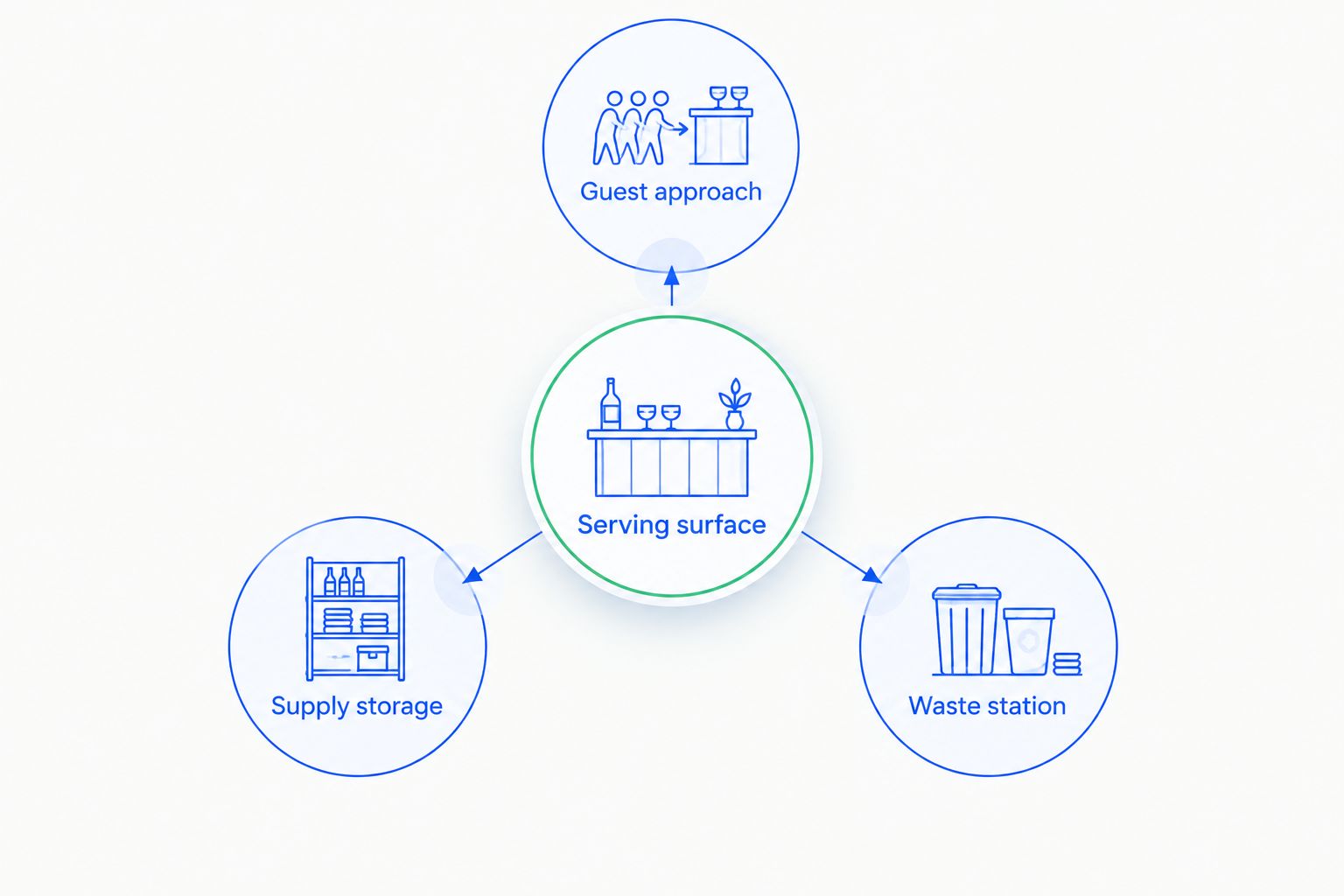
Use these zones to organize the sketch:
- Guest approach: The space guests use to reach the drinks.
- Serving surface: The area for preparing or handing over beverages.
- Supply storage: The location for replenishment items and utensils.
- Waste station: A separate destination for used cups and other waste.
Keep items you repeatedly reach for within the working arrangement you are evaluating. If a cooler or supply container will sit beside the bar, include it in the sketch rather than treating it as an afterthought.
Test 2 layouts before choosing: one for your usual home gathering and one for your next tailgate or outdoor party. These are planning exercises, not product capacity claims. A setup that works in both sketches deserves a closer look at its dimensions and instructions.
Check packed storage before you commit
Identify the actual storage location before choosing a bar. An empty corner during party planning is not necessarily a dependable place to keep it all year.
Record 3 measurements for each packed component: length, width and height. Compare them with the usable storage space and the opening you must pass through. A storage cavity and its access opening are separate checks.
Next, give the covers and accessories a defined home. Follow the fabric care instructions, and store covers in a way that lets you identify the design without repeatedly unfolding everything. Keep attachment pieces with the component they belong to, following the manufacturer's packing guidance.
For seasonal hosting in 2026, organize around the next occasion rather than burying the next cover beneath unrelated supplies. The point is simple: changing the design should not start with a search through several storage areas.
Check the whole transport route
Your transport check starts where the bar is stored and ends where it will stand. Walk that route and note doors, steps, turns and any carrying restrictions that matter to you.
Then inspect your vehicle with the rest of your event equipment in mind. Measure the loading opening as well as the cargo space. Check the product's stated packed dimensions and weight, and confirm the recommended carrying and handling method.
Before the event, complete 1 full setup-and-pack-down rehearsal using the instructions. This is a recommended preparation step, not a claim about assembly speed. It lets you identify loose components, understand the packing order and decide what needs its own container.
For a 2026 tailgate, also check the venue's rules and the product's outdoor-use instructions. Do not infer weather resistance, stability requirements or permitted placement from a photo of a bar outdoors.
Ask About Your Bar Setup
Confirm cover compatibility, packed dimensions and handling details before choosing your display.
Should I choose my party theme before buying the bar?
Choose the working setup before the theme. Your available space, storage and transport needs apply to every event; a birthday or gameday design applies to the occasion.
Swappable covers make that distinction useful. Decide what the display must do, then check the compatible designs for the parties you actually host.
Can I use the same portable bar at home and for tailgating?
Evaluate both locations before choosing the same bar for home and tailgating. Confirm the product's intended use, handling instructions and requirements for the surface where it will stand.
A home layout that works well does not answer questions about vehicle access or venue rules. Treat those as separate checks.
Is built-in storage essential in a portable event bar?
Built-in storage is useful only when it fits your serving routine. Compare the items you want nearby with the storage the specific model actually provides.
Separate supply containers are another arrangement, but they need floor space and transport space too. Include them in the layout rather than comparing an equipped bar with an empty display.
FAQ
What’s the best portable event bar for different party themes?
A portable event bar with swappable covers suits hosts who want different looks without replacing the display. Build a Bar offers interchangeable-design displays with swappable fabric covers; confirm compatible covers before choosing.
How do I know whether a portable bar will fit in my car?
Compare every packed component with your vehicle’s loading opening and usable cargo space. Include the other equipment you intend to transport, and check the stated weight and handling instructions.
What should I measure before buying a portable event bar?
Measure the serving area, storage location and transport openings. For each packed component, record length, width and height, then check the route between storage and setup.
Is a folding bar better than a permanent home bar?
A folding bar suits a serving area you want to put away; a permanent bar suits a dedicated location. Choose based on how you use the space between parties, not appearance alone.
Should I rent a bar instead of buying one?
Renting suits hosts who prefer not to store the rented bar between events. Confirm transport, assembly and return responsibilities before comparing that arrangement with ownership.
Can I leave a portable event bar outside?
Follow the specific product’s outdoor-use, care and storage instructions. A portable design or an outdoor photograph does not establish that a bar can remain outside.
What should I check about interchangeable bar covers?
Check compatibility, attachment instructions and fabric care requirements. Confirm the current designs directly rather than assuming a particular team, color or seasonal theme is offered.
One last thing
Practice putting the bar away, not just setting it up. Packing reveals whether your planned storage location, cover organization and transport arrangement work together. Make that rehearsal part of your 2026 party preparation before the display has to share attention with food, drinks and arriving guests.
Related guides
- Portable bars for parties: compare layouts before you buy
- Portable home bar or permanent bar: which fits your home?
- Best folding bars ranked by storage size
- How to choose a portable outdoor bar for parties and tailgating