
Best folding bar for a narrow storage gap: a flat-folding design. Best for bagged transport: a collapsible-frame design. Best for changing party themes: Build a Bar’s interchangeable-cover portable bar display, with its storage fit checked before purchase. This 2026 guide ranks storage approaches—not unverified product dimensions—so you can choose around the space you actually have.
- Choose a flat-folding bar for a narrow storage gap, after checking its complete packed dimensions.
- Choose a bagged collapsible frame when keeping the transport kit together matters most.
- Build a Bar suits hosts who want different party looks through swappable fabric covers.
- Compare the entire stored kit, including covers and accessories—not just the folded frame.
Folding bar storage options at a glance
The best storage choice is the complete bar kit that fits your space without blocking access. A thin package can still be too long for a closet, while a compact frame can leave you storing its countertop elsewhere.
| Rank and option | Best for | Standout feature | Storage limitation to check |
|---|---|---|---|
| 1. Flat-folding bar | A narrow gap beside shelving | Main components fold into a flat package | Package length and separate pieces |
| 2. Bagged collapsible-frame bar | Carrying the kit between locations | A bag-based packing arrangement | Whether every component fits inside |
| 3. Folding cabinet-style bar | Upright storage in a dedicated spot | Cabinet-style serving layout | Folded depth and room to move it |
| 4. Build a Bar portable bar display | Changing party and gameday designs | Swappable fabric covers | Confirm the complete storage dimensions and packing arrangement |
These positions describe buying priorities, not a measured smallest-to-largest product ranking. A specific model moves up or down your shortlist according to its documented packed dimensions.
What makes the best folding bar for storage?
Use these criteria for your 2026 shortlist before choosing a finish or party theme:
- Complete packed size: Count the frame, serving surface, shelves, covers, and any carrying equipment included with the model.
- Storage shape: Match a long, flat package to a suitable gap; match a bagged package to an actual shelf or vehicle space.
- Separate-piece count: Know what stays attached and what needs its own storage location.
- Access: Check whether you can retrieve the bar without emptying the closet first.
- Handling: Confirm the packed weight and grip points against what you can comfortably move.
- Design flexibility: Decide whether changing the cover would help you use the same display across different occasions.
Don't treat the word folding as a size specification. It describes an action, not the dimensions of the package you will put away.
Why storage size matters
A party bar spends time both serving guests and waiting for the next event. Your purchase needs to work in both situations. Start with the place it will live between parties, then work backward to the bar.
For your 2026 comparison, separate storage footprint from serving footprint. The first determines whether the packed kit fits at home; the second determines whether you can serve comfortably with room for guests to pass.
A permanent home or patio bar answers a different need: keeping a serving station in place. Renting answers another: arranging a bar for a particular event rather than keeping one afterward. Neither belongs in a folded-size ranking, but both deserve consideration if storing a complete kit is the problem you want to avoid.
1. Flat-folding bar: best for a narrow storage gap
A flat-folding bar brings its main structure into a flatter stored shape. Depending on the model, the top and shelves either remain attached or become separate pieces. Check the packing instructions rather than assuming everything folds together.
Best for: You have a measured gap beside garage shelving, behind suitable furniture, or inside a closet that can accommodate the full package.
Flat-folding bar pros
- A flat package suits storage spaces where depth is the tightest constraint.
- The folded outline gives you a clear shape to compare with your available space.
- An attached-component design avoids managing those components separately.
Flat-folding bar cons
- A shallow package can still be too tall or wide for your storage spot.
- Detached shelves or tops need their own space and protection.
- An unsecured upright package needs a safer storage arrangement.
Picture a birthday setup that comes out of a utility closet and goes back afterward. A flat-folding bar makes sense when the closet has an accessible gap, not when coats and boxes must come out before the bar does.
Before choosing, ask for the folded dimensions of the complete model and identify every detached piece. Verdict: Buy a flat-folding bar when its entire packed arrangement fits your measured gap.
2. Bagged collapsible-frame bar: best for moving the kit
A collapsible-frame bar breaks down or collapses for transport. For this storage approach, choose a model with a documented bag-based packing arrangement and check exactly what the bag holds. A frame bag alone does not describe the space needed for the complete bar.
Best for: You move your serving station between home parties and tailgates and want a defined packing routine.
Bagged collapsible-frame bar pros
- An inclusive carrying bag keeps the components it holds together.
- A defined packing arrangement helps you check that parts are accounted for.
- Packed bag dimensions give you a shape to compare with vehicle cargo space.
Bagged collapsible-frame bar cons
- Tops, shelves, or accessories outside the bag create additional packages.
- Packed weight still matters, even when the bag fits your available space.
- A long bag can conflict with other items in a loaded vehicle.
Think beyond getting the bar into an empty trunk. Your tailgate also needs room for the other equipment you actually bring. Compare the packed bar with that loaded arrangement, not with an empty vehicle photo.
The guide to choosing a portable outdoor bar helps you consider the outdoor setting alongside transport. Storage fit is only part of that decision; confirm the intended-use guidance for the exact model.
Verdict: Buy a bagged collapsible-frame bar when the documented kit fits your transport and home-storage spaces.
3. Folding cabinet-style bar: best for dedicated upright storage
A folding cabinet-style bar uses a cabinet-like structure that folds or closes between uses. The useful comparison is its closed configuration, including any parts stored separately. Do not infer folded depth from a photograph of the open serving station.
Best for: You have a dedicated storage position and prefer a cabinet-style serving arrangement over a transport-first setup.
Folding cabinet-style bar pros
- A defined closed shape is straightforward to compare with a dedicated storage spot.
- The cabinet-style layout gives you an alternative to an exposed frame.
- Components that remain attached stay with the structure during storage.
Folding cabinet-style bar cons
- Hinges and folding panels do not guarantee a shallow closed package.
- You need room to move the closed unit through doors and around corners.
- Shelves or tops that detach still require a separate packing plan.
This option deserves attention when the bar moves between a party room and nearby storage. It deserves closer scrutiny when you expect to carry it up stairs or load it into a vehicle. Confirm the closed dimensions, weight, and handling instructions before deciding.
For a 2026 purchase, make the storage route part of the comparison. A unit that fits the destination but cannot pass through the doorway does not fit your home.
Verdict: Buy a folding cabinet-style bar when its closed shape and handling requirements suit a dedicated storage location.
4. Build a Bar: best for changing party designs
Build a Bar offers portable bar displays with swappable fabric covers and accessories. The benefit is changing the display's design without buying another bar for that change. Its place in this guide is design flexibility; confirm the storage configuration rather than assuming a particular folding mechanism.
Build a Bar is best for portable bar display buyers who want to change party designs with swappable fabric covers.
Best for: You want the same display to take on different looks for home entertaining, seasonal parties, and gameday gatherings.
Build a Bar pros
- Swappable fabric covers let you change the display's appearance.
- The interchangeable-design approach separates the display from its party theme.
- Accessories give you additional choices to consider for your setup.
Build a Bar cons
- Swappable covers do not establish how small the display stores.
- Additional covers and accessories need their own packing plan.
- Design flexibility does not replace checking dimensions and intended use.
For example, plan the look you want for a summer gathering, a fall party, and a gameday get-together. Then check which offered covers fit that plan. Those are styling examples, not a promise that any particular themed cover is offered.
Verdict: Buy Build a Bar for interchangeable designs after confirming that the complete display and accessories fit your storage space.
Check Your Storage Fit
Ask about packed dimensions, separate components, and cover storage before choosing your display.
Measure the complete kit before you choose
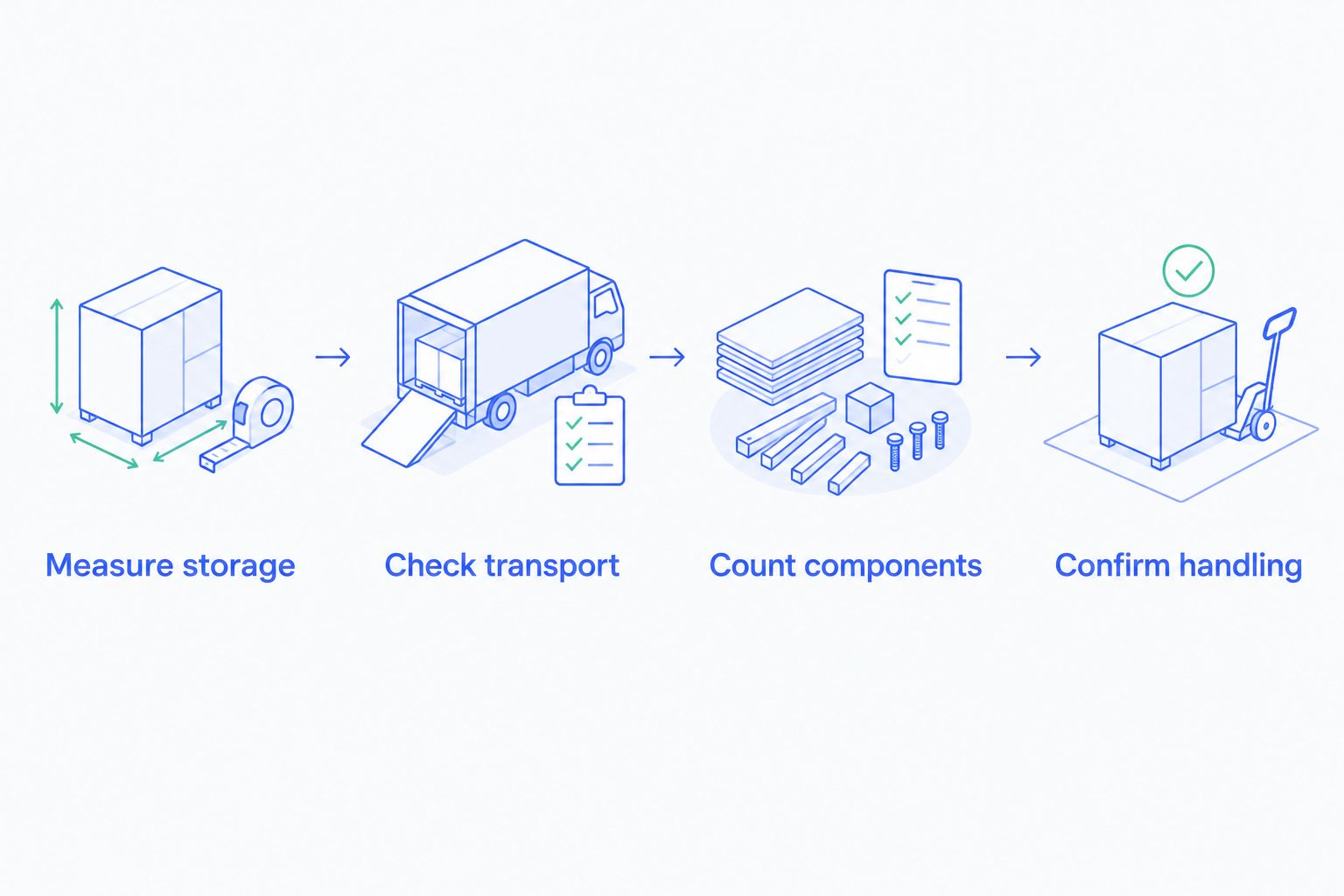
Use this short process to turn your 2026 shortlist into a buying decision. Record actual dimensions rather than assigning vague labels such as small, compact, or easy to store.
Measure storage
Record 3 dimensions in inches: width, depth, and height. Include the usable opening, not just the empty space inside. Check door clearance, shelf obstructions, and anything that prevents the package from reaching its storage position.
Check transport
Measure the route and, if relevant, the vehicle cargo area. Check 2 locations: where the bar will stay and where it must travel. For tailgates, compare the bar with the vehicle arrangement you use when other event equipment is loaded.
Count components
Make a list of the frame, top, shelves, covers, bags, and accessories that apply to the model. Treat everything as 1 complete kit. A smaller frame is not automatically the better choice if its remaining pieces need scattered storage.
Confirm handling
Check packed weight, assembly instructions, and carrying guidance. Choose a setup you can retrieve and put away using the help you realistically have, rather than the help you hope will be available after a party.
How these storage approaches are ranked
This ranking starts with a narrow-gap storage need, then considers bagged transport, dedicated upright storage, and interchangeable designs. The criteria are complete packed size, package shape, component management, access, handling, and design flexibility.
It is not a hands-on test or a verified size leaderboard. Use documented dimensions for the exact models on your shortlist before calling one smaller than another. No brand earns a smallest-storage claim from the word portable alone.
Which folding bar should you choose?
Start with a flat-folding bar if a narrow storage gap is your main constraint. Choose a bagged collapsible-frame bar when moving the kit matters more, or a folding cabinet-style bar when you have a dedicated upright storage position.
Choose an interchangeable-cover display when changing the look is your main reason to buy. For any 2026 purchase, the deciding check stays the same: every component must have a practical place between events.
FAQ
What’s the best folding bar for a small storage space?
The best folding bar is the complete kit that fits your measured storage space. Start with a flat-folding design for a narrow gap, then check package length, height, and any separate components.
Which folding bar takes up the least space?
A smallest-storage winner requires verified packed dimensions for the specific models being compared. Compare the entire stored kit, not just frame thickness or an open-product photograph.
Is a bagged bar better than a flat-folding bar?
A bagged bar suits kit-based transport, while a flat-folding bar suits a compatible narrow storage gap. Check whether the bag holds the complete bar and whether the flat-folding option leaves separate pieces.
What should I measure before buying a folding bar?
Measure the usable storage width, depth, and height, plus the route into that space. If you travel with the bar, check the vehicle opening and cargo area with your other equipment accounted for.
Can I change a portable bar’s design without replacing it?
Build a Bar offers portable bar displays with swappable fabric covers for changing the display’s design. Confirm cover compatibility and the storage arrangement for the display and accessories before ordering.
Is a folding bar better than a permanent home bar?
A folding bar suits a serving area you want to put away between events; a permanent bar suits a dedicated location. Choose according to whether clearing the space or keeping the station in place matters more.
Should I rent a bar instead of storing one?
Consider renting when you want a bar for an event without keeping a kit afterward. Compare the rental terms with the responsibilities of owning, transporting, and storing your own setup.
One last thing
Check the storage opening before the storage space. A roomy closet is no help if the complete package cannot pass through its door. Make retrieval just as practical as putting the bar away, and your next party setup starts with less rearranging.
Related guides
- Best pop-up bars for parties
- Compare portable bar layouts before you buy
- Portable home bar or permanent bar: which fits your home?