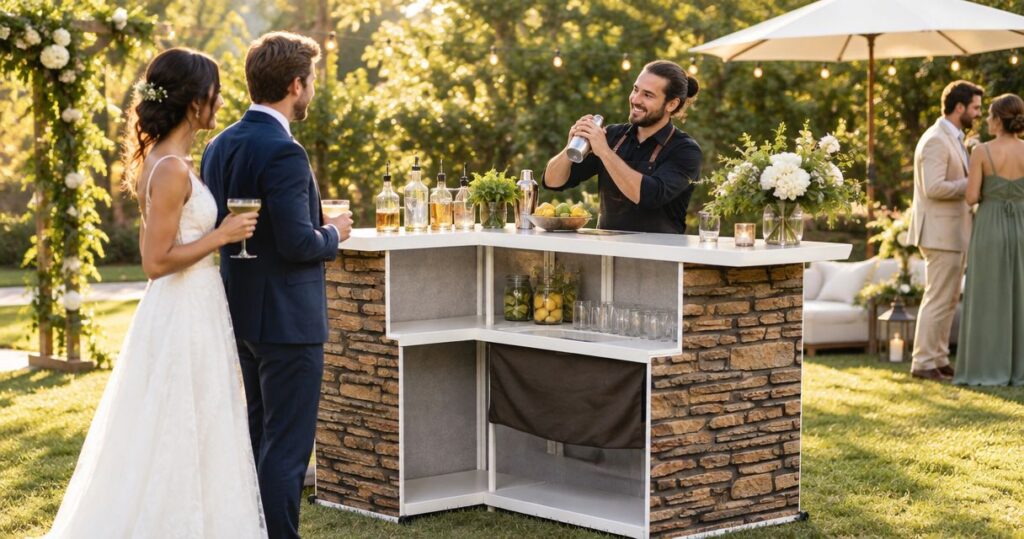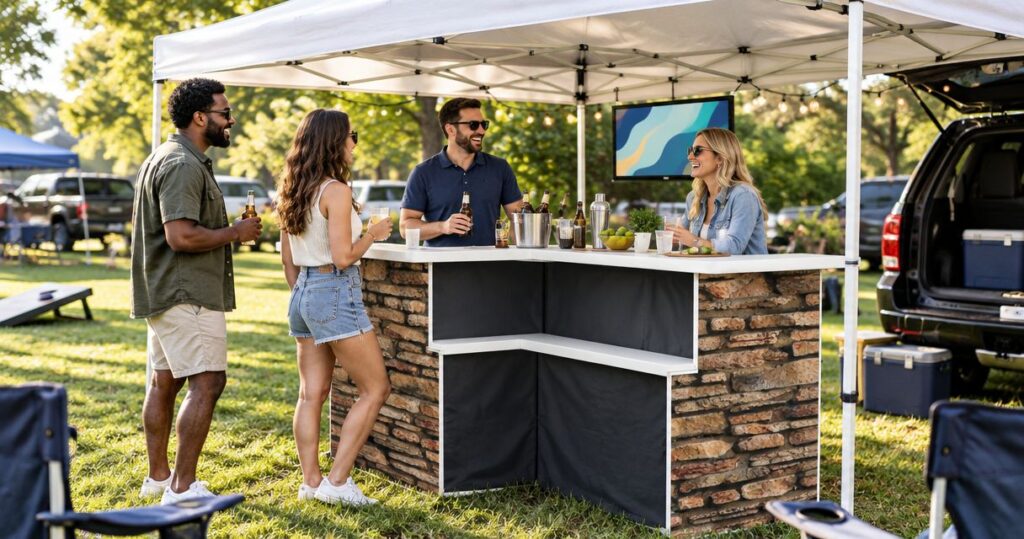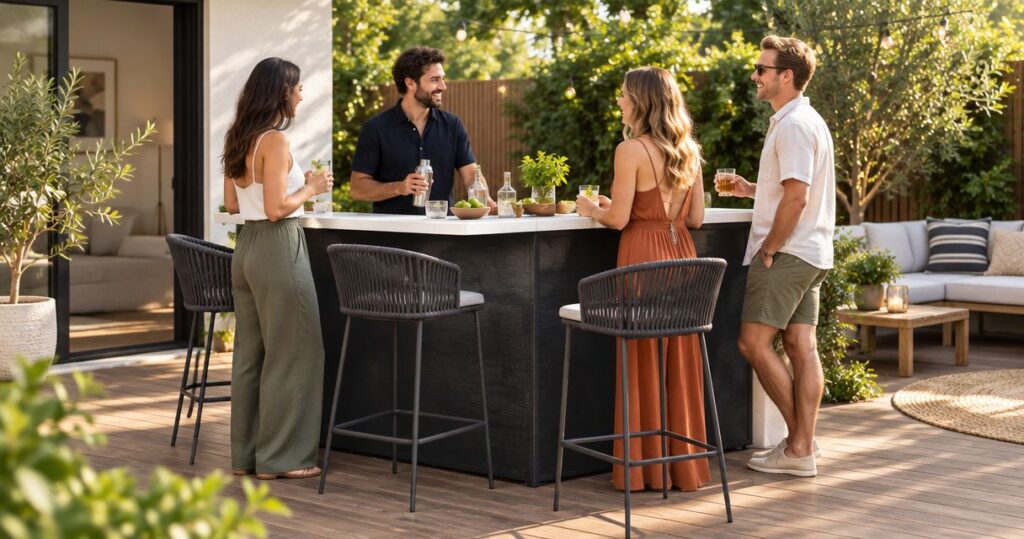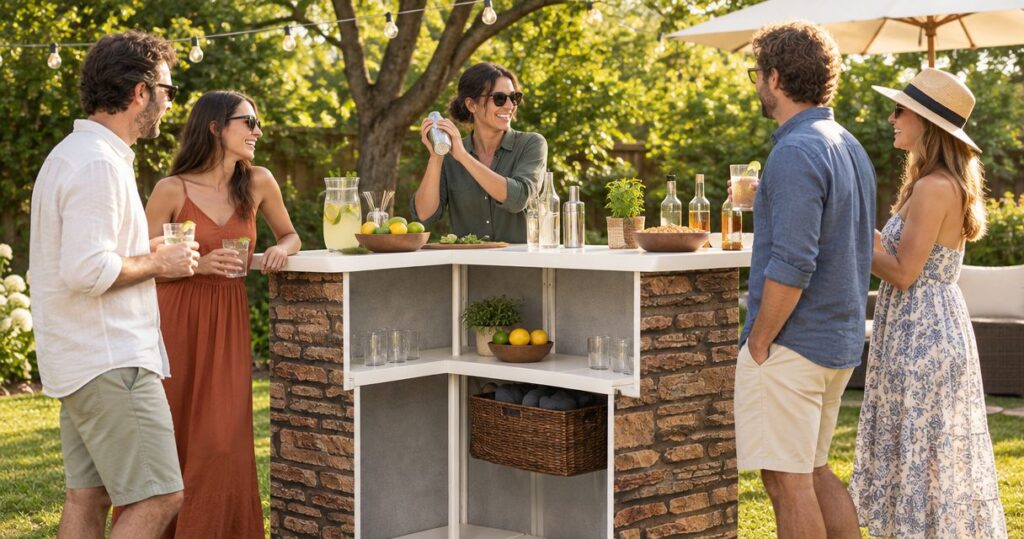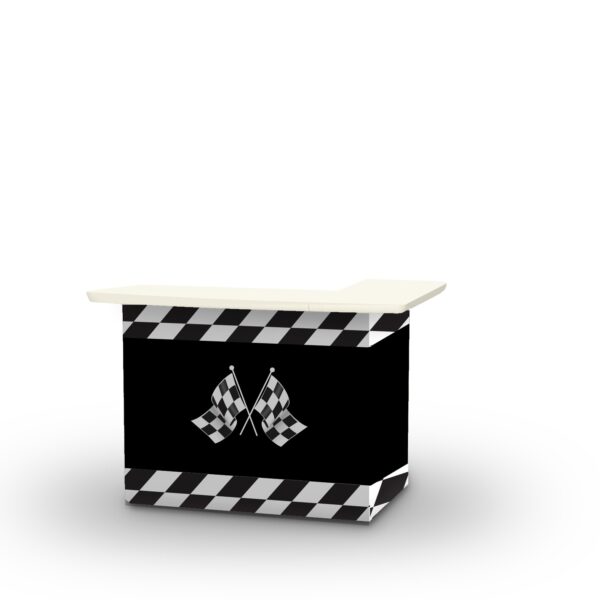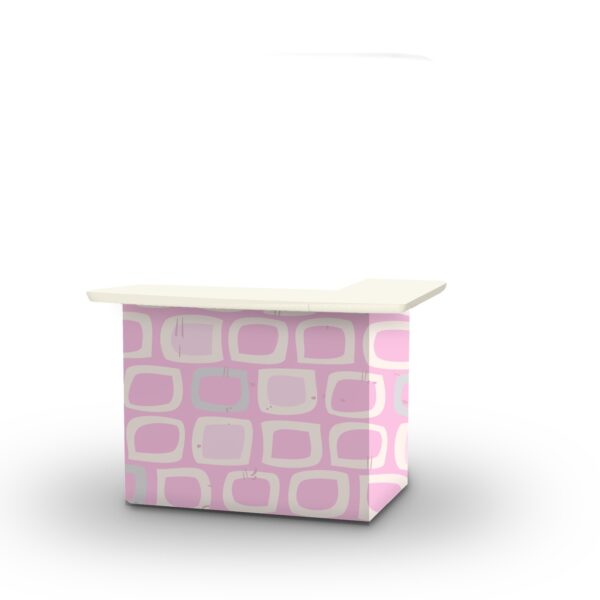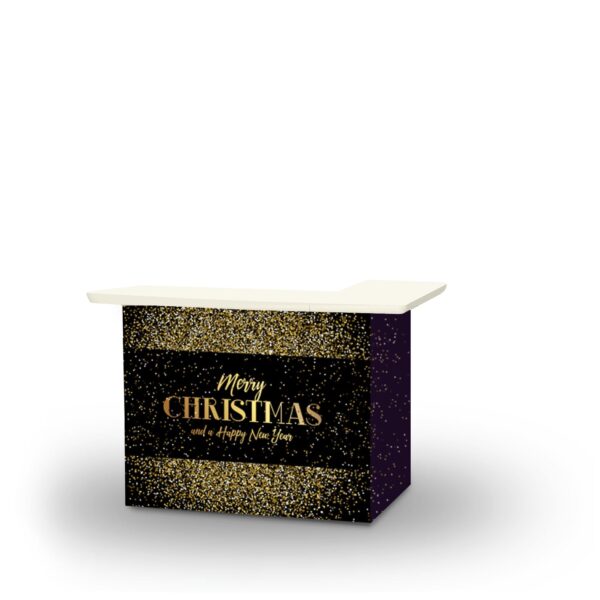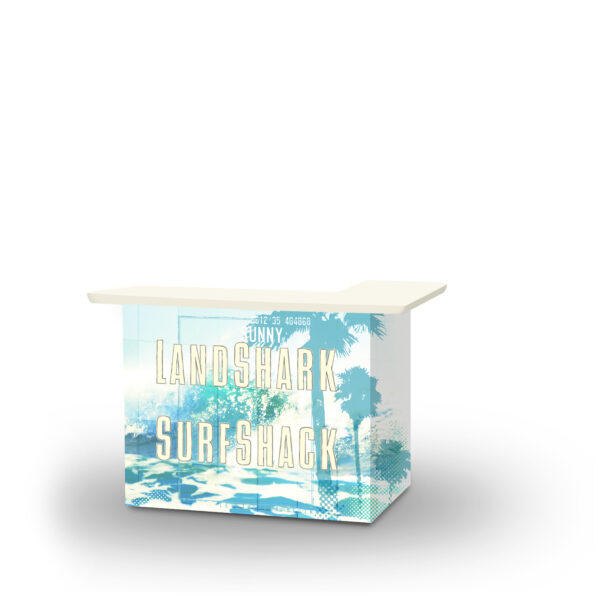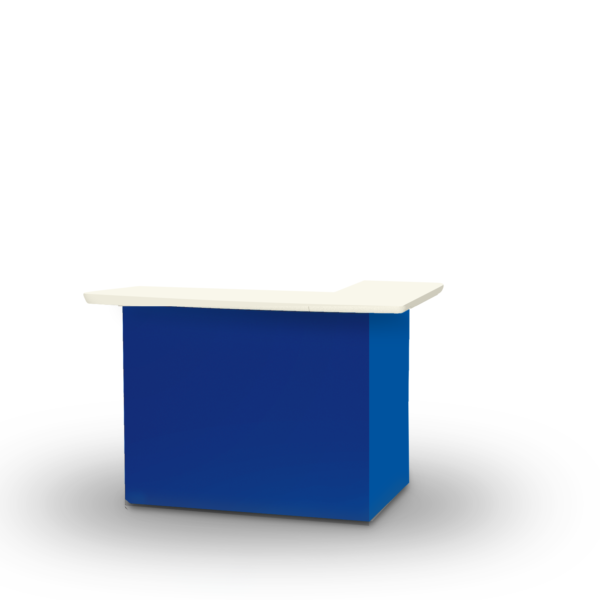

For portable outdoor bar storage, empty the bar, clean it according to its care instructions, and let every component dry completely before packing it in a dry, sheltered space. Store removable fabric covers clean and dry, protect hard parts from rubbing, and follow the manufacturer's directions for folding, stacking, and storage orientation. Swappable covers let you change from a backyard party look to a gameday design without buying another bar—but each cover needs a clean, dry place between events.
- Portable outdoor bar storage starts with clean, completely dry parts—not a cover over a damp bar.
- Keep removable fabric covers away from sharp accessories and dirty tailgating gear.
- Build a Bar suits hosts who want a portable bar display with swappable designs for different parties.
- Choose storage by moisture exposure, packed dimensions, and access—not empty floor space alone.
How do you store a portable outdoor bar between parties?
Clean it, dry it, protect the separate components, and store everything where it stays dry. Your bar's care instructions determine the cleaning products, folding method, and storage position; an outdoor party setting does not establish that the bar is suitable for permanent outdoor storage.
Use this routine after a backyard gathering or tailgate. If you're still choosing a bar for your 2026 party calendar, the portable outdoor bar selection guide helps connect your entertaining plans with the equipment you bring home.
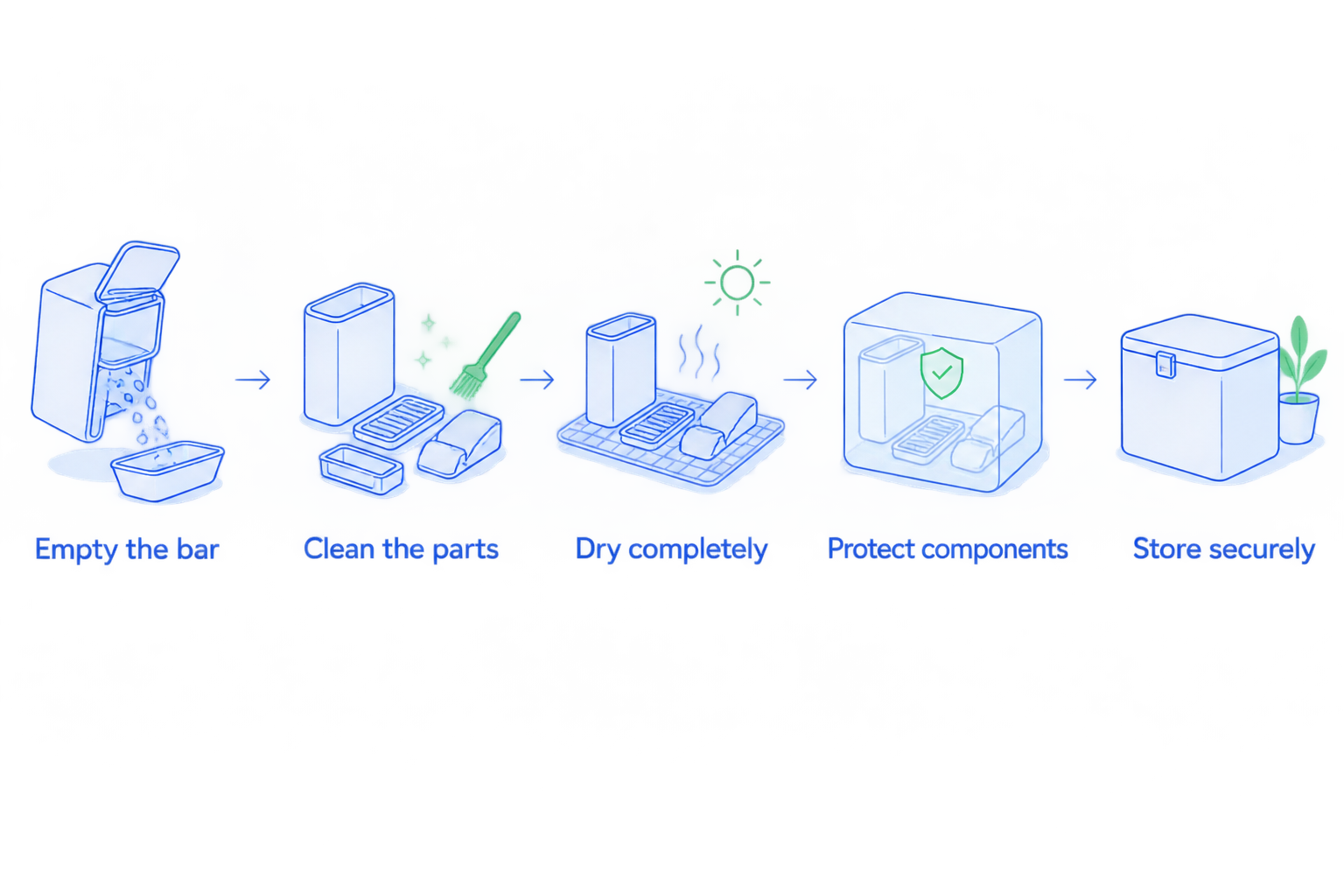
- Empty the bar. Remove drinks, ice, food, decorations, and loose accessories. Check shelves, pockets, and any other storage areas your model has.
- Clean the parts. Follow the care instructions for each material. Remove sticky drink residue before it dries onto surfaces or transfers to packed fabric.
- Dry completely. Check joints, undersides, fabric folds, and other places where water collects. A dry-looking front does not mean the entire bar is ready to pack.
- Protect components. Separate fabric from sharp edges and dirty equipment. Use the supplied storage materials as directed, or suitable clean protection that does not trap residual moisture.
- Store securely. Fold or disassemble only as instructed. Place the packed bar somewhere dry and stable, without heavy objects pressing on vulnerable parts.
Keep that sequence visible near your party supplies. Packing gets easier when cleaning and drying happen before everything reaches the storage cupboard.
Why this matters
A portable bar moves between different environments: a damp lawn, a drinks station, a vehicle, and a storage space. Putting it away without checking those transitions carries spills, dirt, and moisture into the next party.
Your storage routine also affects how useful interchangeable designs are. A clean cover is ready for its next occasion; a cover packed against a sticky accessory creates another cleaning job before guests arrive.
For your 2026 setup, choose a repeatable routine rather than an elaborate storage system. You need a suitable place for the bar, protection for its covers, and a clear route to get everything out again.
Indoor storage: best for keeping party gear together
An indoor closet or utility area is the first place to assess when it stays dry and fits the packed bar. Measure the actual storage opening, usable depth, and route into the space before deciding it works.
A narrow cupboard is not useful if the folded frame cannot pass through its door. Likewise, a shelf needs to support the item you intend to place on it; do not assume a fabric-covered package is lightweight or stackable.
- Best for: Hosts with an accessible, dry indoor storage area.
- Main benefit: You can keep fabric covers away from garden tools, wet equipment, and outdoor dirt.
- Main limitation: Packed dimensions and awkward doorways can rule out an otherwise convenient location.
Keep regularly used party accessories nearby, but do not load them onto the packed bar. Separate storage avoids making the frame or tabletop carry an unapproved load.
Garage or shed storage: best when conditions stay dry
A garage or shed works only when the storage position and conditions meet your bar's care requirements. Inspect the proposed spot after rain, not just on a sunny afternoon.
Look for roof leaks, damp walls, and water entering beneath doors. Keep the bar away from wet lawn equipment, open chemicals, and anything that can snag or stain the fabric.
- Best for: Hosts with a dry garage or shed and a clear, protected storage position.
- Main benefit: Outdoor party gear can stay together without occupying an indoor cupboard.
- Main limitation: Moisture, dirt, and temperature exposure require attention; the building alone is not protection.
If using a raised storage surface, check its load rating and stability. Keep the bar out of vehicle paths and make sure removing it does not require shifting unstable stacks of equipment.
Covered patio storage: best treated as temporary staging
A roof over the patio is not a substitute for the storage conditions specified by the manufacturer. Wind-driven rain and condensation still matter, even when the bar does not sit directly beneath an open sky.
Use a sheltered patio as a place to finish cleanup only when conditions allow. Do not leave a damp bar wrapped up there while assuming its outer cover will solve the moisture problem.
- Best for: Temporary staging during cleanup, where permitted by the care instructions.
- Main benefit: You can remove outdoor dirt before moving equipment indoors.
- Main limitation: Shelter does not establish that the location is suitable for long-term storage.
Which storage location should you choose?
Compare the actual conditions rather than the room name. This checklist applies to a portable bar bought in 2026 just as much as one you already own.
| Storage option | Best for | What to check | Main limitation |
|---|---|---|---|
| Indoor closet or utility area | Accessible indoor storage | Opening, packed dimensions, dry conditions | Limited room and awkward access |
| Garage or shed | Keeping outdoor equipment together | Leaks, dampness, dirt, safe positioning | Conditions need regular checking |
| Covered patio | Temporary cleanup staging | Manufacturer's instructions and weather exposure | A roof does not prevent all moisture exposure |
How should you store swappable fabric covers?
Store removable covers clean, fully dry, and protected from sharp or dirty objects. Check their individual care instructions before washing, spot cleaning, folding, or applying any treatment; fabric appearance alone does not establish a safe cleaning method.
Build a Bar is best for portable bar shoppers who want to change the display design between parties. The Build a Bar interchangeable-cover approach fits that goal, but it also gives you separate fabric pieces to organize and care for.
Think in occasions rather than a loose pile of fabric. Keep your backyard-party cover easy to reach during summer, and identify the cover you plan to use for your next gameday gathering.
- Separate clean covers from used covers awaiting attention.
- Follow any supplied folding or hanging instructions.
- Avoid sharp clips, exposed fasteners, and dirty accessories in the same package.
- Label storage containers by occasion without attaching adhesive labels directly to the fabric.
- Check stored covers before party day so any cleaning happens before setup.
For your 2026 entertaining calendar, organize by the next event you actually plan to host. There is no need to unpack every seasonal design to find the one you want.
Why does portable outdoor bar storage vary?
The right storage plan depends on the bar and the place you keep it. These factors determine what to check—not a universal packing method or an assumed weather rating.
- Materials and care instructions. A cleaning method suitable for a hard surface is not automatically suitable for a printed fabric cover.
- Folding or disassembly method. Hinges, removable pieces, and fasteners need their specified handling; do not force a part to make the package smaller.
- Packed dimensions. Measure the stored configuration, including any bag or protective packaging, against the space you plan to use.
- Moisture exposure. A bar used on wet grass needs attention underneath as well as across its serving surface.
- Accessories and covers. Loose components need protection and an identifiable storage location.
- Access frequency. A bar used throughout the season needs a clear retrieval route, not a position behind rarely moved equipment.
Choose a storage spot you can use without shortcuts. If packing requires balancing the frame against a wall or compressing covers beneath heavy items, reassess the arrangement.
Can you leave a portable outdoor bar outside all year?
Outdoor use does not automatically mean year-round outdoor storage is permitted. Follow the manufacturer's stated storage requirements, and do not treat an added weather cover as proof that the bar can remain outside.
If outdoor storage is your only option in 2026, establish that requirement before choosing the bar. A product that fits your party layout still needs to fit your storage conditions.
Should you fold the bar with its fabric cover attached?
Fold the bar with its cover attached only if the manufacturer's instructions specify that method. Otherwise, check whether the cover needs removing before folding so it does not interfere with moving parts or become pinched.
Do not copy the packing method of a different portable bar. Similar-looking frames do not establish identical handling instructions.
How do you store a portable bar after a tailgate?
After a tailgate, separate wet or dirty equipment from clean covers and finish cleaning and drying before long-term storage. Transport packing gets equipment home; it does not replace the final storage routine.
Once unloaded, inspect the underside for dirt and check any fabric packed near a cooler or spilled drink. Keep the storage space ready before you leave so cleanup does not end with a damp bundle forgotten in the vehicle.
Make the next party easier to set up
Before putting everything away, leave the next setup in a sensible order. Keep the instructions accessible, group compatible loose parts, and identify which accessories belong with the bar rather than the cooler or canopy.
A short inventory beats reopening every bag. Write down what you have, where it belongs, and anything that needs attention before the next gathering; do not pack damaged parts out of sight and expect to remember them later.
If the folding method or fabric care remains unclear, ask before forcing, washing, or treating anything. A storage question is easier to resolve while the bar is still unpacked.
Check Your Storage Questions
Ask about the bar’s care and packing requirements before choosing your storage setup.
FAQ
What’s the best place for portable outdoor bar storage?
The best place for portable outdoor bar storage is a dry, stable location that meets the manufacturer’s instructions and fits the packed bar. Check access, moisture exposure, and protection from nearby equipment before choosing the spot.
Can I store a portable bar in my garage?
You can use a garage when its conditions meet your bar’s storage requirements. Check for leaks, dampness, vehicle traffic, and contact with wet or dirty equipment.
Should I put a wet portable bar in its storage bag?
Do not pack a wet portable bar for long-term storage. Clean it as instructed and let all components dry completely before putting them away.
How should I store Build a Bar fabric covers between parties?
Store Build a Bar fabric covers clean, completely dry, and protected from sharp or dirty accessories. Follow the supplied care instructions for cleaning and packing each cover.
Do I need to remove the cover before folding my portable bar?
Follow your bar’s folding instructions to determine whether the cover must come off. Do not assume fabric can stay attached simply because the frame starts to fold.
How do I keep portable bar accessories from getting lost?
Give loose accessories an identified storage place and keep a simple inventory with the bar. Protect sharp or heavy pieces separately so they do not damage fabric or other components.
What should I check before taking my portable bar out again?
Check that the bar and covers are clean, dry, and free from visible damage before setup. Confirm that required parts are present and follow the assembly instructions rather than forcing stiff or misaligned components.
One last thing
Plan the drying space, not just the storage space. A bar can fit neatly inside a cupboard when packed yet still need somewhere else to dry after a wet tailgate or a spill-heavy party.
Before your next gathering, choose that cleanup spot and leave the route clear. It is the small preparation that keeps packing from becoming a damp, hurried bundle at the end of the night.
Related guides
- Best Folding Bars Ranked by Storage Size
- Portable Home Bar or Permanent Bar: Which Fits Your Home?
- Portable Bars for Parties: Compare Layouts Before You Buy