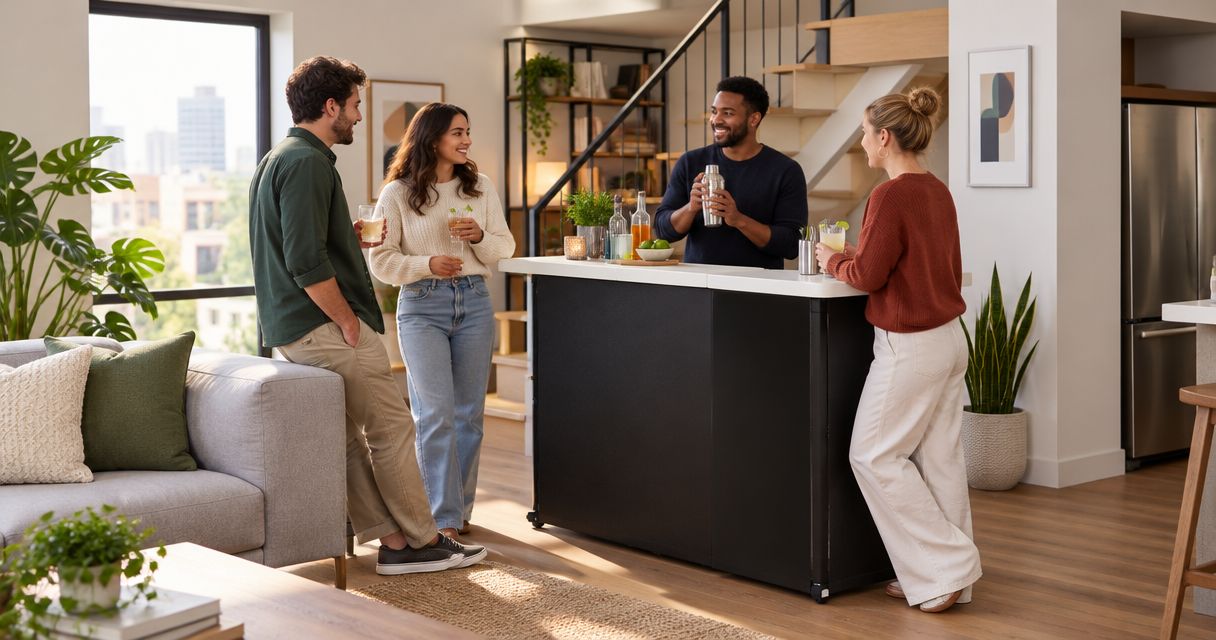
Yes—a collapsible bar is practical for an upstairs apartment when you can carry it through the building, store it out of the way, and open it without blocking your living space. A swappable cover lets you change the look for different parties without buying another bar, but the buying decision starts with the folded size, carrying requirements, and space needed to serve guests.
- A collapsible bar works upstairs when its carrying route, storage spot, and open footprint all fit your apartment.
- Build a Bar suits home hosts who want swappable fabric covers for different party themes.
- Choose a folding bar around storage and handling before choosing its party look.
- Check stairs, landings, doors, and serving access—not just the space against your living-room wall.
Is a collapsible bar practical for an upstairs apartment?
Yes, if the bar passes the carry, storage, and serving checks before you buy. A bar that fits your living room but cannot turn on the stair landing is not an apartment-friendly choice. Neither is a folded bar that has no designated home between parties.
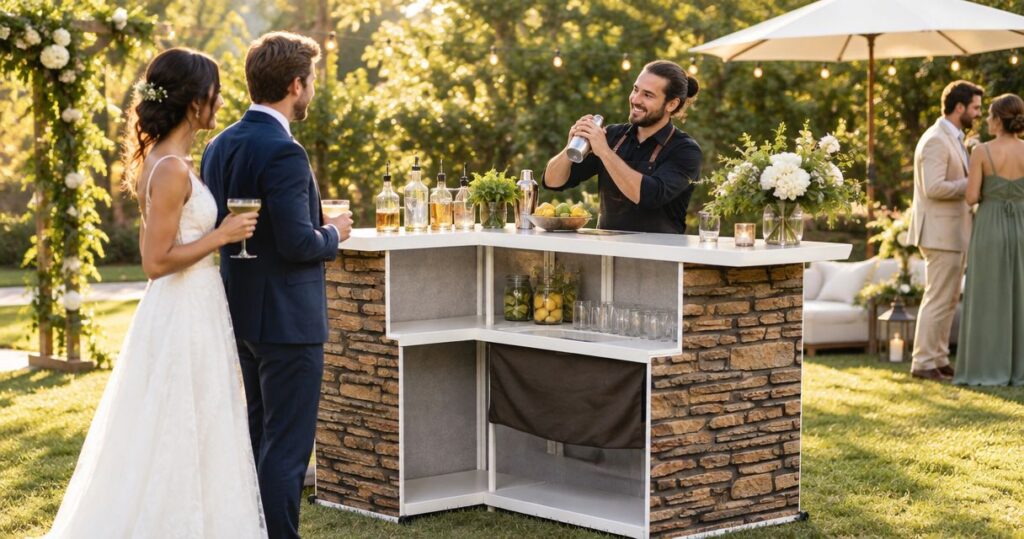
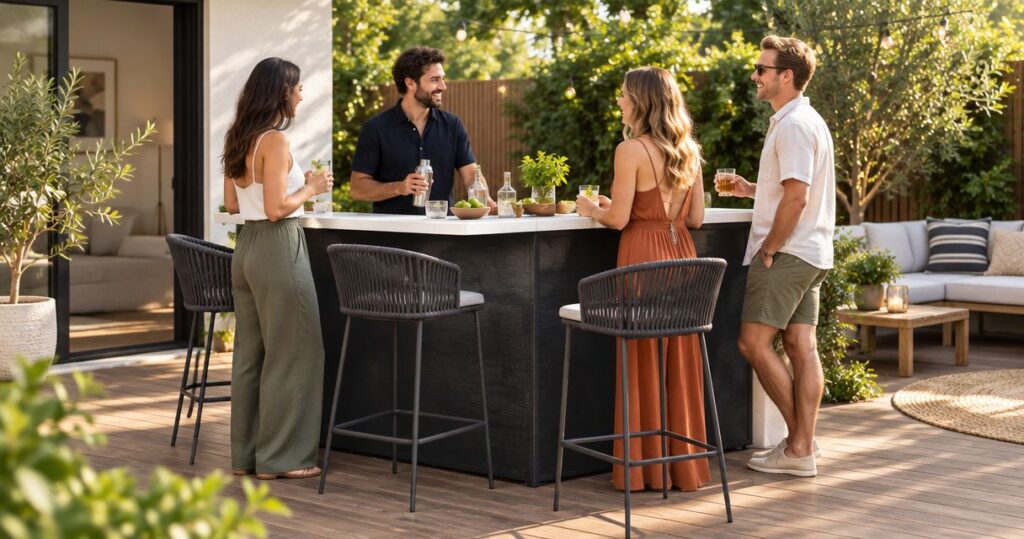
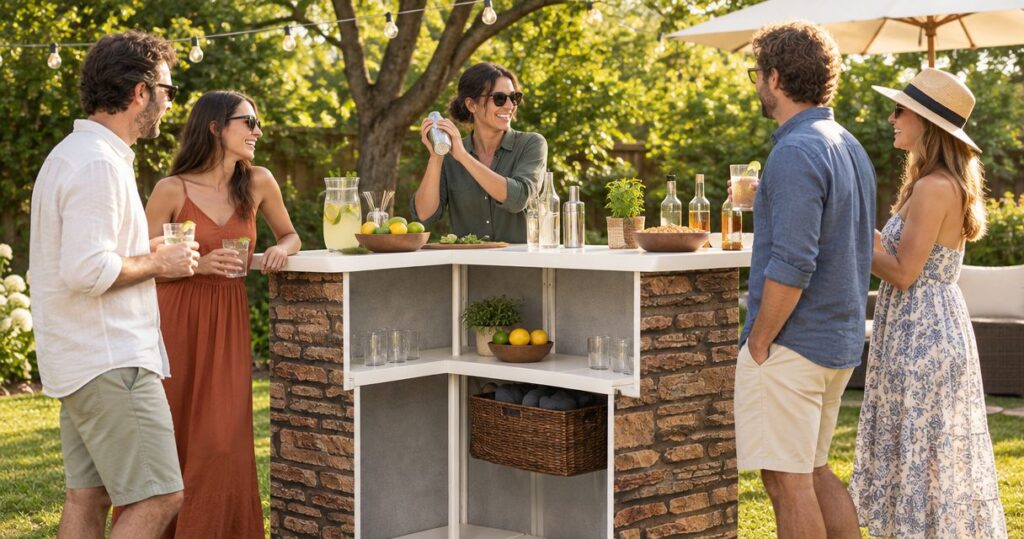
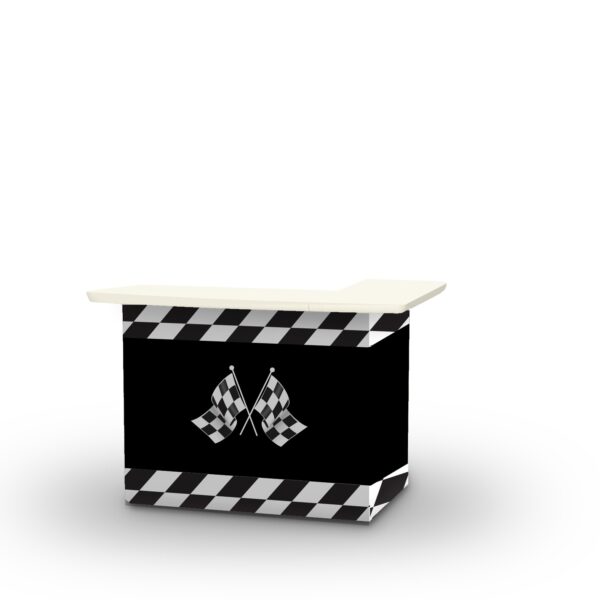
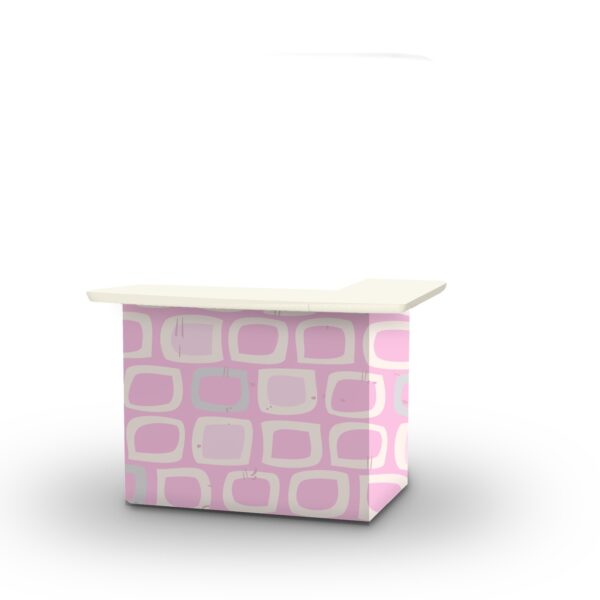
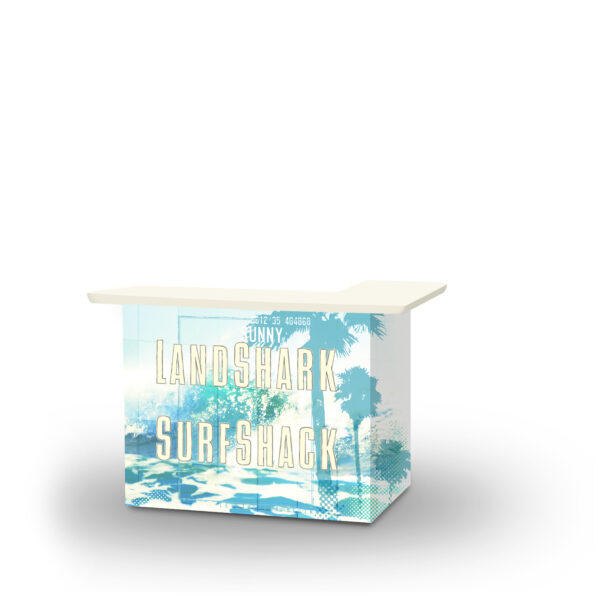
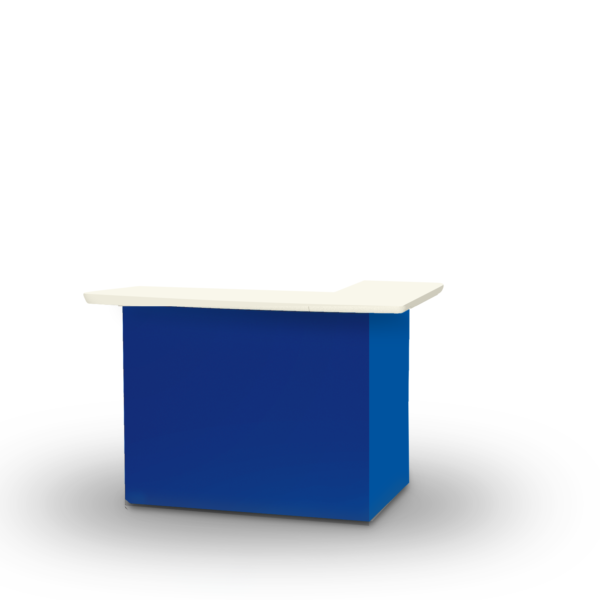
Build a Bar offers portable bar displays with swappable fabric covers. That design flexibility matters when the same apartment hosts a birthday, a holiday gathering, and gameday—but it does not replace checking the physical fit.
Use this sequence for your 2026 purchase:
- Trace the route. Follow the entire trip from the building entrance to the setup location. Include stairs, elevator doors, landings, apartment doors, and interior corners.
- Check the carrying format. Establish what you actually carry: an assembled folded unit, separate components, or a packed bag. Compare that format with the route, not just the assembled dimensions.
- Assign a storage location. Pick the closet, utility space, or other permitted spot where the bar will stay. Confirm that you can close the door and retrieve other belongings.
- Mark the open footprint. Outline the bar on the floor, then allow room for the host behind it and guests in front.
- Plan the return trip. Decide where drinks, accessories, and the cover go before folding and storing the bar after the party.
Measure before choosing a finish or theme. The right apartment bar fits your ordinary week as well as your party night.
Why this matters
An upstairs apartment turns a portable-bar purchase into a handling decision. You are choosing something that must move through shared spaces, work inside a room that already has furniture, and disappear when the gathering ends.
That is why an attractive party photo is not enough. Evaluate the complete routine: bringing the bar upstairs, setting it up, serving from it, clearing it, and putting it away. If any part requires moving furniture you cannot readily move, choose a different layout or bar format.
For a 2026 apartment setup, make the storage location part of the purchase decision—not a problem to solve after delivery.
Which bar setup fits apartment life?
A collapsible bar, a permanent home bar, and an event rental solve different problems. Choose around what happens between gatherings, not just what looks good during one.
| Option | Best for | Practical advantage | Trade-off to check |
|---|---|---|---|
| Collapsible bar | Hosts who need their floor space back | Can be put away when its folded format fits your storage | You must handle setup, takedown, and storage |
| Permanent home bar | Hosts who want a dedicated serving area | Keeps a serving station in place | Commits part of the apartment to the bar between gatherings |
| Rented event bar | Hosts arranging an occasional event | Avoids keeping the rented bar after the rental period | Requires agreement on access, placement, collection, and building rules |
A permanent bar is not automatically wrong upstairs. It fits a different priority: keeping the bar ready rather than reclaiming its footprint. A collapsible model makes more sense when the room must switch back to everyday use.
Use the portable home bar or permanent bar comparison to decide whether you want a dedicated fixture or a temporary serving station. For a rental, confirm who handles the stairs and where collection takes place before booking.
Check the stairs before the serving surface
Start your carrying check with the packed or folded configuration. An assembled product photo does not show how you will move the bar through your building.
Record 3 measurements for each restrictive opening: clear width, clear height, and available turning space. On a landing, consider the full turn, including railings and the next flight of stairs. Do not assume that fitting through the apartment doorway proves the stair route works.
Ask the seller about the weight and dimensions of each piece you will carry. Then decide who will move it. If your plan depends on another person, make sure that person will also be available when you need to move or store the bar.
- Keep your view of the steps clear while carrying.
- Do not plan to rest equipment where it blocks shared access.
- Check building rules before arranging delivery or moving bulky items.
- Use the elevator's actual access constraints, not an assumption that it will fit.
Reject a bar that requires an unsafe carry, even if its open size is perfect. Portability has to work for your route and your handling needs.
Give the folded bar a real storage spot
Choose 1 storage location before you order. Be specific: inside a particular closet, along a permitted storage wall, or in another space you can measure and access.
Check the entire packed shape, including anything that protrudes. Also account for the cover, carrying equipment, and accessories you intend to keep with it. A folded frame that fits is only part of the storage plan.
Access matters as much as fit. If retrieving the bar means emptying the closet every time, the storage arrangement adds work to every gathering. Position it so you can remove it without disturbing items you regularly use.
A useful 2026 buying question is: can you put the bar away after hosting without reorganizing the apartment? If the answer is no, revisit the storage location before choosing a larger serving surface.
Do not treat a shared hallway, stair landing, or building exit as overflow storage. Keep your plan inside space you are allowed to use.
Test the room in its open and closed positions
Plan 2 floor layouts: the everyday room and the party room. The bar must work in both, even though it appears in only one.
For the party layout, mark the bar's footprint with removable floor markers appropriate for your flooring. Stand where you will serve, then walk the routes guests need to reach seating, the bathroom, and the exit. Open nearby doors during the test.
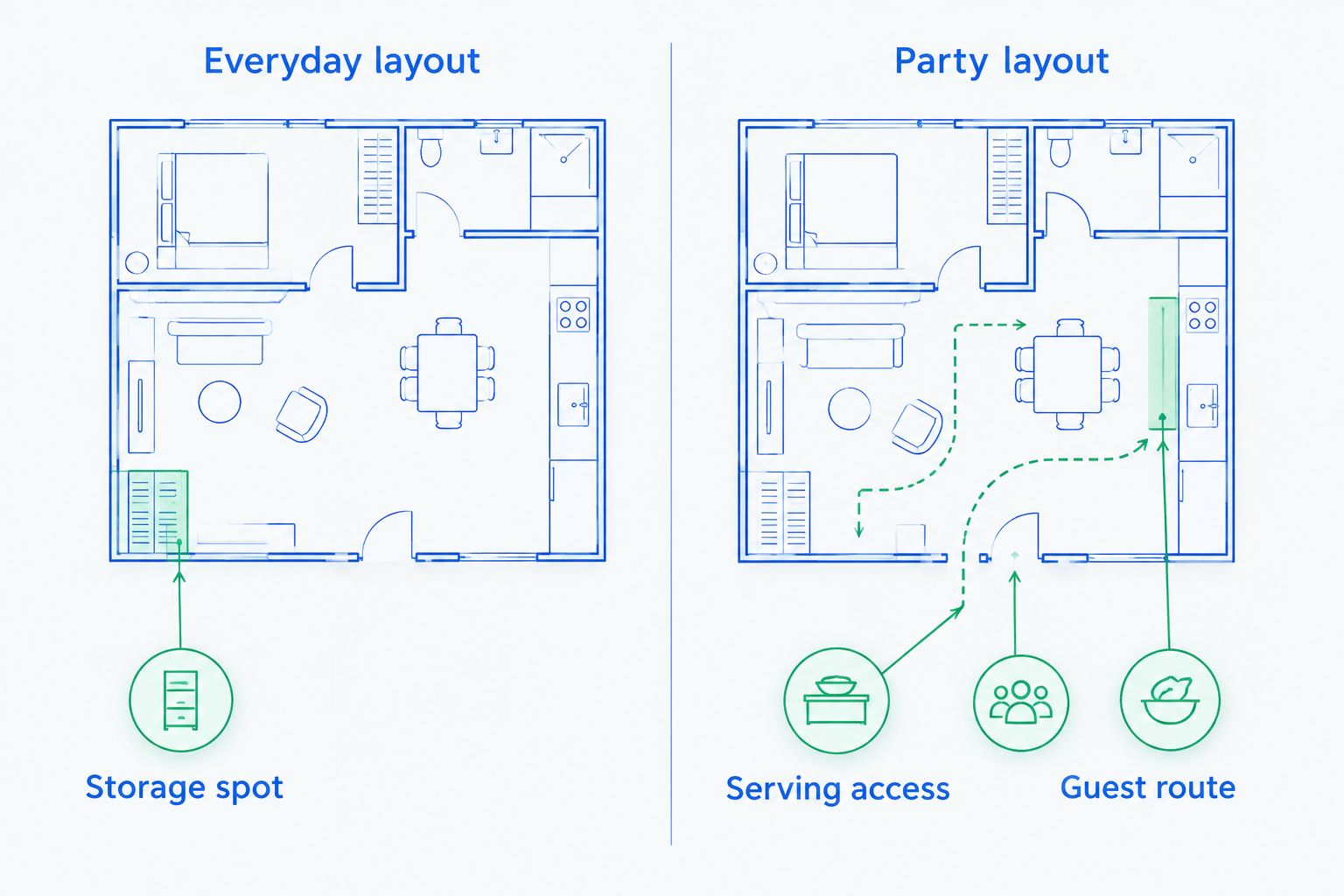
Keep the serving position separate from a doorway or narrow passage. A bar that technically fits against a wall still needs enough surrounding space for its intended use.
Think through what guests will do at the station. If they will choose a drink, collect a glass, and add a garnish, arrange those actions so they do not require reaching across the person serving. Keep the setup within the surface and storage limits specified for the bar you choose.
A smaller usable station beats a larger station that interrupts the room. Check the layout with your existing furniture, not an imagined empty apartment.
Why upstairs practicality varies
The same collapsible bar can suit one apartment and fail another. These are the deciding factors for your 2026 shortlist:
- Carrying route: Straight access and a route with tight turns create different handling requirements. Check every transition, not only the narrowest door.
- Packed configuration: Separate pieces and a single folded unit require different carrying plans. Confirm which format applies to the bar you are considering.
- Storage access: A measured space is useful only if you can put the bar in and take it out without blocking essentials.
- Serving layout: Your setup needs room for the host, guests, and existing furniture—not merely the bar's footprint.
- Gathering routine: A bar used for changing party themes serves a different purpose from a station you want permanently ready.
- Building requirements: Delivery access, shared-space rules, and permitted use of common areas shape what works upstairs.
Keep these checks separate. A good result on storage does not cancel out a difficult carry, and an easy carry does not make a crowded serving layout comfortable.
Change the party look without replacing the bar
Build a Bar is best for home party hosts who want to change their portable bar's design with swappable fabric covers. Its relevant benefit for an apartment is design flexibility: you can change the display rather than choose a different bar for every theme.
Plan the look around your gathering. For a birthday, coordinate the bar with the party decorations. For a seasonal get-together, change the visual theme. For gameday, plan the serving station around your watch-party setup. Confirm the cover designs you want rather than assuming a particular team or theme is offered.
The trade-off is straightforward: interchangeable design does not establish carrying weight, packed dimensions, or suitability for your particular space. Make those checks independently. Treat the fabric cover according to its care instructions, and plan where it will go between events.
For your 2026 shopping list, choose the physical setup first and the party look second. That keeps an appealing design from distracting you from the apartment-fit checks.
Check your apartment fit
Ask about folded dimensions, carrying requirements, and cover options before choosing your setup.
Can I use a collapsible bar on an apartment balcony?
Use a collapsible bar on a balcony only after checking the product instructions and your building's rules. An upstairs location alone does not establish outdoor suitability, and a fabric cover does not establish weather resistance.
Check door access, the usable floor area, and the route back indoors. Keep the setup clear of exits and do not make an outdoor storage plan unless the product instructions support it. Assess the balcony separately from your indoor party layout.
Should I rent a bar instead of storing one upstairs?
Rent when you want an event-specific bar without keeping that bar afterward. Before choosing a rental, confirm the delivery arrangement, stair access, placement requirements, and collection process with the provider.
Choose a collapsible bar when you want to own the setup and have a workable carrying and storage plan. Neither option removes the need to check your building's access rules. Compare the complete arrangements rather than assuming that delivery includes upstairs placement.
FAQ
Is a collapsible bar a good idea for a small upstairs apartment?
A collapsible bar is a good fit when its packed size, carrying route, storage location, and open layout all work in your apartment. Check those conditions before choosing the design.
What should I measure before buying a folding bar for upstairs?
Measure the carrying route, the intended storage space, and the open serving area. Compare them with the actual packed and assembled dimensions of the bar you are considering.
Can I carry a collapsible bar upstairs by myself?
Base that decision on the weight and shape of the pieces, the stair route, and your ability to handle them safely. Confirm the carrying configuration before planning a solo move.
Is a folding bar better than a permanent bar for an apartment?
A folding bar is better when reclaiming floor space matters and you have somewhere to store it. A permanent bar fits a different need: a dedicated serving station that stays in place.
What makes Build a Bar relevant for apartment parties?
Build a Bar offers portable bar displays with swappable fabric covers, letting hosts change the display’s design for different gatherings. Check the specific setup’s dimensions and handling requirements against your apartment.
Can I leave a collapsible bar outside between parties?
Leave a collapsible bar outside only if its product instructions support that use and your building permits it. Portability does not establish suitability for outdoor storage.
Where should I store a portable bar in an apartment?
Store a portable bar in a permitted location that fits its full packed configuration and remains accessible. Keep shared halls, stair landings, and exits clear.
One last thing
Rehearse putting the bar away, not just setting it up. Before buying, walk from the intended serving spot to the storage location while thinking through every component you will move.
Picture the end of the party: glasses cleared, accessories gathered, cover handled according to its instructions, and the bar returned to storage. That final routine is the test that connects portability with apartment life. Choose a setup you can comfortably manage when the hosting is finished.
Related guides
- Folding bars ranked by storage size
- Portable bars for parties: compare layouts before you buy
- How to choose a portable outdoor bar for parties and tailgating