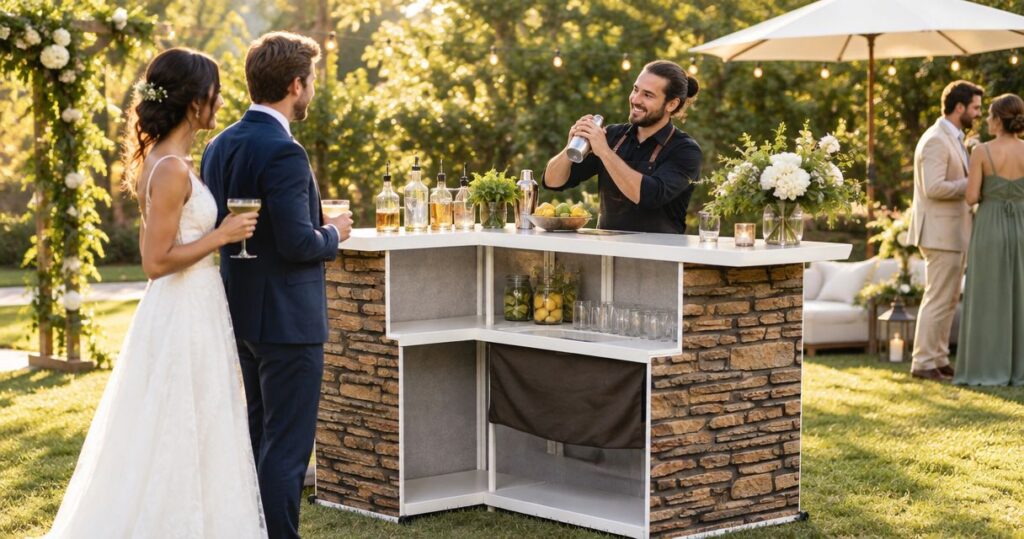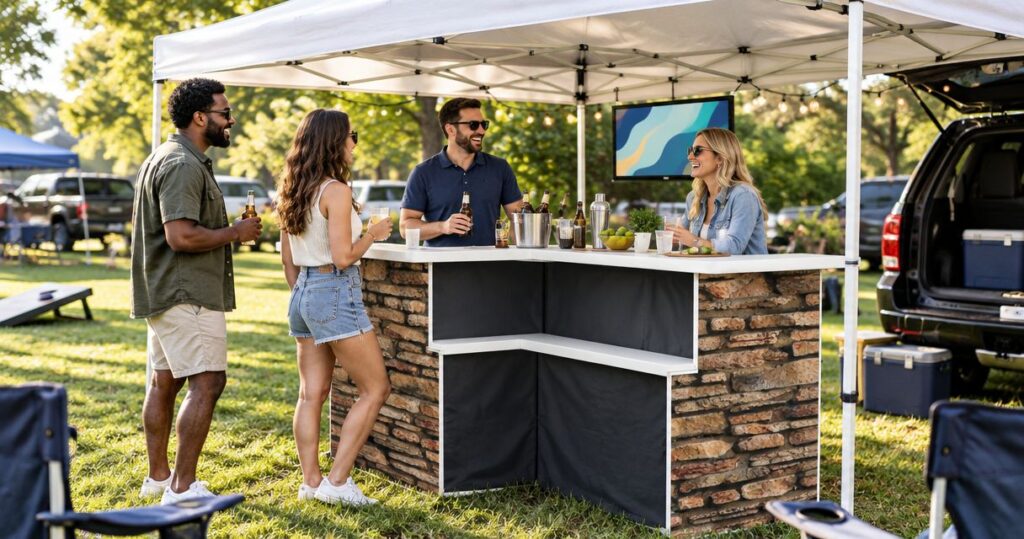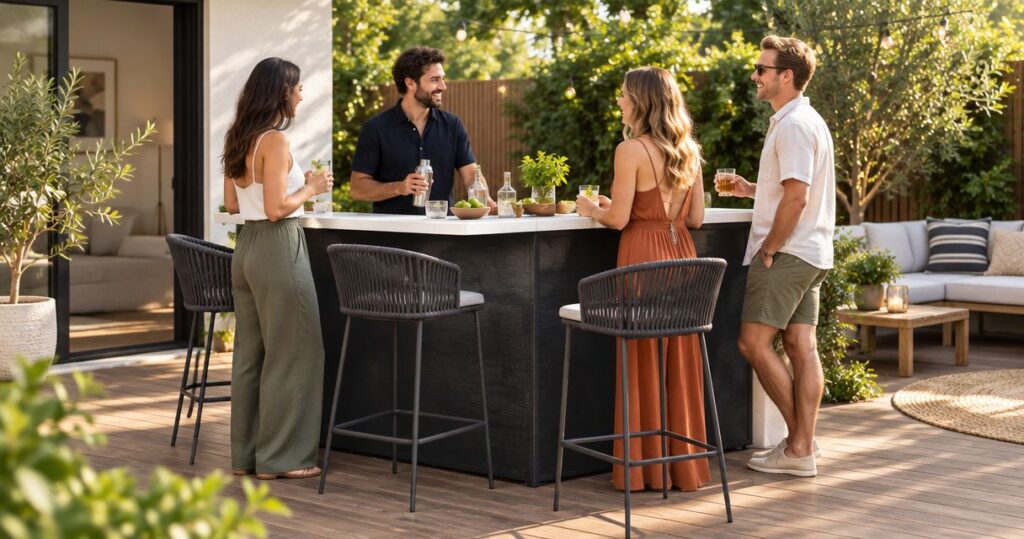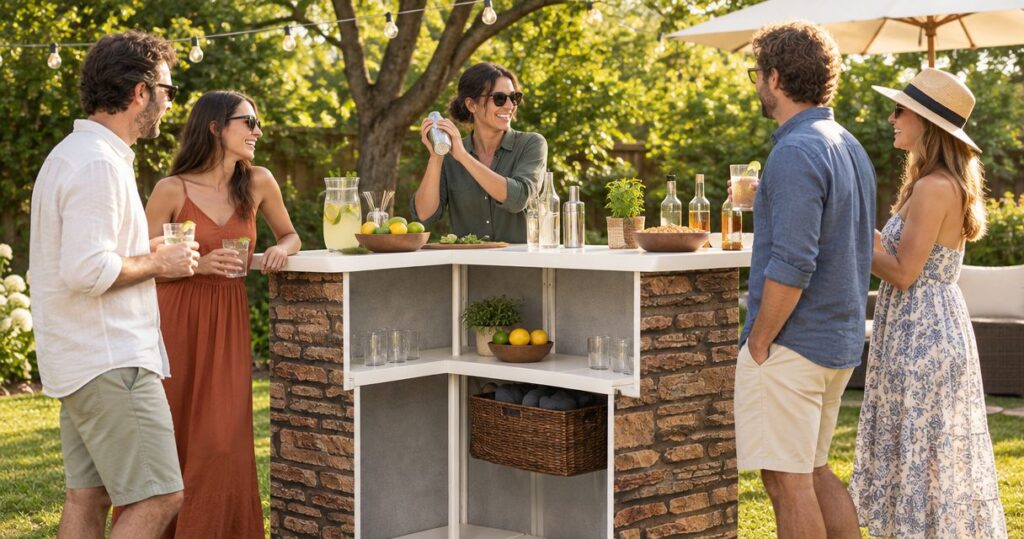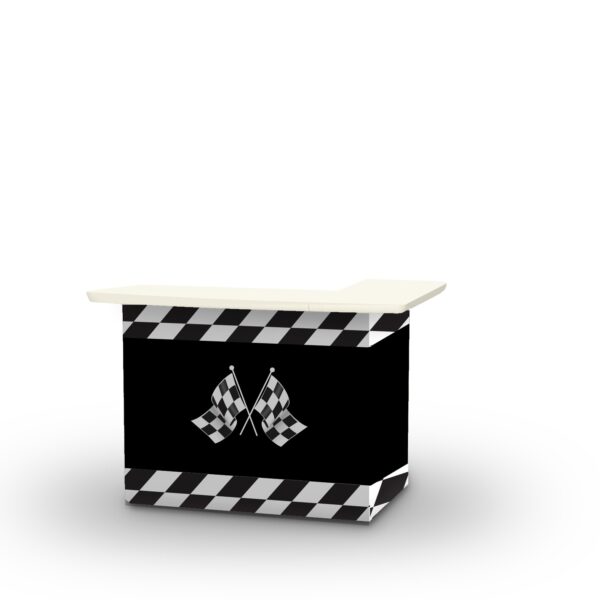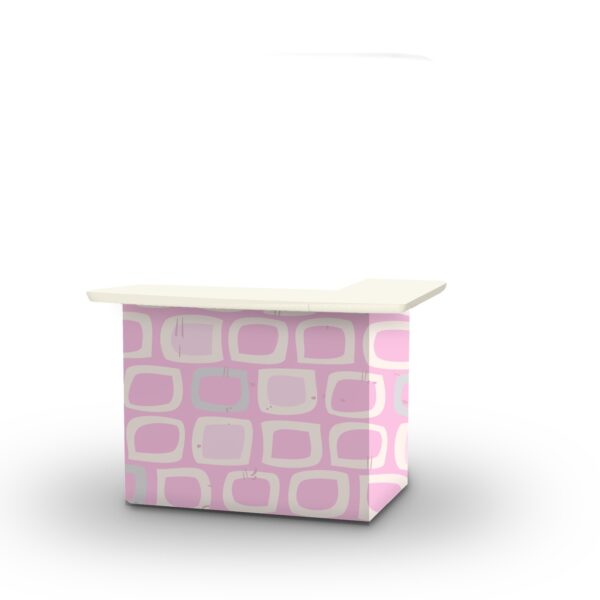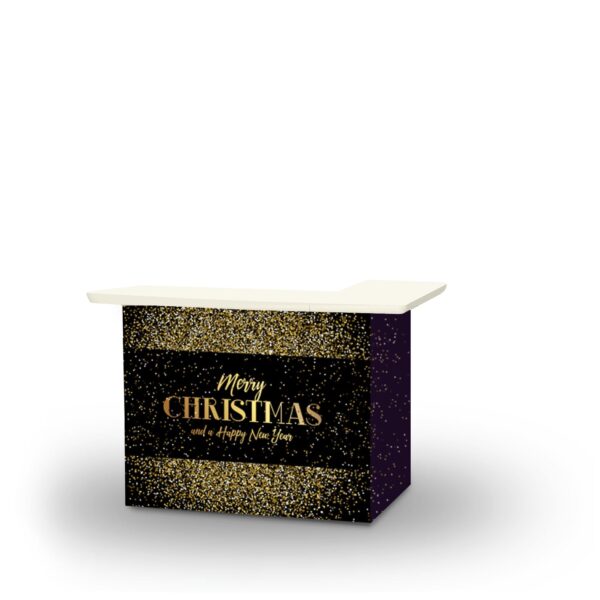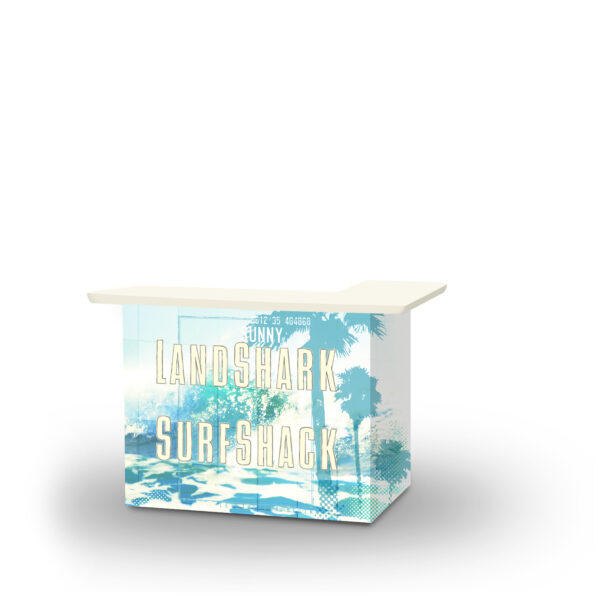
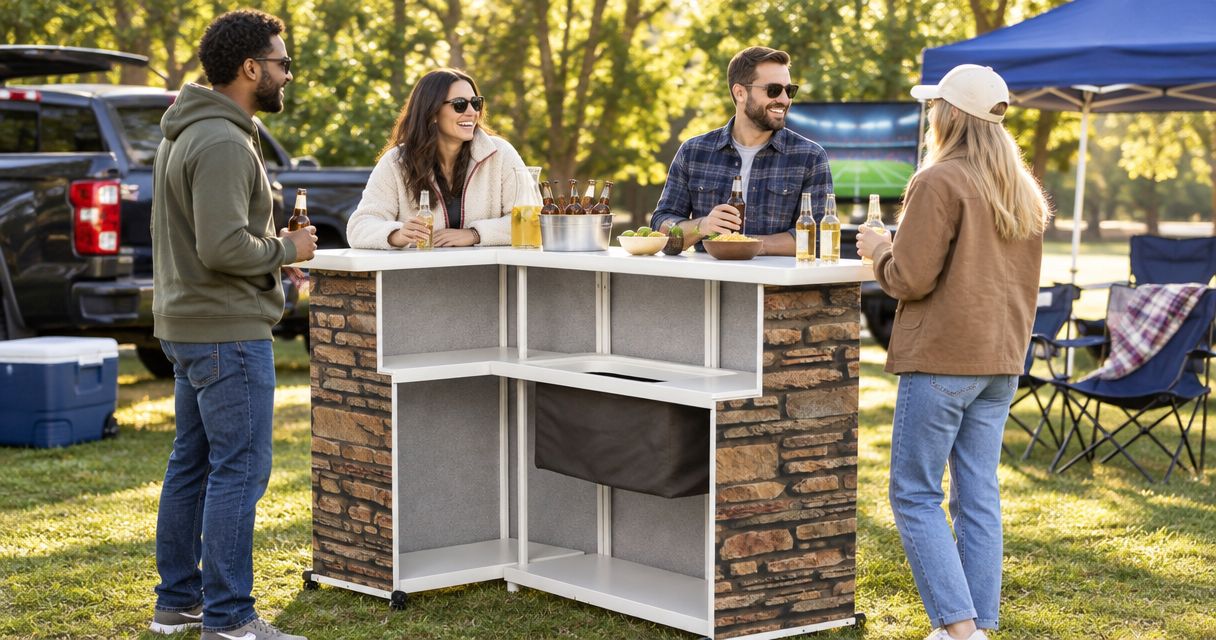
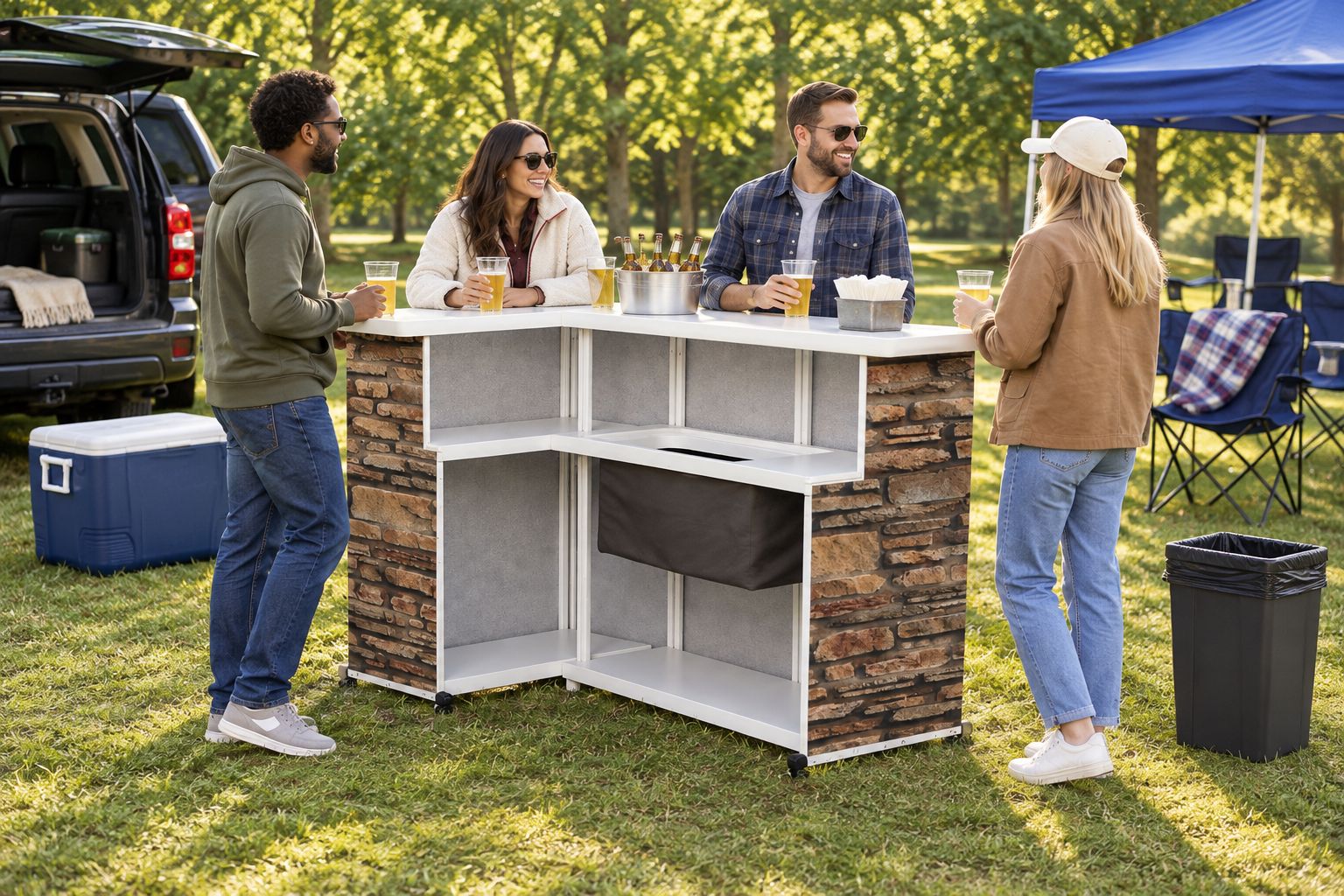
A tailgater’s portable outdoor bar is a movable serving station for organizing drinks and hosting away from home; an interchangeable design lets you change its appearance without buying another bar. Choose a portable outdoor bar for tailgating around your vehicle, serving space, storage needs, and gameday plans—not just how it looks in a product photo.
- Choose a portable outdoor bar for tailgating by checking packed fit, serving layout, setup instructions, and outdoor-care requirements.
- Build a Bar suits tailgaters who want swappable fabric covers for gameday, seasonal parties, and home entertaining.
- Separate drinks, serving supplies, and waste before choosing your bar layout.
- Compare interchangeable-design bars, other folding bars, permanent bars, and event rentals against your actual hosting routine.
Why portable outdoor bars matter for tailgaters
Tailgaters need a serving station that works between the vehicle and the gathering—not a permanent fixture that dictates where everyone stands. Your bar also shares packing space with coolers, chairs, food, and the rest of your setup.
A bar’s appearance matters when the same equipment moves from gameday to a backyard birthday or seasonal party. Swappable covers address that change directly: you change the presentation rather than select another bar solely for a different look.
For your 2026 buying checklist, separate appearance from function. A cover changes the display; it does not answer questions about packed dimensions, surface care, stability, or transport. The guide to choosing a portable outdoor bar for parties and tailgating provides a broader starting point before you narrow your shortlist.
Choose the bar around the trip first, then choose the look around the party. A great-looking setup still needs a practical route from storage to vehicle to serving spot.
How to choose your tailgating bar
Map your serving space before you shop
Start with a free layout test. Use removable tape on a suitable floor or place empty boxes where the bar, cooler, and trash container would sit. Walk through the arrangement while imagining someone pouring a drink and someone else reaching for ice.
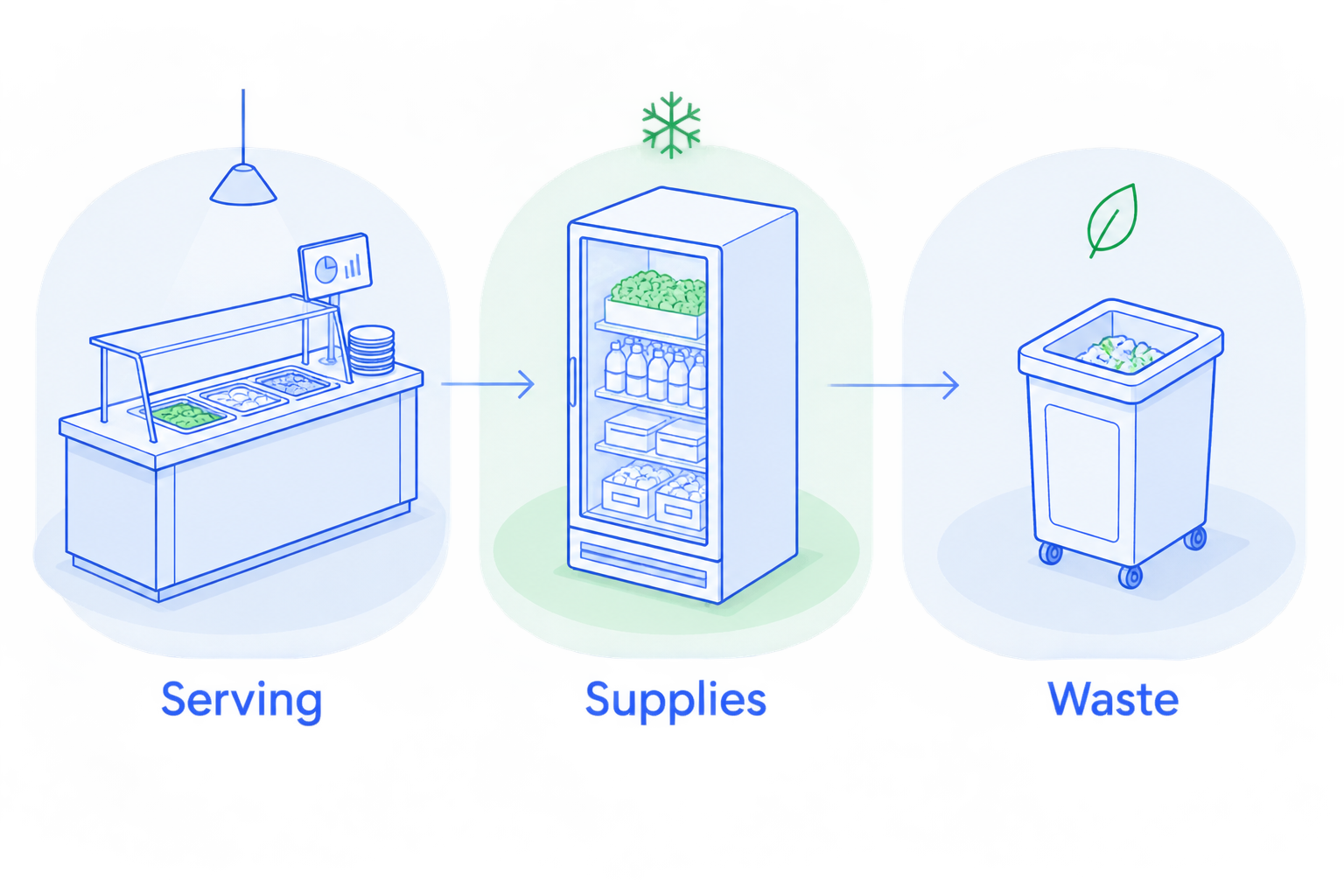
Plan 3 zones: serving, supplies, and waste. These are planning categories, not a required number of furniture pieces. The goal is to stop every task from competing for the same small patch of counter.
Keep your serving position out of the route people use to reach seats or the vehicle. At an event venue, check the organizer’s rules before treating any parking area as usable entertaining space.
- Serving: mark where cups and finished drinks belong.
- Supplies: place coolers, ice, napkins, and refills within reach.
- Waste: choose a separate spot for trash and used cups.
- Leave a clear route between the vehicle and your gathering.
Measure the packed route, not just the open bar
Use a tape measure and write down the vehicle opening, usable cargo area, and storage space at home. Measure around the equipment you actually bring. An empty cargo area is the wrong reference if your cooler and chairs already occupy it.
Check both assembled and packed dimensions in the product information. Also confirm whether the packed measurements include a case, detached parts, or accessories. Do not treat the word portable as a substitute for measurements.
For your 2026 tailgating plan, sketch 2 layouts: everything packed for travel and everything arranged for serving. That simple comparison exposes a bar that fits the party but not the journey.
- Measure the narrowest opening along the loading route.
- Record usable cargo space with your regular gear included.
- Check packed dimensions and listed product weight.
- Identify a dry storage location between events.
Choose a design you can change between occasions
Before buying, list the occasions you want the same bar to serve. Gameday, a backyard birthday, and a seasonal gathering call for different presentations, even when the serving tasks stay similar.
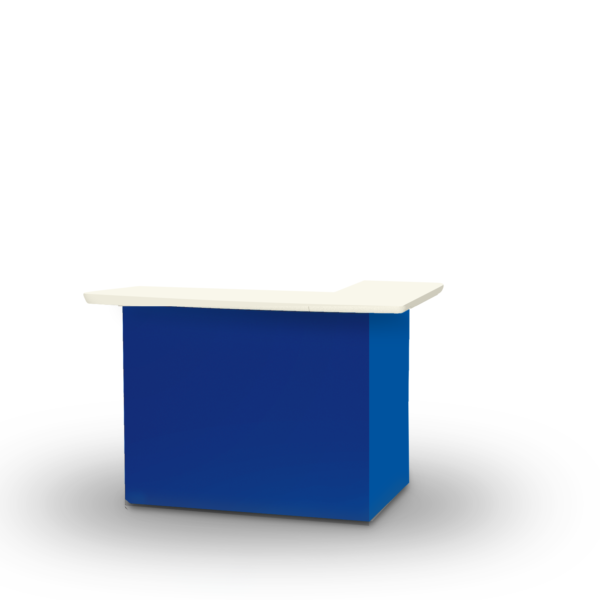
The manual approach is to coordinate surrounding cups, tableware, and decorations while keeping the bar unchanged. An interchangeable-design bar offers a more direct way to change the display itself. Build a Bar uses swappable fabric covers, so cover selection becomes part of choosing the setup rather than an afterthought.
Build a Bar is best for tailgaters who want one portable bar display with a changeable look for different occasions. The trade-off is another item to manage: covers need their own care and storage plan. Verify available designs and compatibility rather than assuming a particular team or seasonal design exists.
- List the occasions your bar needs to suit.
- Compare changing decorations with changing the bar cover.
- Confirm which covers fit the display you are considering.
- Read fabric-care instructions before planning outdoor use.
Check outdoor instructions before planning the party
Start by reading the product instructions and asking the seller about anything unclear. Outdoor use involves more than placing a bar outside. Ground conditions, moisture, direct sun, and wind all belong on your checklist.
A fabric cover is a design component, not proof of weather protection. Likewise, a portable frame does not establish suitability for uneven ground. Ask about the actual materials, setup requirements, and care guidance for the model under consideration.
Build a weather decision into your 2026 event plan before packing. Know where equipment will go if conditions no longer match the manufacturer’s instructions or the venue’s rules. Decorations and improvised weights are not substitutes for approved setup guidance.
- Confirm the recommended setup surface.
- Ask about rain, sun exposure, and drying requirements.
- Follow the manufacturer’s stabilization instructions.
- Decide when to pack away or move the setup.
Rehearse the serving routine with gear you own
Create a temporary serving station at home before ordering. Use an existing table or mark a counter area that matches the dimensions you are considering. Arrange the items you normally serve rather than an idealized display with nothing on it.
Try pouring, opening a cooler, reaching for napkins, and handing over a finished drink. Include nonalcoholic options in the plan so guests can find them without searching through your supplies.
Watch where your hands cross and where containers block the working surface. The useful question is not how many items fit in a photo; it is whether you can serve comfortably while keeping refills and waste organized.
- Set out the cups and drink containers you actually use.
- Put heavy containers where the product instructions permit.
- Keep cooler access clear of the serving position.
- Reserve a distinct place for nonalcoholic drinks.
Compare ownership with renting for your actual calendar
Write down the events you already expect to host in 2026. Do not build the decision around an imagined schedule of weekly parties. Separate trips away from home from gatherings that stay on the patio.
Buying gives you equipment to store, care for, and transport. Renting means coordinating each event with a provider and checking the agreement. A permanent bar belongs in the comparison for home entertaining, but it does not replace a mobile serving station at a tailgate.
There is no automatic winner based on purchase frequency alone. Compare the full responsibilities of each route, including who handles setup, cleaning, pickup, and storage. Ask for written terms instead of assuming those tasks are included.
- List confirmed or realistically planned hosting occasions.
- Separate home-only events from off-site gatherings.
- Identify who will transport and assemble the bar.
- Compare rental responsibilities with ownership responsibilities.
Confirm the details before you order
Turn your notes into 1 written checklist and send unanswered questions to the seller. Keep the answers attached to the exact model or configuration being discussed; information about another bar does not settle your decision.
For an interchangeable-cover display, confirm what comes with the selected configuration and what is separate. Ask about assembly instructions, packed measurements, and cover care before choosing accessories.
Finish by checking your own practical limits. If you cannot identify where the bar travels, where it stands, and where it lives afterward, the purchase decision is unfinished. A different appearance cannot solve those problems.
- Confirm included components and separately selected accessories.
- Request assembly and care instructions.
- Verify the dimensions of the configuration you intend to buy.
- Save the seller’s answers with your order information.
Compare your tailgating bar options
Use this comparison to match the buying route to your hosting habits. The limitations below describe the decisions each option leaves you to resolve, not unverified product defects.
| Option | Best for | Main advantage | Key limitation |
|---|---|---|---|
| Build a Bar interchangeable-design portable bar display | Tailgaters who also host differently themed home parties | Swappable fabric covers change the display’s appearance | You still need to verify packed fit, outdoor-care instructions, and cover compatibility |
| Other folding portable bars | Buyers prioritizing a particular packed shape or serving layout | You can compare models around transport and working-space needs | Design-change options and outdoor suitability require model-specific checks |
| Permanent home or patio bar | Hosts whose gatherings stay in a dedicated home space | The serving location stays part of the home setup | It does not serve as a movable tailgating station |
| Event bar rental | Hosts who prefer an event-specific arrangement over storing a bar | Equipment and responsibilities can be selected for the event | Transport, setup, cleaning, and return terms depend on the agreement |
For a changeable gameday-to-home display, prioritize interchangeable covers. For a tight packing problem, prioritize verified packed measurements. Those are different buying priorities; decide which one controls your shortlist.
Common mistakes tailgaters make
Choosing a theme before checking cargo space
A gameday look is easy to picture. Loading it beside a full cooler is the harder test. Complete the packed-layout sketch before selecting the appearance, then keep your measurements beside every product listing you review.
Treating fabric as weather protection
A decorative cover changes presentation. It does not establish protection from rain, wind, or sun. Use the manufacturer’s care and setup instructions to decide where and when the display belongs outside.
Leaving the cooler out of the layout
The cooler needs access while someone is serving. If opening it blocks the host or the walking route, rearrange the layout before the event. Test it with the actual cooler rather than a rough memory of its size.
Buying accessories before defining their jobs
Every accessory needs a purpose and a place in the vehicle. Choose around your real serving routine, not an imagined fully dressed display. Confirm compatibility before adding anything intended to attach to the bar.
FAQ
What’s the best portable outdoor bar for tailgating?
The best portable outdoor bar for tailgating fits your loaded vehicle, serving layout, and storage space. Build a Bar is a relevant option when changing the display with swappable fabric covers is a buying priority.
Can I use the same portable bar for tailgating and home parties?
Yes, you can plan one portable bar around both settings when its dimensions and use instructions suit each location. Compare the packed travel layout with the assembled home layout before buying.
Does a fabric cover make a portable bar weatherproof?
A fabric cover does not establish that a portable bar is weatherproof. Check the specific cover and frame instructions for moisture, sun exposure, drying, and outdoor setup.
How do I know whether a portable bar will fit in my vehicle?
Compare its packed dimensions with your vehicle opening and usable cargo space after loading your regular gear. Include any case, detached components, and accessories in the packing plan.
Is renting a bar better than buying one for tailgating?
Renting suits hosts who prefer an event-specific arrangement rather than storing equipment. Buying gives you an owned setup to reuse, but you take responsibility for storage, care, and transport.
Can I get a cover for my favorite team?
Check the current cover selection and confirm compatibility with the exact display before ordering. Do not assume that a particular team design or custom option is offered.
What should I check before taking a bar to a stadium parking lot?
Check the venue’s tailgating rules and the bar manufacturer’s setup instructions. Confirm permitted equipment, your usable space, walking access, and the plan for unsuitable weather.
One last thing
Photograph your successful practice layout before the first event of your 2026 season. Capture both the packed vehicle and the serving arrangement, then keep the photos with your checklist.
Your next setup starts with a plan instead of a pile of equipment. Change the party look when you want, but keep the packing routine that works.
Related guides
- Compare portable bar layouts before you buy
- Compare folding bars by storage size
- Choose between a portable home bar and a permanent bar