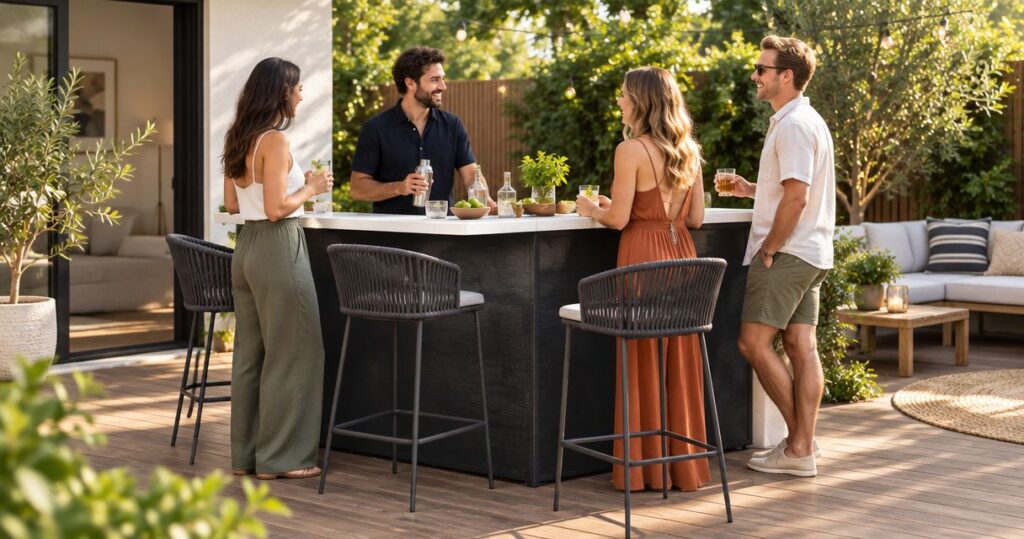
Small-patio outdoor bar planning is arranging a portable serving station so you can pour drinks without crowding guests. Choose a portable outdoor bar for small patios around usable space first, then look for changeable designs that let you refresh the party without buying another bar.
- Choose a portable outdoor bar for small patios by testing serving space, guest movement, and storage before buying.
- Build a Bar portable bars suit hosts who want swappable fabric covers for different party themes.
- Compare folding bars, permanent patio bars, and rentals by how you actually entertain.
- A compact footprint alone does not prove a bar will fit your patio routine.
Why outdoor bar planning matters for small-patio hosts
A small patio has to accommodate more than furniture. You need somewhere to stand behind the bar, somewhere for guests to collect drinks, and a clear route back to the seating area.
Choose the serving layout before choosing the bar. A station that fits against the fence still fails your plan if opening the door or pulling out a chair blocks it.
For your 2026 patio plans, separate everyday use from party use. A portable station lets you plan for an entertaining setup without treating that arrangement as permanent. Portability, however, does not establish whether a particular bar can remain outdoors; check the product's care and storage instructions.
Start with this guide to portable bar layouts for parties if you are comparing where the host and guests will stand. Then use the steps below to test the layout on your own patio.
How to choose a portable outdoor bar for a small patio
Measure the serving area, not just the bar
Start with a tape measure and a simple sketch. Record the patio's usable outline, then mark doors, steps, fixed planters, furniture, and anything else you cannot move for a party.
Next, mark the proposed bar footprint with painter's tape suitable for the surface. Use the actual dimensions of each bar you are considering, not a size inferred from a photograph. Stand behind the outline and act out pouring a drink, reaching for a glass, and stepping aside.
Test 2 layouts before deciding: one along an edge and one near the house. This is a planning exercise, not a claim that either position always works better. Keep the arrangement that preserves access and avoids forcing guests through your preparation area.
- Measure the proposed bar's width and depth against the available space.
- Mark door swings and the space occupied by chairs when someone sits down.
- Include your standing position behind or beside the serving surface.
- Walk from the house to the seats without stepping through the bar outline.
- Photograph both taped layouts for a side-by-side comparison.
Separate preparation, pickup, and returns
Use what you already own to rehearse service: a small table, an empty tray, and a few unbreakable cups. The point is to discover where people and supplies belong before adding another piece of furniture.
Plan 3 service zones: preparation, pickup, and returns. These are functions, not a requirement for three separate tables. On a small patio, used cups can return to a tray near the kitchen instead of occupying the bar.
Keep guest pickup away from the path you use to replenish supplies. If guests must reach across your preparation space for every napkin, the layout needs another pass. Put frequently requested items where guests can reach them without entering your working area.
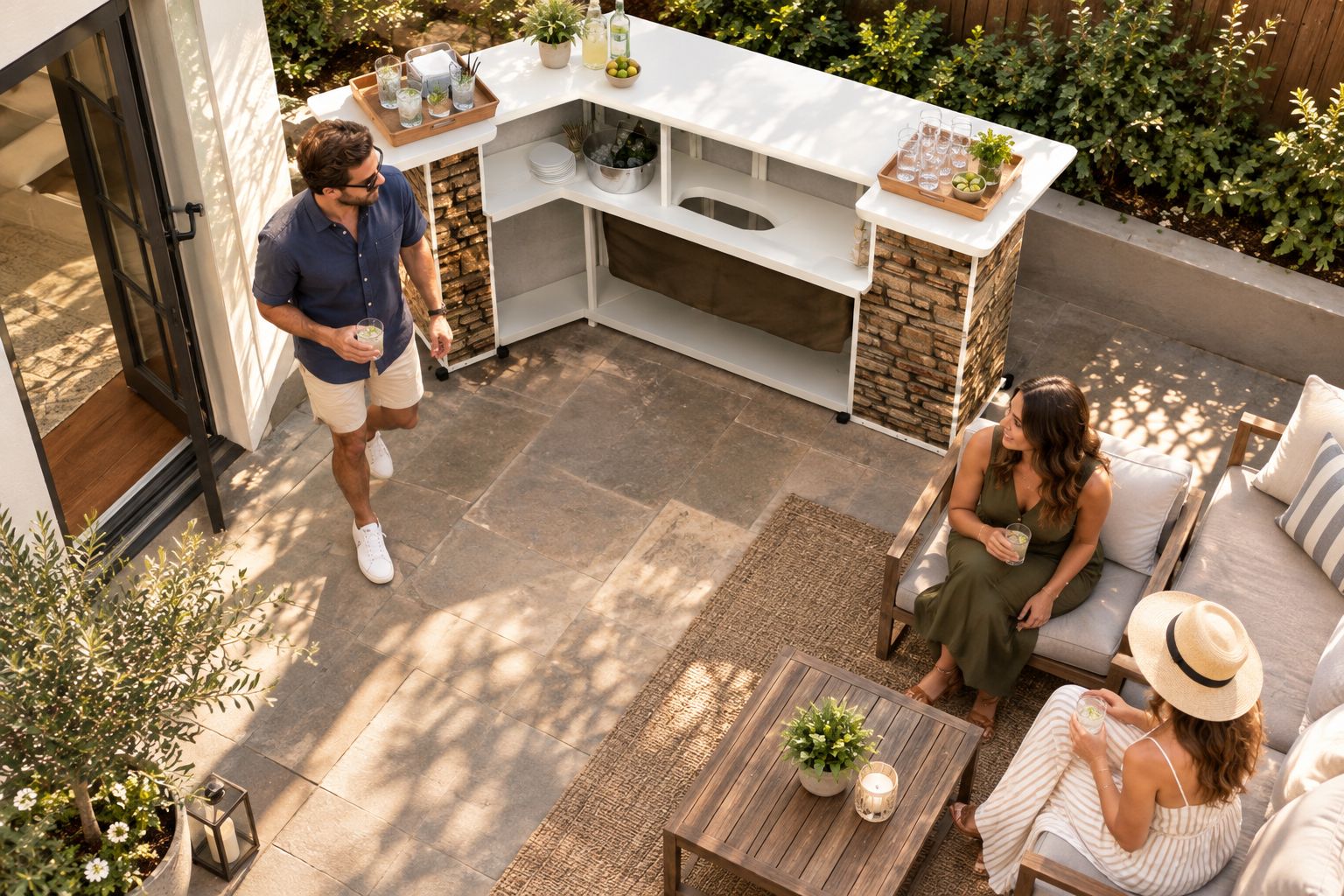
A self-serve arrangement deserves the same rehearsal as a host-served bar. Set out the items in their intended positions, then check whether reaching for cups interrupts someone collecting a drink.
- Preparation: reserve a working area for assembling drinks.
- Pickup: place finished drinks where guests can collect them directly.
- Returns: give used cups a destination away from clean supplies.
- Keep refills accessible without blocking the main walking route.
- Move seldom-used items off the serving surface.
Choose a design you can change between parties
Begin with a list of the occasions you actually host. A summer cookout, a fall gathering, and a gameday watch party call for different decorating choices, but they do not automatically call for different bars.
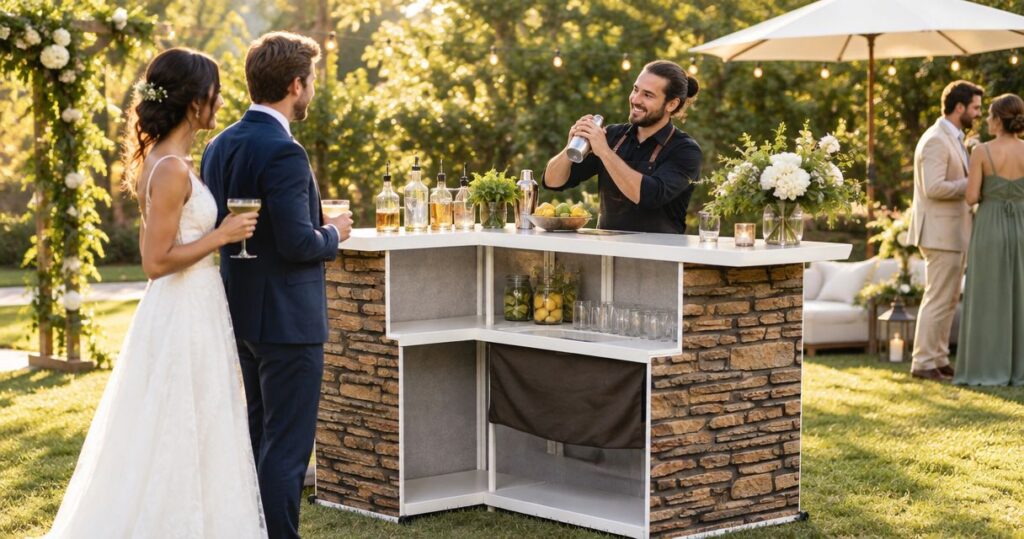
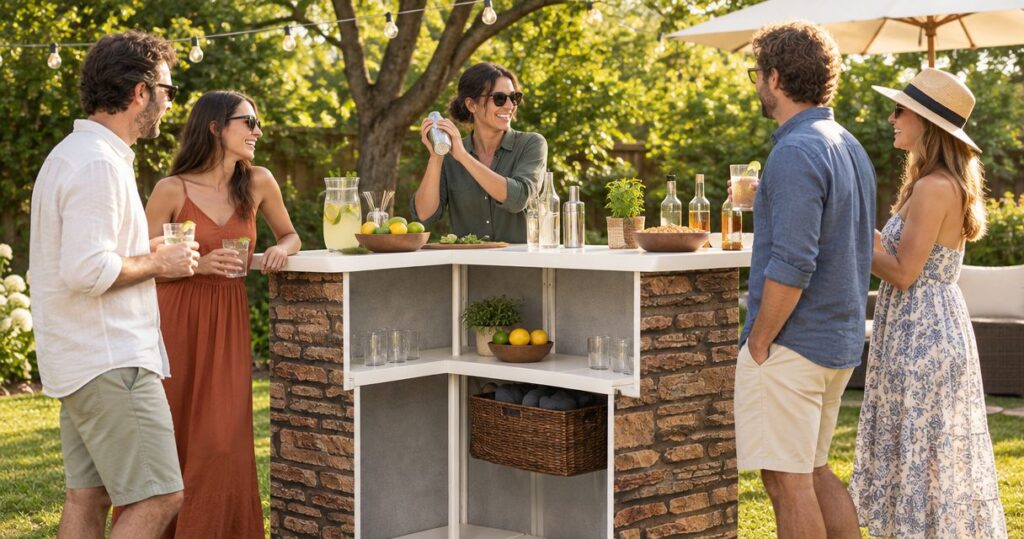
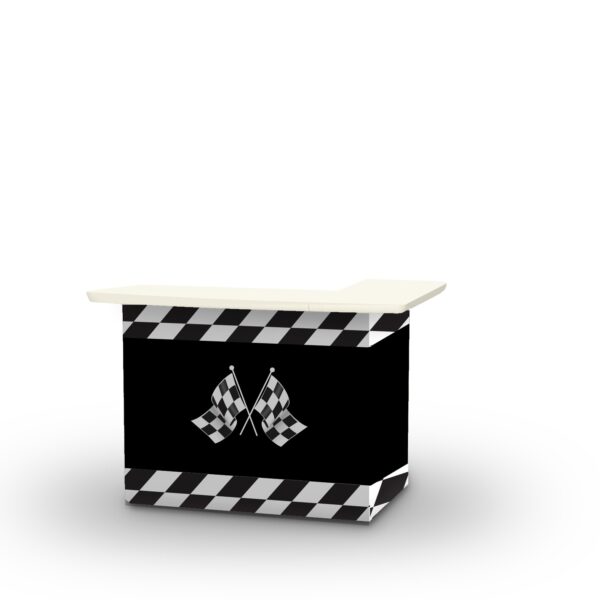
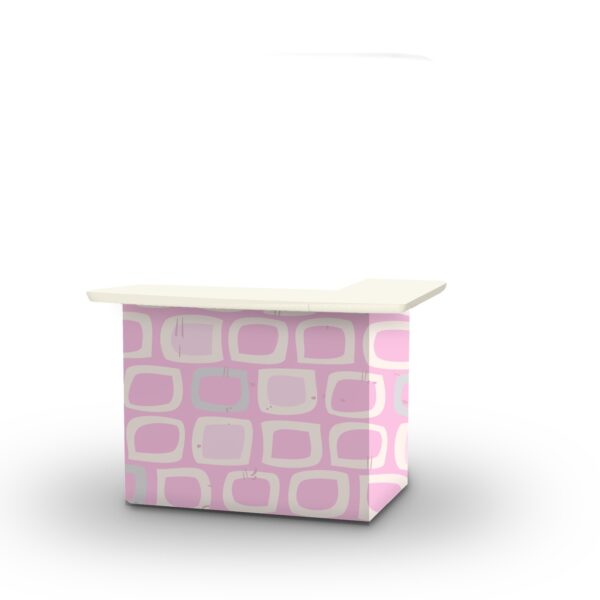
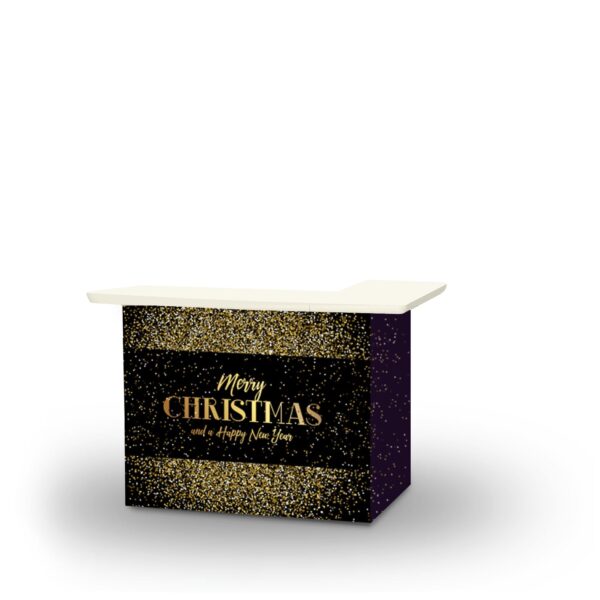
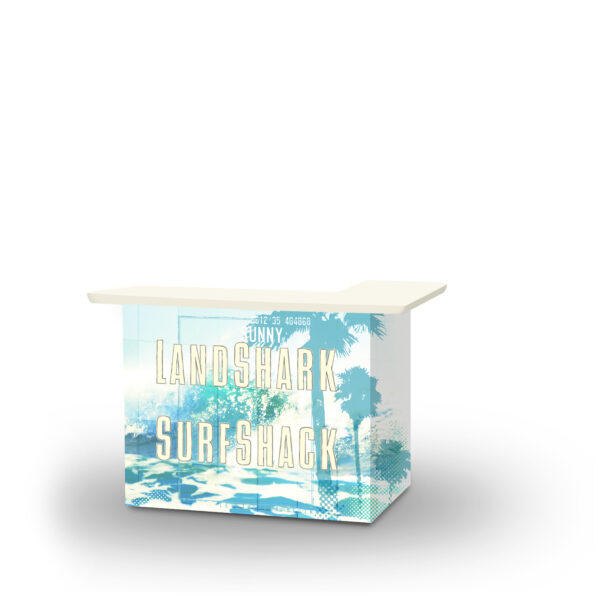
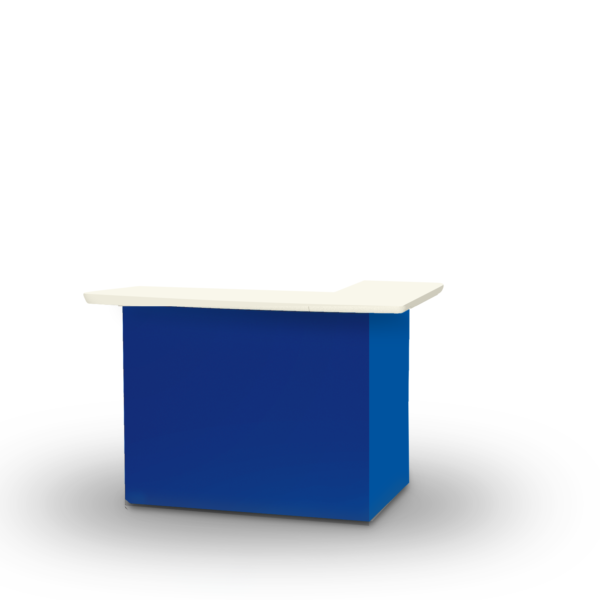
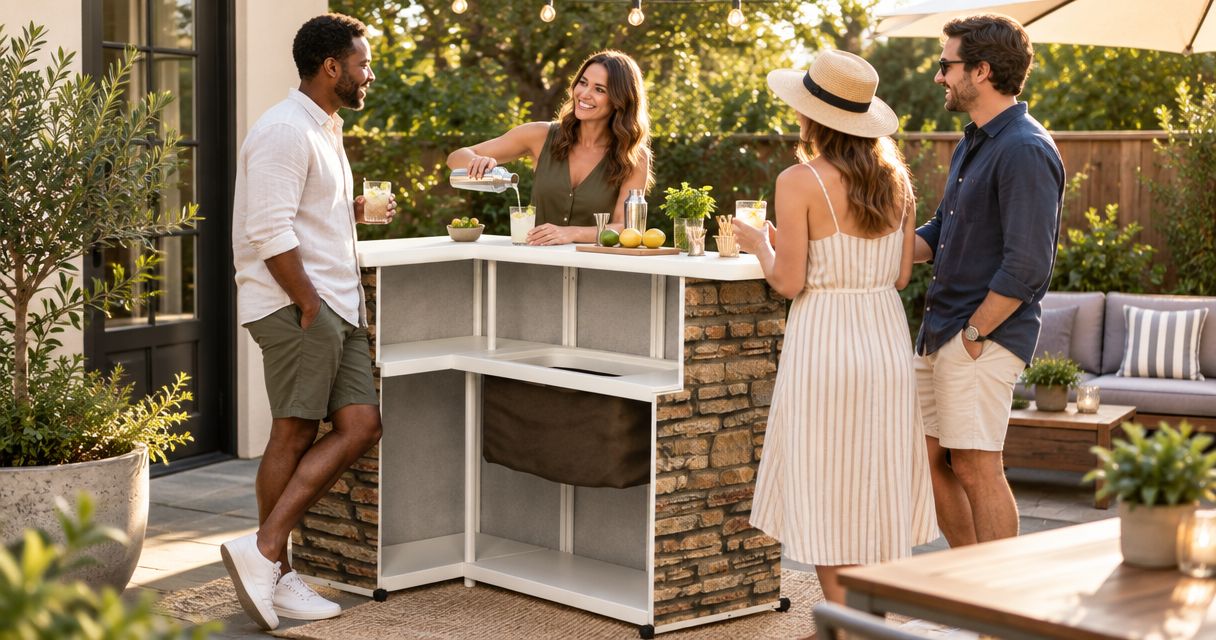
Build a Bar portable bars are best for hosts who want to change the display design with swappable fabric covers. That is the relevant distinction when your goal is a new party look without another bar purchase.
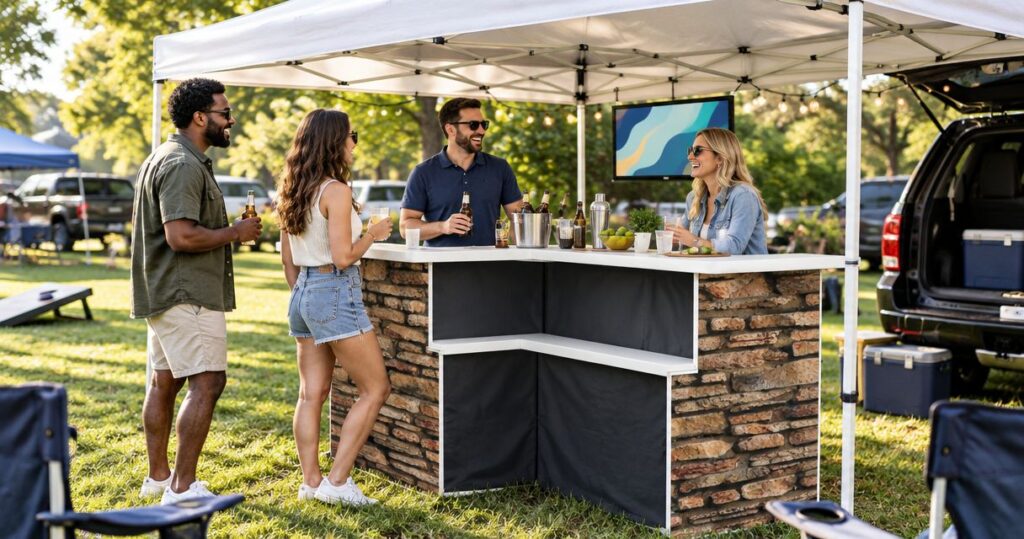
With Build a Bar, interchangeable covers are the starting point for that approach. For your 2026 entertaining calendar, think about how a seasonal or gameday look would work alongside reusable cups, trays, and decorations. Confirm current cover choices rather than assuming a particular team, holiday, or custom design is offered.
The limitation is straightforward: a changeable appearance does not answer a space or weather question. You still need to check dimensions, storage requirements, care instructions, and any accessories you intend to use.
- List the party themes you would genuinely reuse.
- Check which covers fit the bar you are considering.
- Confirm how the cover is changed and cared for.
- Check whether covers and accessories are included or selected separately.
- Choose the physical layout independently of the decorative look.
Check outdoor suitability and storage together
First, write down where the bar will live between gatherings. A garage corner, indoor closet, or other protected storage area creates different requirements for moving and packing it away.
Measure the whole storage route, including doors and turns. Then compare that route with the product's stated dimensions in its transport or storage configuration. Do not assume that a bar described as portable folds flat, fits your vehicle, or moves comfortably for you.
For 2026 shopping, treat outdoor use as a question to verify, not a promise hidden inside a product category. Fabric care, frame care, exposure limits, and storage instructions all matter. If you want a permanently exposed patio fixture, establish that requirement before comparing portable displays.
- Identify a specific storage location before ordering.
- Check storage dimensions and any required disassembly.
- Compare stated weight with what you can comfortably handle.
- Read instructions for moisture, sun exposure, cleaning, and drying.
- Confirm the serving surface is suitable for your intended setup.
Match the setup to the way you serve
Run 1 mock event using empty containers and the supplies you already have. Set out what you would need for your usual gathering, rather than an imaginary party with every drink option available.
A host-poured setup needs preparation space. Self-service needs obvious access to cups, drinks, and napkins. If you switch between those formats, choose an arrangement you can reset without shifting the whole patio.
Avoid treating the portable bar as the storage location for everything associated with drinks. A nearby indoor refill point can hold reserve supplies while the patio station handles serving. Check any applicable venue rules before taking the same arrangement to a tailgate or another shared space.
- Rehearse your most common serving format first.
- Place cups and napkins where guests can identify them easily.
- Keep reserve supplies outside the active preparation area.
- Check that trays sit fully on the usable surface.
- Decide where spills and used items will be handled.
Compare ownership options against your routine
Make a short requirements sheet before comparing listings. Include patio fit, design flexibility, storage, and outdoor care so an attractive photograph does not become the deciding factor.
For your 2026 shortlist, compare the alternatives against the same needs. An interchangeable-cover display addresses changing appearances; a folding bar addresses a particular packing arrangement only when its stated specifications support it. A permanent bar and an event rental answer different ownership questions.
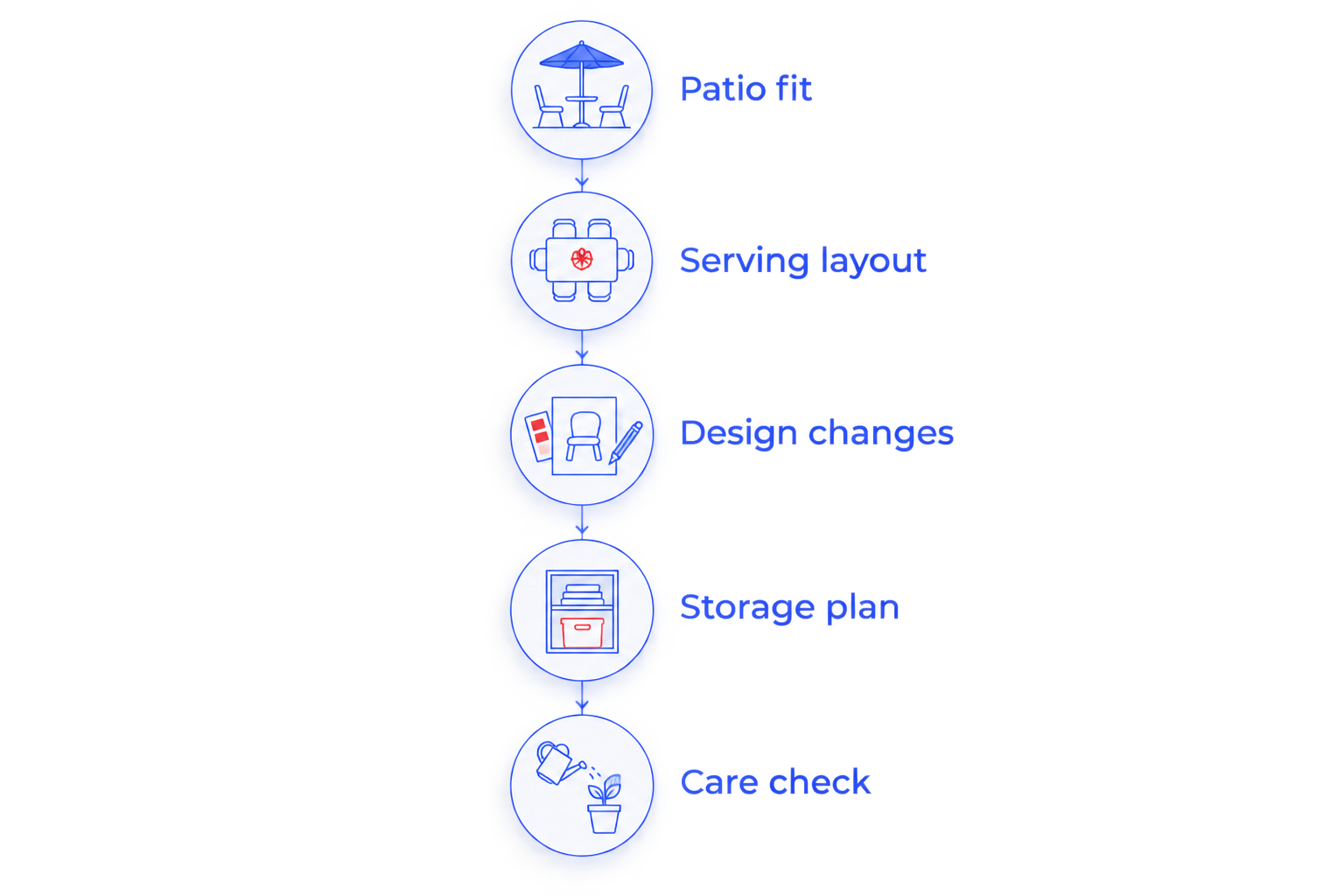
Use this decision sequence: Patio fit, Serving layout, Design changes, Storage plan, and Care check. Stop when an option fails a requirement you cannot change. There is no benefit in choosing an appealing display that has nowhere suitable to go after the party.
Keep the comparison sheet after buying. It becomes your setup checklist when you bring the bar out again, especially if you rearrange the patio between seasons.
- Patio fit: compare the complete working footprint.
- Serving layout: confirm how guests collect drinks.
- Design changes: identify which occasions need a different look.
- Storage plan: verify where every component goes afterward.
- Care check: follow the instructions for the actual materials.
Compare bar options for a small patio
The best option is the one that fits both party day and pack-away day. Compare the specific product or rental agreement, not assumptions about the category.
| Option | Best for | Main advantage | Key limitation or check |
|---|---|---|---|
| Build a Bar interchangeable-cover display | Hosts who want different looks for different occasions | Swappable fabric covers change the display design | Confirm dimensions, outdoor care, cover compatibility, and storage requirements |
| Other folding bar | Hosts prioritizing a folding configuration | A folding format offers another storage approach | Check folded dimensions, setup instructions, and whether the design changes |
| Permanent home or patio bar | Hosts who want a dedicated serving location | The serving station has an assigned place | Its installed footprint remains part of the layout between events |
| Event bar rental | Hosts who prefer event-specific use without storing a bar afterward | You select an arrangement for the occasion | Confirm dimensions, collection or delivery arrangements, and return requirements |
A folding bar is not automatically the smallest option once stored. A rental is not automatically the simplest event plan. Compare the actual measurements and arrangements that apply to your choice.
For 2026 purchases, save the relevant specifications and care instructions with your order information. That gives you a reference when changing the layout, replacing a cover, or preparing for another gathering.
Common mistakes small-patio hosts make
Buying for the empty patio
A bar can fit beautifully before anyone arrives and still compete with occupied chairs. Test the layout with seats pulled out and the door open, not with everything pushed neatly against the wall.
Fix: rehearse the patio as guests will use it, including movement between the house and seating.
Choosing a theme before checking dimensions
A gameday look does not solve a blocked doorway. Decorative flexibility matters only after the serving station fits your space and routine.
Fix: approve the footprint first, then compare covers and decorations.
Treating portable as permission to leave it outside
Portable describes movement, not a universal weather rating. The care instructions determine how a particular bar and its fabric components should be handled.
Fix: decide where the bar will be stored and check exposure limits before buying.
Putting every supply on the bar
Reserve cups, extra containers, decorations, and used dishes can consume the surface you intended for serving. A small patio benefits from a clear distinction between active supplies and backups.
Fix: keep the bar focused on the current serving task and assign refills and returns elsewhere.
FAQ
What’s the best portable outdoor bar for small patios?
The best portable outdoor bar for small patios fits the working area, guest route, and storage location you actually have. Build a Bar suits hosts who also want to change the display design with swappable fabric covers; verify dimensions and outdoor care before choosing.
How do I know whether a portable bar will fit my patio?
Mark the product’s actual footprint, then rehearse serving and walking around it. Include occupied chairs, opening doors, your working position, and the guest pickup area.
Can I leave a portable bar outside after a party?
Follow the specific product’s care and storage instructions rather than assuming it can stay outdoors. Check the requirements for both the structure and any fabric components.
Is a folding bar better than a permanent patio bar?
A folding bar suits a plan that requires packing the station away; a permanent patio bar suits a dedicated serving location. Compare actual storage dimensions and the space each arrangement occupies between gatherings.
How can I change my bar’s look for gameday?
Choose a display with compatible interchangeable covers and confirm the designs currently offered. Coordinate the rest of the setup with reusable trays and decorations rather than assuming a particular team cover is available.
Should I rent a bar for a small patio party?
Renting suits hosts who want an event-specific arrangement without storing the bar afterward. Confirm the bar’s measurements, access route, and rental arrangements before committing.
Where should guests return used cups on a small patio?
Give used cups a designated return point separate from clean supplies and drink preparation. A tray near the route back indoors is one layout to test during your rehearsal.
One last thing
Plan the trip back into storage before planning the first drink. Carry an empty box along the intended route, open the necessary doors, and check where you would set components down. That rehearsal exposes awkward turns and blocked access before a new bar becomes part of your patio.
Related guides
- Portable home bar or permanent bar: which fits your home?
- Compare folding bars by storage size
- Choose a portable outdoor bar for parties and tailgating