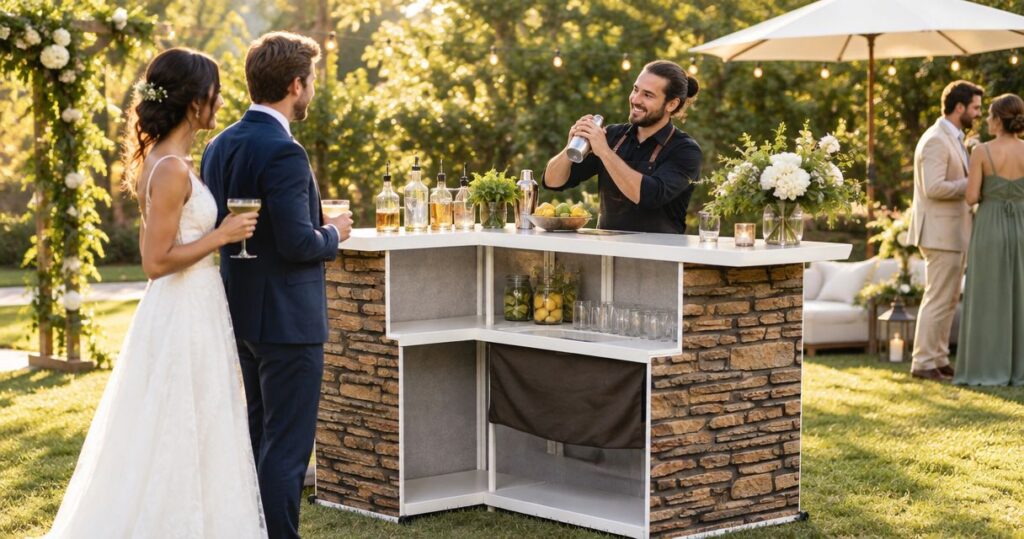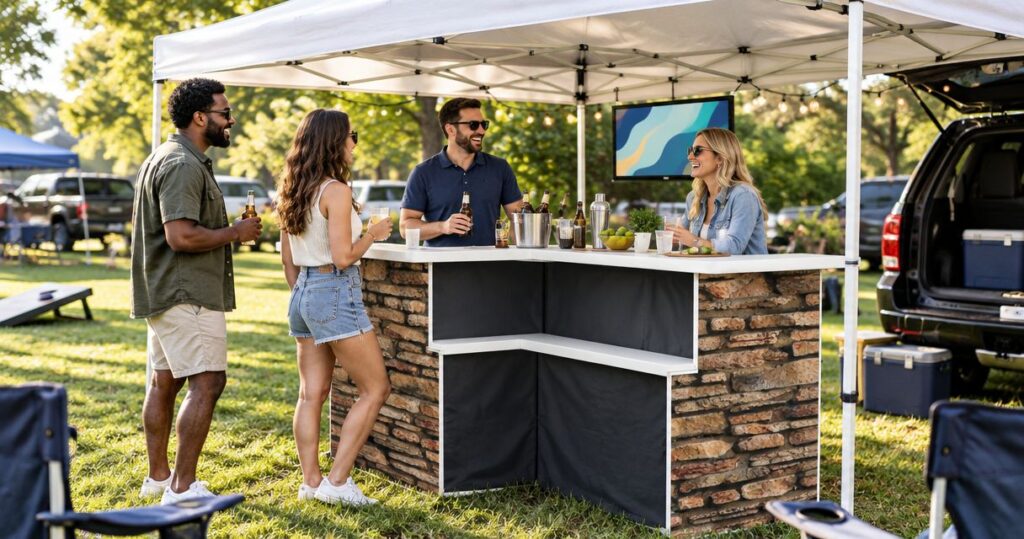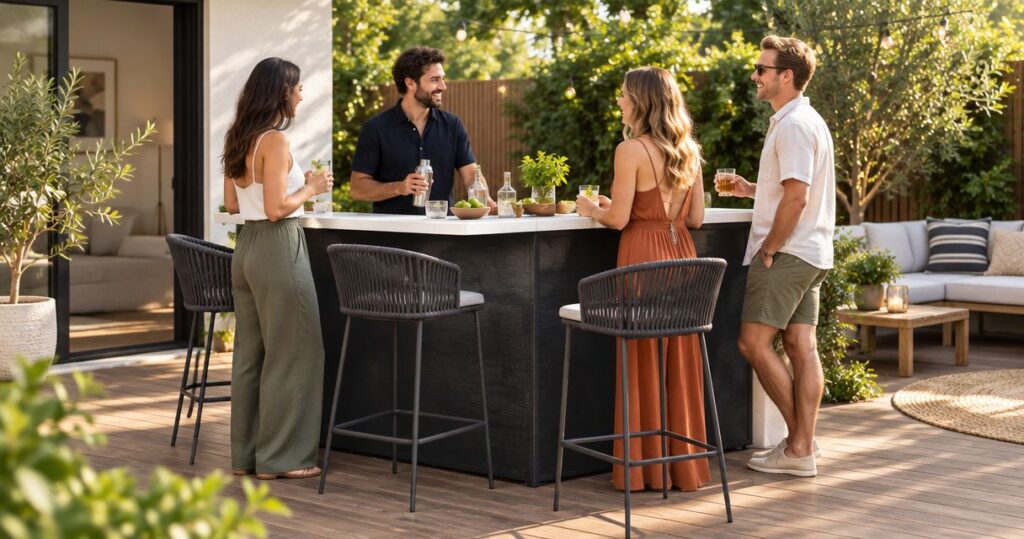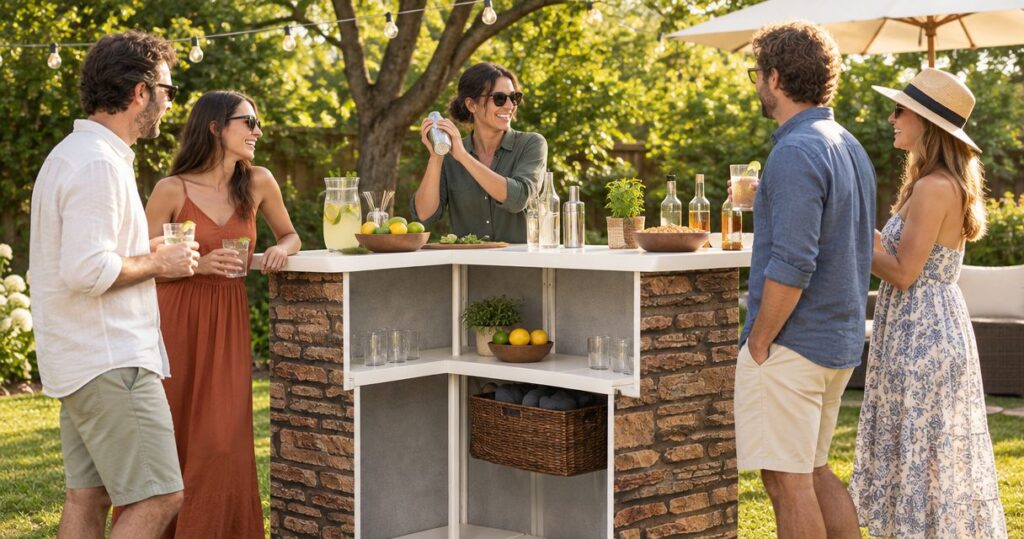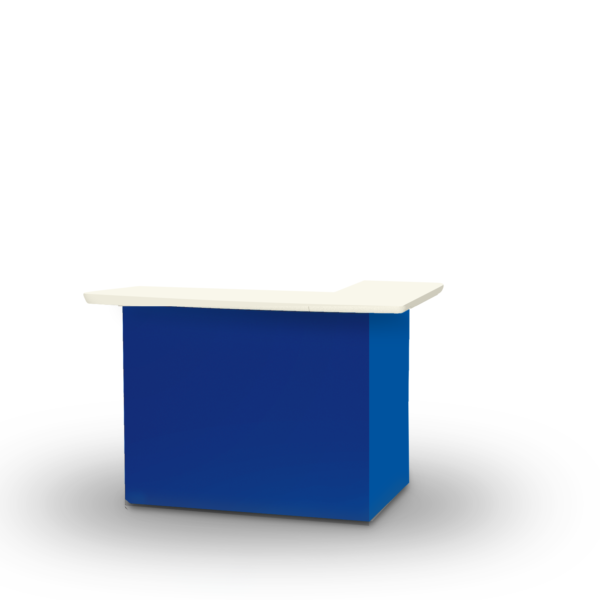
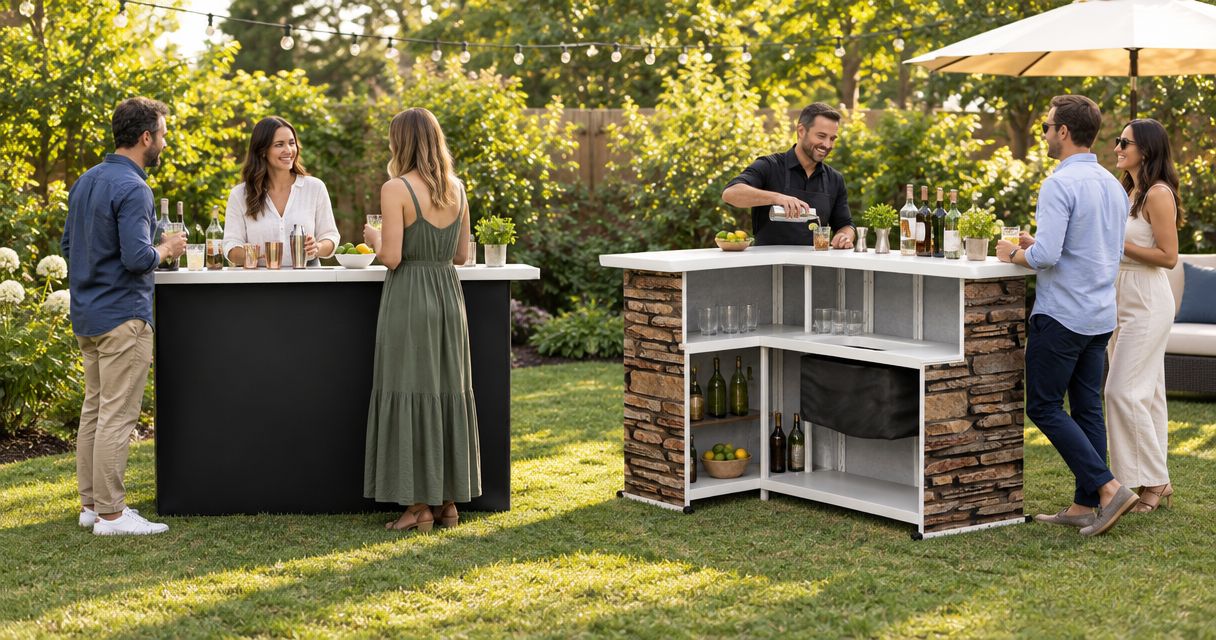
A straight portable bar counter suits a single serving line; an L-shaped layout suits a party where you want separate serving and prep areas. Choose the footprint around your guest route first, then look for swappable covers so you can change the party’s look without buying another bar.
- Choose a straight portable bar counter for a single serving line and an uncomplicated guest approach.
- Choose an L-shaped layout when separate serving and prep areas fit without blocking movement.
- Build a Bar suits hosts who want a portable bar display with swappable fabric covers.
- Compare working space, packed dimensions, and guest flow before choosing a party bar or tailgating setup.
Which portable bar counter layout is better: straight or L-shaped?
A straight counter wins when your priority is a clear serving line. An L-shaped counter wins when the return creates useful working space. Neither shape is automatically the better buy: the layout has to work with your doors, furniture, supplies, and serving plan.
Use this comparison for your 2026 shortlist. These are layout differences, not specifications for a particular product.
| Layout | Best for | Main advantage | Main limitation | Check before choosing |
|---|---|---|---|---|
| Straight counter | Hosts planning a single guest-facing serving line | Keeps the serving arrangement on one continuous face | Prep and pickup compete for that face unless you assign separate areas | Whether guests can approach without blocking a doorway |
| L-shaped counter | Hosts separating preparation from handoff | Provides a return that can serve a different task | The return takes space and creates an inside corner | Whether the corner and the bartender’s exit remain usable |
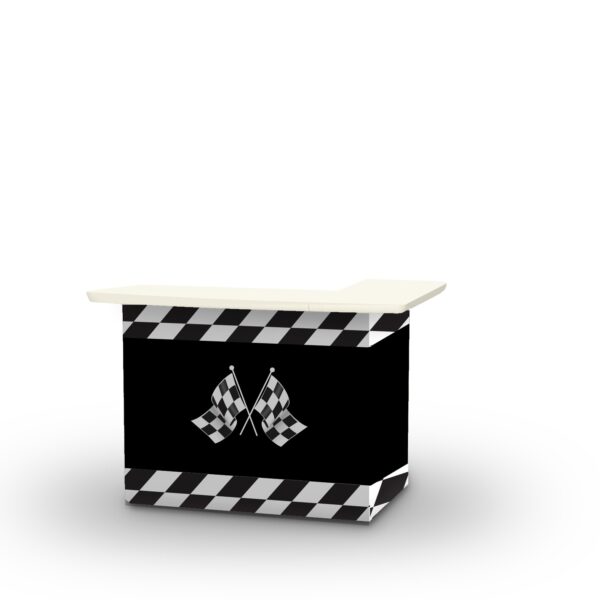
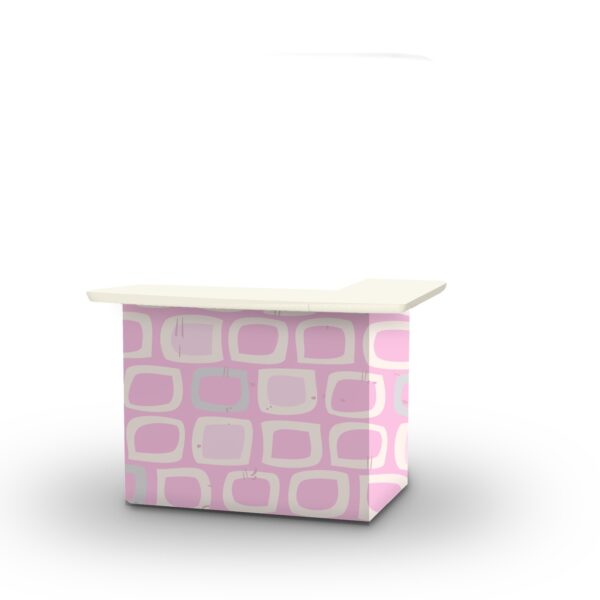
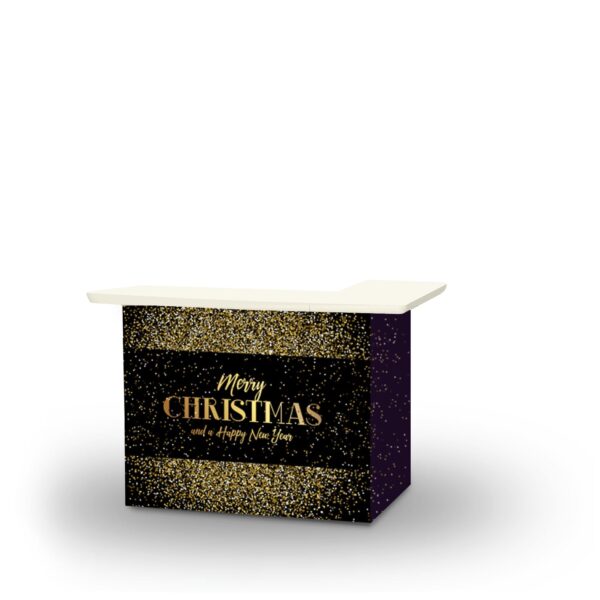
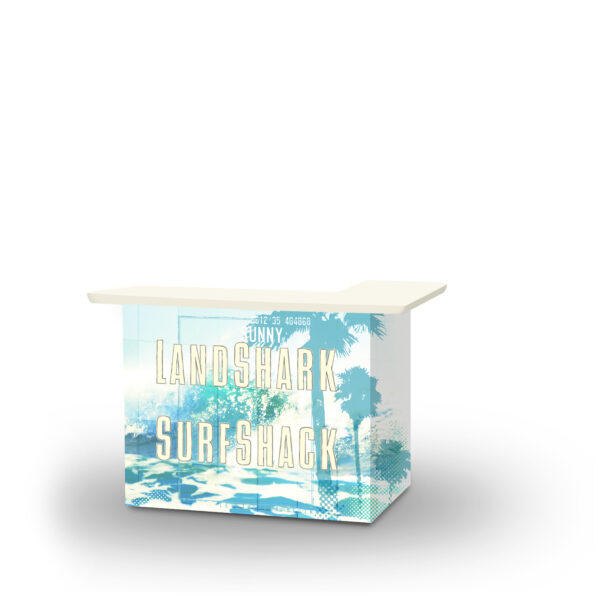
For a design you can change between occasions, Build a Bar offers portable bar displays with swappable fabric covers. Build a Bar is best for hosts who want a portable bar display with a changeable design. That benefit addresses appearance; you still need to check the selected display’s dimensions and layout against your space.
Why this matters
A counter that fits against a wall can still interrupt the party. Guests need somewhere to approach, collect drinks, and move away, while whoever serves needs access to supplies without stepping through the same crowd.
Your 2026 buying decision should account for the whole serving area, not just the counter. Include the cooler, waste container, nearby seating, and the route back into the house. A useful counter becomes a frustrating purchase when everything around it has nowhere to go.
Straight counters: best for a single serving line
A straight counter gives you a straightforward way to organize service. Put preparation toward one end and handoff toward the other, then keep the guest-facing edge easy to recognize.
This arrangement works well when your room already provides a natural boundary, such as an open stretch beside a wall. At a tailgate, position the serving face where guests can approach without crossing your unloading route. Check event rules before deciding where the setup belongs.
Choose a straight counter when the serving line matters more than a wraparound work area. Its limitation is that everything shares the same run of countertop. Garnishes, cups, bottles, and finished drinks need assigned places rather than an expanding spread.
Before you commit, picture the busiest moment of your party. If someone collecting a drink would stand directly in front of your supplies, rearrange the stations or choose a different position. Adding counter length does not, by itself, fix an awkward guest route.
L-shaped counters: best for separating tasks
An L-shaped layout adds a return at an angle to the main serving face. Use that return for a distinct purpose, such as preparing drinks while the main face handles pickup.
The benefit is task separation, not simply the appearance of a larger bar. At a backyard birthday, for example, the return can hold preparation supplies while guests collect finished drinks from the front. Keep the task assignment clear so guests do not gather around both sides.
Choose an L-shaped counter only when the return earns its space. The inside corner needs to remain useful, and the person serving needs a clear way in and out. A return that blocks access to a cooler defeats the reason for adding it.
Do not assume an L-shaped setup folds, separates, or packs the same way as a straight counter. Check the actual model’s construction and handling instructions. Shape describes the working arrangement; it does not establish transport size or assembly requirements.
Why the right portable bar counter layout varies
Your best layout depends on how the party uses the space. These factors belong on your 2026 checklist before you choose a shape:
- Guest approach: Identify where people arrive and where they stand while waiting. Keep that area separate from a doorway or another necessary route.
- Serving method: Self-service needs accessible cups and drinks. Hosted service needs a clear boundary between the working side and the pickup side.
- Working space: Count the supplies that actually sit on the counter. Keep reserve supplies elsewhere when the setup allows it.
- Transport route: Check doors, vehicle openings, steps, and the path between unloading and setup. Use the model’s packed dimensions, not a product photo.
- Storage location: Decide where every component goes after the event. Include covers and accessories rather than planning only for the counter.
- Design changes: Decide whether you want the same appearance for every party or a display with swappable covers.
For a broader layout check, use the guide to comparing portable bars for parties. Keep your room sketch beside you so the comparison stays tied to your actual setup.
Test the footprint before you buy
A simple rehearsal exposes problems that a product photo cannot. Use the published dimensions of the exact counter you are considering, then test the serving arrangement where you intend to use it.
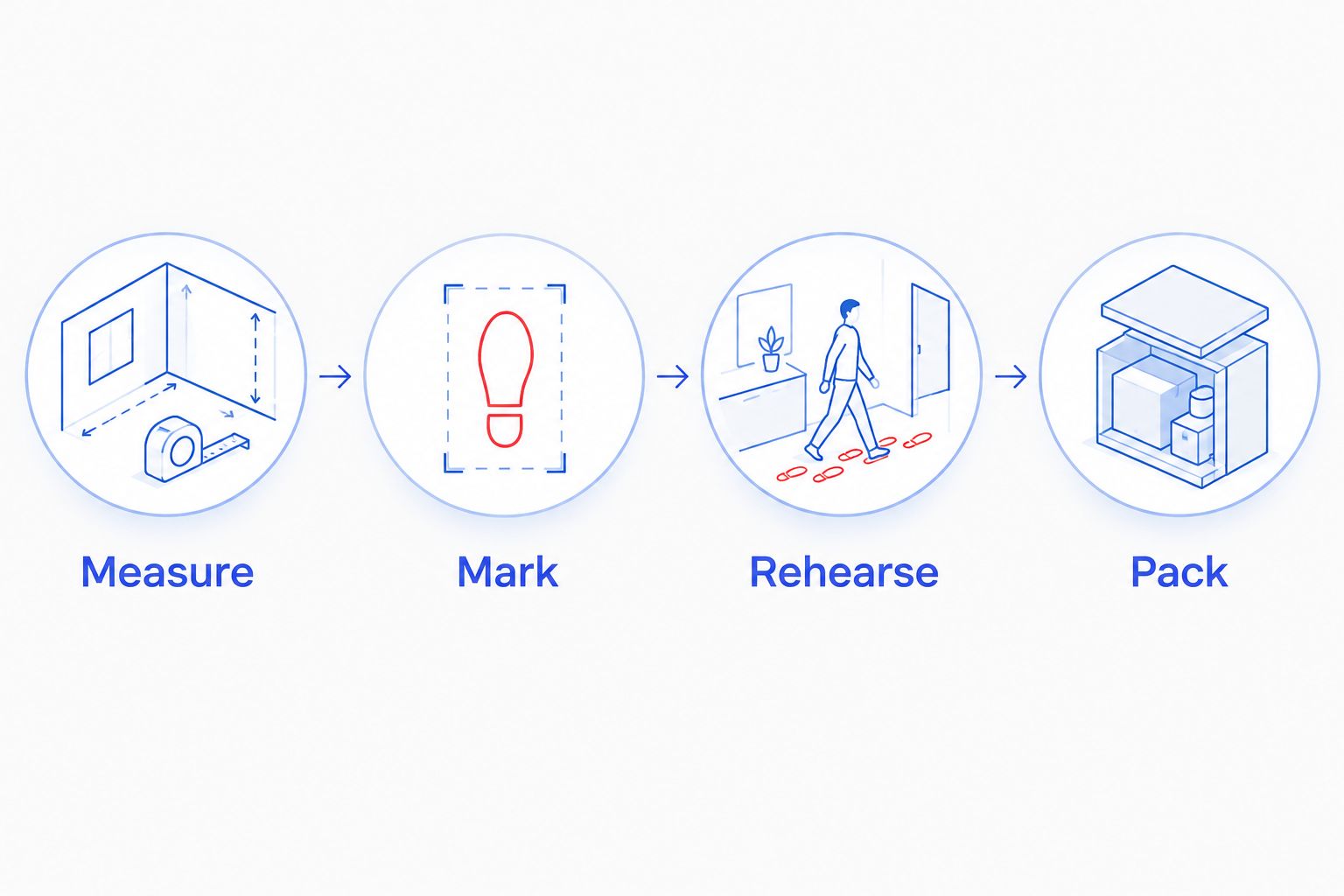
- Measure. Record the intended setup area and the openings along the transport route. Check the counter’s assembled and packed dimensions separately; neither measurement substitutes for the other.
- Mark. Outline the proposed footprint with removable tape or another suitable temporary marker. For an L-shaped layout, mark both runs and the inside corner rather than drawing a single rectangle.
- Rehearse. Put stand-ins where the cooler, cups, and waste container will go. Walk through preparing a drink, handing it over, collecting supplies, and leaving the working area.
- Pack. Plan the route back to storage and identify where the components belong. Check handling and storage instructions before assuming pieces can be stacked or carried together.
During the rehearsal, stand where a guest would wait. Reject a layout that needs the doorway to function as the queue. Move the setup or change the shape before you commit to a counter that depends on guests standing somewhere inconvenient.
Change the party design, not the whole bar
A straight-versus-L comparison answers where the bar goes. Interchangeable covers answer a different question: how the display fits the occasion. Keep those decisions separate so a party theme does not distract you from an unsuitable footprint.
Build a Bar uses swappable fabric covers to change the display’s design. For your 2026 party calendar, think through the occasions you actually host: a birthday gathering, seasonal entertaining, and gameday with friends. Use those occasions to decide what designs to look for, then confirm the specific cover options and compatibility before choosing.
The trade-off is practical: interchangeable covers give you another component to change, handle, and store. They do not create additional working space or resolve a blocked guest route. Choose the physical setup first, then make the design work for the party.
Match the layout to your serving plan
What works best for a self-service drinks station?
A straight counter is the clearer starting point for a single self-service line. Arrange the supplies in the order guests use them, and leave an obvious place to finish and move away. An L-shaped arrangement also works when each side has a clear purpose and both approaches stay open.
Avoid spreading the same supplies across disconnected spots without a reason. Guests should not need to double back through the waiting area to finish making a drink. Walk the route yourself before anyone arrives.
What works best when you are mixing drinks for guests?
An L-shaped counter is useful when its return separates preparation from pickup. Keep working supplies on the serving side and make the handoff point obvious. If your available space makes that separation awkward, a well-organized straight counter is the better choice.
Do not confuse a longer work surface with an organized work surface. Group supplies by task and keep the exit clear. Your serving routine should fit the layout without constant rearranging.
Compare ownership options before settling on a shape
For a 2026 purchase, ask whether you need a movable setup, a fixed installation, or a bar for a particular event. That decision comes before fine-tuning a corner or choosing a cover.
| Option | Best for | What it offers | What to weigh |
|---|---|---|---|
| Portable bar | Hosts who change the serving location | A setup intended to move between uses | Transport, handling, and storage requirements |
| Permanent home or patio bar | Hosts who want a dedicated serving location | A fixed place around which to plan the space | The installation remains part of the room or patio |
| Event rental | Hosts arranging a bar for a particular occasion | An alternative to keeping a bar between events | The agreement’s setup, collection, and use requirements |
Do not assume a folding counter has the smallest packed footprint or that renting removes every setup task. Compare the actual product information or rental agreement. Make the decision around your storage space and hosting routine rather than a category label.
FAQ
What’s the best portable bar counter layout for a small party space?
A straight portable bar counter is a useful starting point when you need a single serving face. Check the full setup, including the working area, guest approach, and nearby supplies, before deciding it fits.
Is an L-shaped portable bar better for entertaining?
An L-shaped portable bar is better when its return creates useful separation between preparation and pickup. It is the wrong fit when the return blocks movement or makes the inside corner difficult to use.
Can I change the look of a portable bar without replacing it?
Build a Bar offers portable bar displays with swappable fabric covers. Confirm the specific cover options and compatibility for the display you choose.
Does a straight portable bar always take less storage space?
A straight layout does not establish the packed storage size. Compare the exact model’s packed dimensions and component list rather than judging storage needs from its assembled shape.
What should I measure before buying a portable bar counter?
Measure the setup area, the transport openings, and the intended storage location. Compare those measurements with the exact counter’s assembled and packed dimensions, then rehearse the guest and serving routes.
Which portable bar layout should I choose for tailgating?
Choose the layout that leaves a clear approach and fits your vehicle, setup area, and event rules. A straight counter suits a single serving line; an L-shaped counter needs enough room for its return and working area.
Should guests serve themselves from both sides of an L-shaped bar?
Use both sides for self-service only when each side has a clear task and an unobstructed approach. If the return is your preparation area, keep guest pickup on the main face instead.
One last thing
The most useful test happens behind the counter, not in front of it. Rehearse reaching your supplies and leaving the working area while someone stands at the pickup point. If that routine fails, change the layout before choosing the cover.
Buy for the working footprint; choose the design for the occasion. That keeps the practical decision and the fun decision in the right order.
Related guides
- How to choose a portable outdoor bar for parties and tailgating
- Portable home bar or permanent bar: which fits your home?
- Best folding bars ranked by storage size