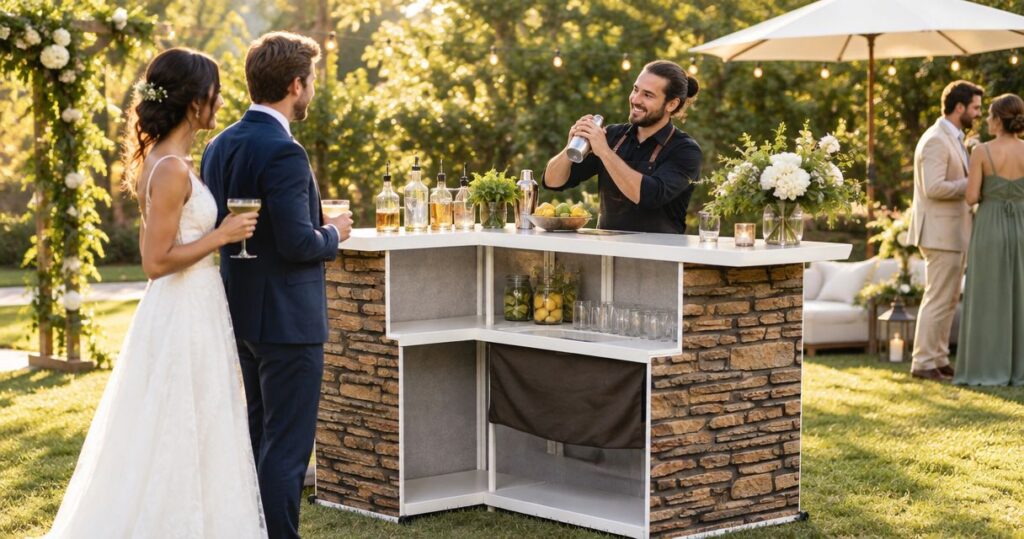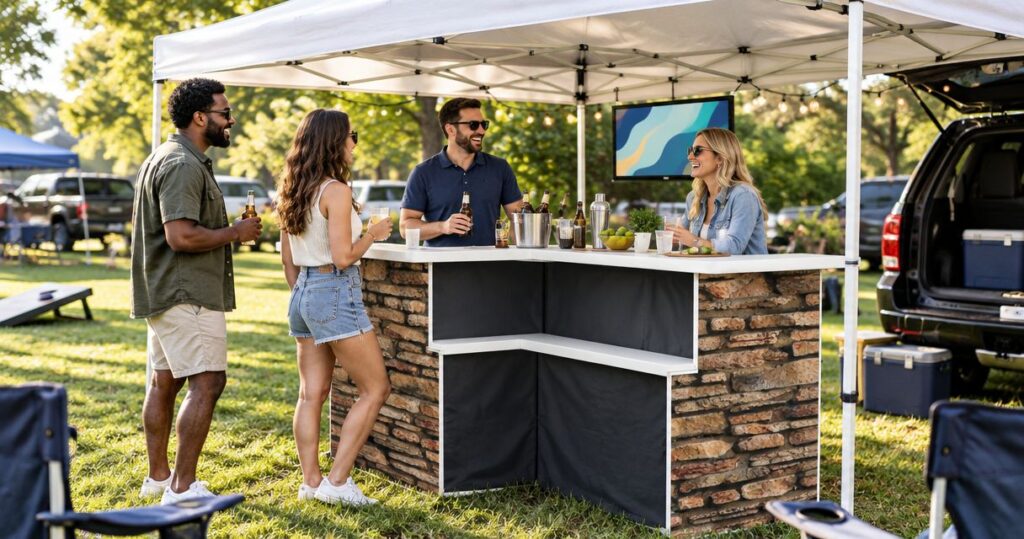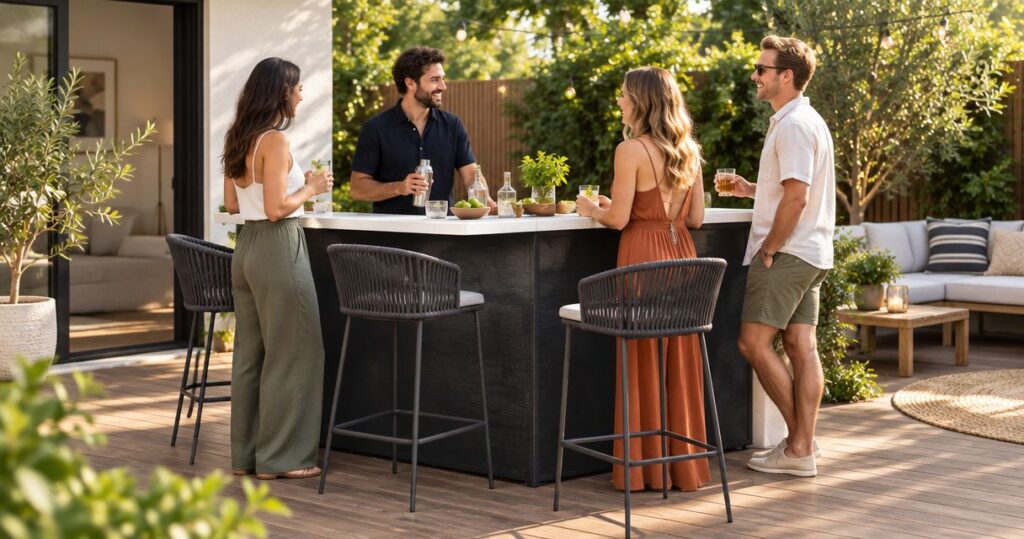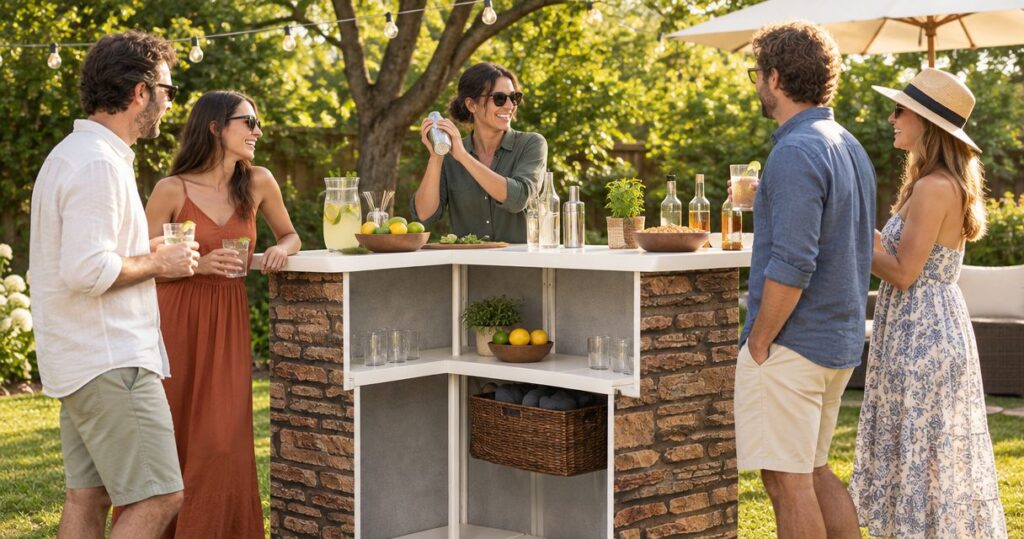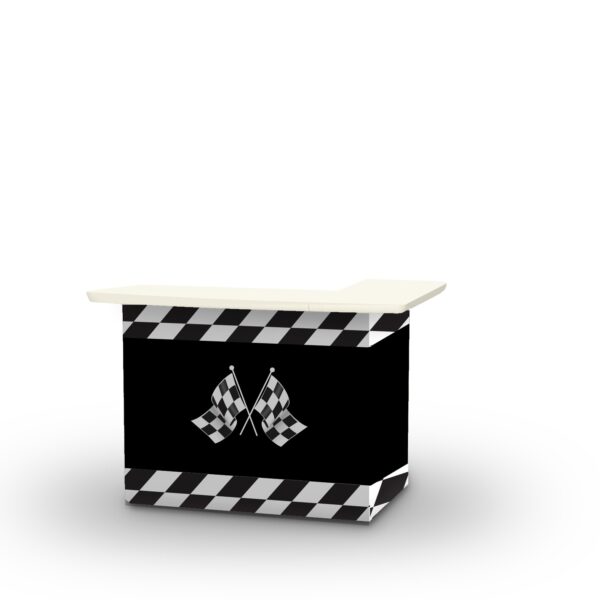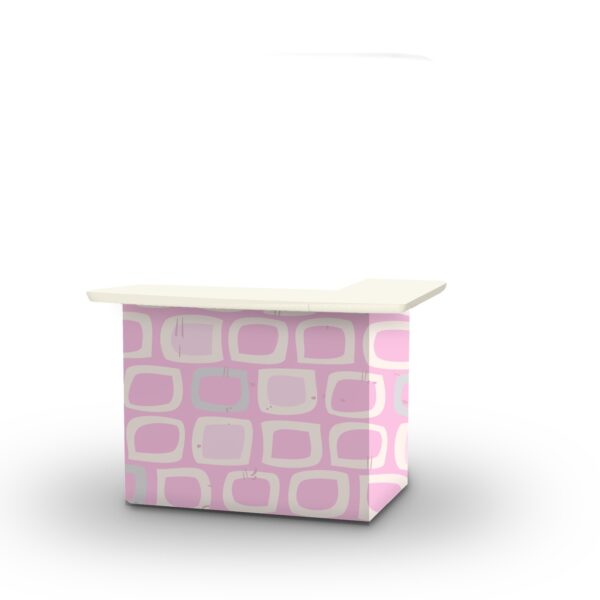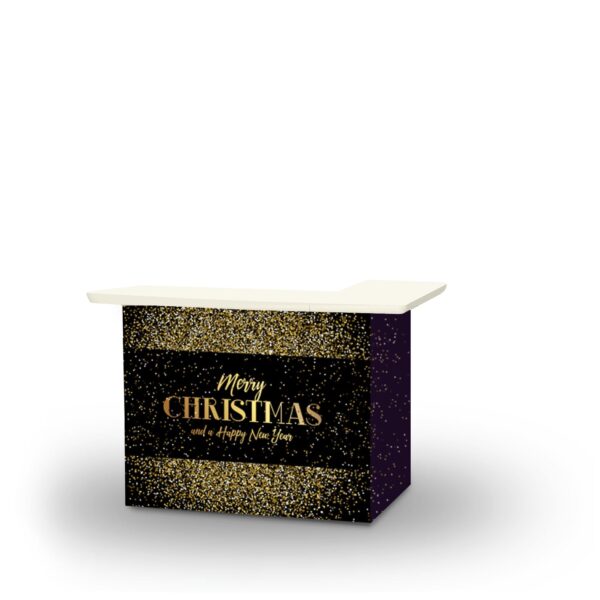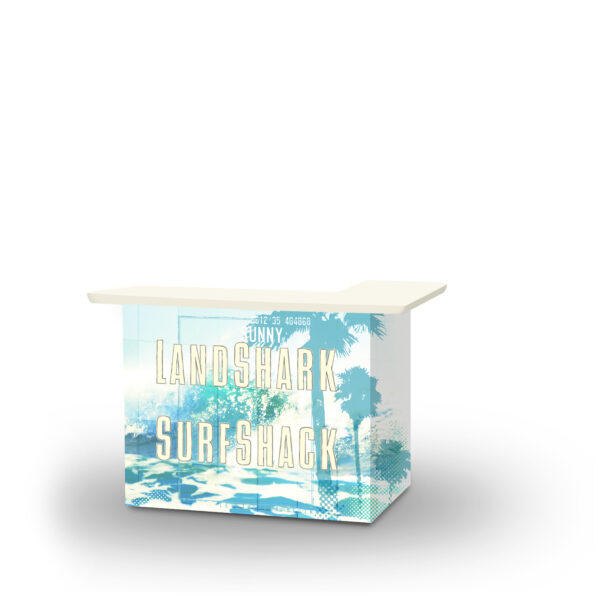
Choose a commercial portable bar that lets you change the event’s look without replacing the whole display, then check how it handles transport, setup, cleaning, and storage. For repeat use, separate the bar’s appearance from its working requirements: swappable covers change the design, but you still need to confirm dimensions, surface care, stability, and suitability for your intended service.
- A commercial portable bar should fit your transport, service, cleaning, and storage routine—not just your event theme.
- Build a Bar suits hosts and promotional teams who want swappable fabric covers for different events.
- Compare portable bars, permanent bars, and rentals by working layout and handling requirements before choosing.
- Confirm care instructions and intended use before treating a display as a beverage-service workstation.
What should you check in a commercial portable bar for repeat use?
Check the complete event routine, not just the assembled bar. For your 2026 shortlist, work through these checks in order:
- Define the job. Decide whether you need a promotional display, a serving counter, or a beverage-preparation station.
- Map the working layout. Identify where drinks, supplies, waste, and guests belong.
- Check transport. Compare the packed dimensions and handling instructions with your vehicle and access route.
- Review setup. Read the assembly instructions and identify every separate component.
- Check care requirements. Confirm how to clean the top, frame, covers, and accessories.
- Plan storage. Give every component a designated place between events.
- Check design changes. Confirm which covers and accessories fit the bar you select.
Start with a portable bar layout comparison if you have not decided how guests and the person serving will use the space. A layout that looks tidy from the front still needs to work behind the counter.
Why this matters for repeat events
A bar has more jobs than looking good while guests arrive. You also have to load it, carry it through the venue, assemble it, keep the service area organized, clean it, and put it away.
Home hosts and tailgaters face the same practical questions as promotional teams. Your backyard party, gameday gathering, and business event can share a display, but each setting needs its own placement and operating plan.
Treat your 2026 purchase as an event system rather than a single piece of furniture. The right choice fits the work before, during, and after the party.
Compare the bar formats before choosing
“Commercial” is not enough information to make a buying decision. Ask what the bar is designed to do, which instructions apply, and whether its layout supports your event.
These options address different needs. The trade-offs below are selection questions, not claims about every model in a category.
| Option | Best for | Main advantage | Limitation or check |
|---|---|---|---|
| Build a Bar | Hosts and promotional teams changing event designs | Swappable fabric covers let you change the display’s appearance | Confirm working dimensions, care instructions, and suitability for your service tasks |
| Other folding bars | Buyers prioritizing a pack-away counter | A folding format supports a temporary setup | Compare packed size, assembly steps, and included working surfaces model by model |
| Permanent home or patio bars | Hosts with a dedicated serving location | The bar can stay in its assigned space | A fixed installation does not serve events at other locations |
| A rented event bar | Hosts arranging a bar for a particular event | Lets you select a bar for that event’s needs | Check the rental agreement, handling responsibilities, and return requirements |
Choose the format around where you host and how you serve. If your gatherings move between your home, a parking area, and a business venue, assess portability directly rather than treating it as a bonus.
For a dedicated entertaining space, compare permanent and portable layouts without assuming either wins on appearance or practicality. Your room, storage space, and event routine determine the better fit.
Check what happens behind the counter
Begin with a pretend service run. Walk through making or handing over a typical drink using the equipment you actually intend to bring.
Where will you put unopened drinks? Where will used utensils go? What happens when someone needs another cup while you are opening a container?
Separate display from preparation
A display surface and a preparation surface are not automatically interchangeable. Before preparing drinks or handling food on a bar, check the manufacturer’s intended use and any requirements that apply to your venue or operation.
For business events in 2026, ask the organizer about beverage service, food handling, and any documentation required before selecting your setup. A product’s appearance does not establish permission to serve.
Assign supplies a home
Make a packing list based on your menu rather than a staged product photo. Include cups, napkins, utensils, drinks, waste bags, and whatever equipment your chosen service requires.
Keep guest-facing items separate from supplies that the server needs to reach. If the bar does not provide the storage you need, plan a separate support area instead of crowding the countertop.
Walk the guest route
Place the bar where guests can approach without blocking an entrance or the route used to restock. Check the working position behind it, too.
For a tailgate, account for nearby vehicles and the space your group actually controls. For a home party, walk the route between the kitchen and serving area before deciding where the bar belongs.
Check transport before you fall for the finished look
Measure the entire journey, not just the destination. Compare the seller’s packed dimensions with your vehicle opening, storage area, doorways, and any turns along the access route.
Check the stated weight and handling instructions as well. Do not assume that a portable bar is comfortable for you to carry simply because it packs away.
Use these questions when comparing your 2026 options:
- Does the packed bar fit through the vehicle opening, not merely inside the cargo area?
- Which pieces travel separately, and how will you keep them together?
- What handling method does the manufacturer specify?
- Will your drinks, coolers, and other party supplies still fit alongside it?
- Where will you place the bar while unloading and packing up?
A home rehearsal answers practical questions that a product photograph cannot. Pack the vehicle as you intend to use it, then check whether the bar remains accessible without unloading unrelated items first.
Make setup and pack-down repeatable
Read the instructions before choosing a bar, especially if different people will handle it at different events. Look for clear assembly steps, component identification, and care guidance.
Do not turn an unverified setup claim into your event schedule. Practice the process yourself and record the time your own arrangement requires.
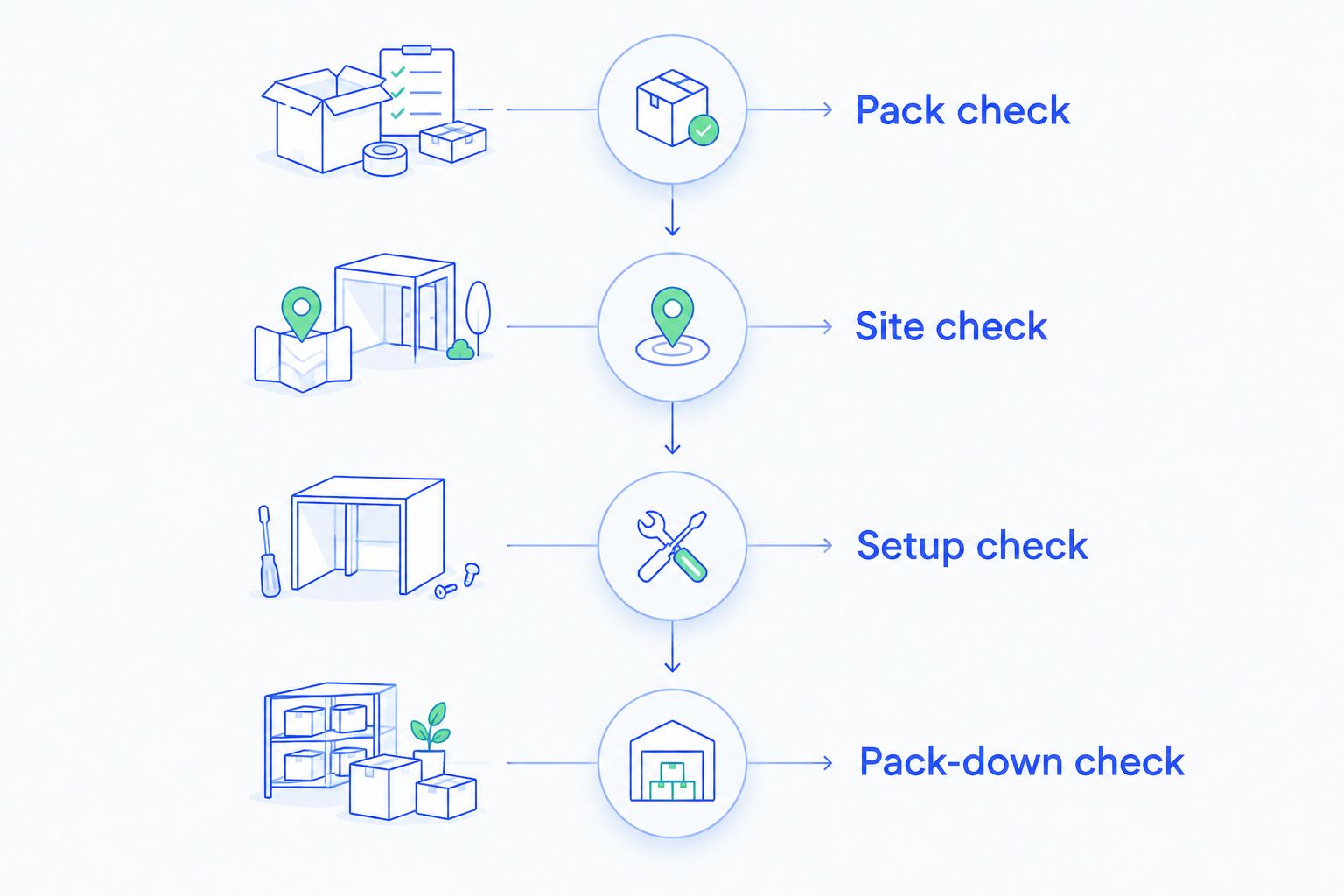
Pack check
Lay out the components against the manufacturer’s instructions before loading. Keep any required fittings and accessories with the bar so they do not become a separate last-minute search.
Site check
Inspect the intended position before assembly. Follow the manufacturer’s guidance for placement, operating conditions, and any securing requirements.
Setup check
Assemble the bar according to its instructions, then inspect the finished setup before adding supplies. Keep loads within the manufacturer’s stated limits and distribute items as directed.
Pack-down check
Remove supplies, inspect for spills, and follow the care instructions before packing. Return each component to its assigned place so the next event starts with a complete kit.
Change the theme without changing the whole bar
A swappable cover gives you a straightforward way to change the display’s look. Think of a backyard birthday, a seasonal gathering, and a gameday party: the design changes while your need for an organized serving area remains.
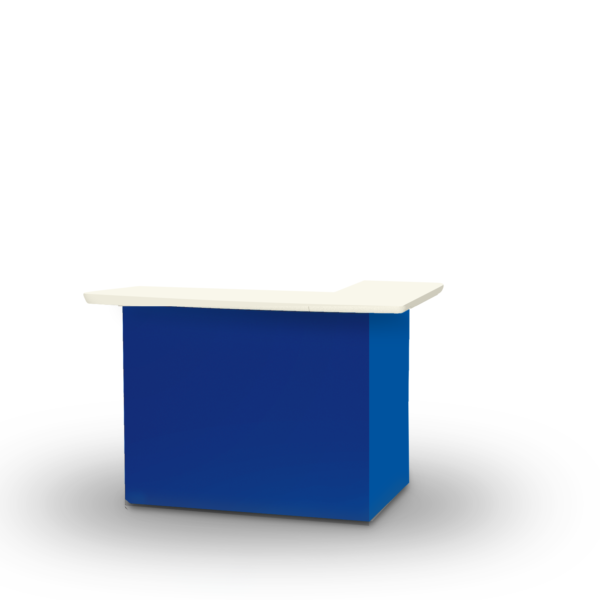
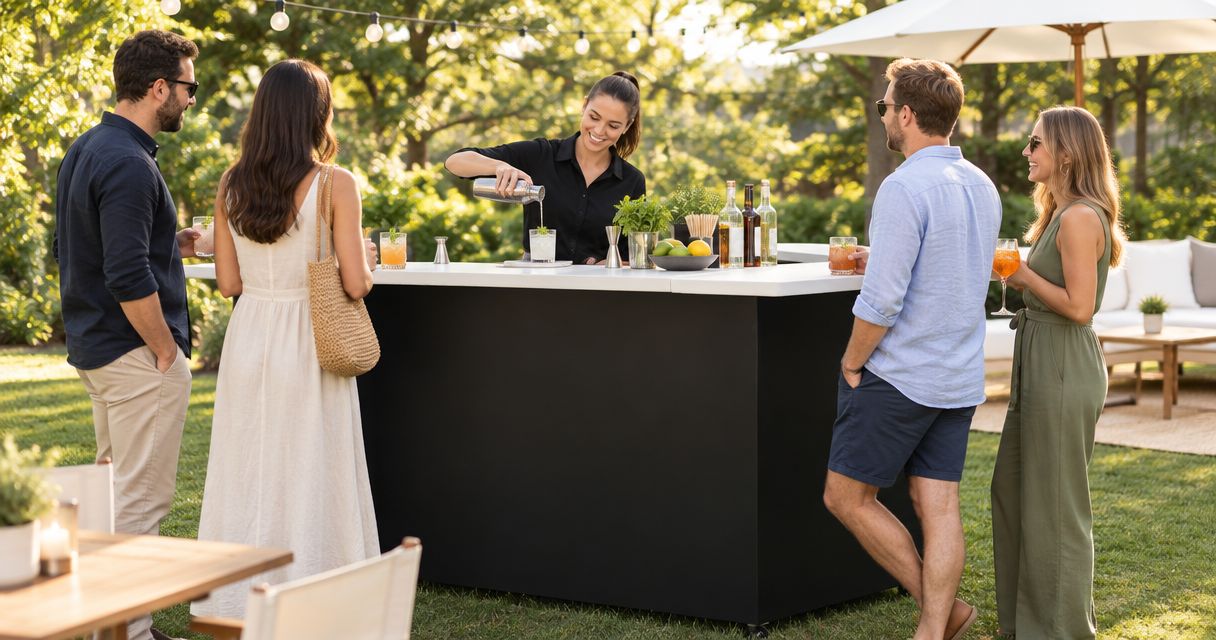
Build a Bar is best for hosts and promotional teams who want a portable bar display with swappable fabric covers. Its relevant advantage is design flexibility; you still need to check the working details against your event requirements.
Before choosing covers for your 2026 calendar, confirm compatibility with the bar you are considering. Ask how to fit, remove, clean, dry, and store each cover rather than assuming all fabric covers use the same process.
Keep the buying decision focused on designs you will actually use. Plan around your recurring occasions, then check the current options instead of assuming a particular team, holiday, or custom design is offered.
Why repeat-use requirements vary
Your event routine determines which checks deserve the most attention. Use these factors to compare bars without relying on a broad “commercial” label:
- Service tasks: Handing out packaged drinks creates a different working layout from preparing beverages with utensils and ingredients.
- Event location: Home parties, tailgates, and business venues require different access and placement plans.
- Design changes: A recurring theme and a calendar of different celebrations create different reasons to choose swappable covers.
- Transport routine: Vehicle openings, carrying routes, and other equipment determine what you can move comfortably.
- Cleanup routine: The materials and manufacturer’s instructions determine how you should clean and store the components.
- People handling setup: Anyone responsible for assembly needs access to the same instructions and complete set of parts.
Avoid scoring a bar highly for features your events do not require. A useful selection checklist reflects your actual gathering, not the longest feature list.
How do you check cleaning and storage requirements?
Check cleaning instructions for each material separately. The countertop, frame, fabric cover, and accessories need the care methods specified for them; do not assume a cleaner suitable for one component suits everything.
Before buying, ask what to do after a spill and how components should be dried before storage. Confirm whether covers have washing restrictions and whether any parts require particular storage conditions.
Storage deserves its own rehearsal. Assign space for the packed bar and separate components, then check that you can retrieve them without emptying the entire closet or garage.
Keep a simple packing list with the equipment. After an event, mark anything that needs attention before putting the kit away rather than leaving the discovery for your next party.
Can a portable bar work for home parties and business events?
A portable bar can serve home parties and business events when its intended use and working layout match both settings. Design flexibility addresses appearance; it does not replace checks for service tasks, venue rules, or handling requirements.
Write a separate supply list for each setting. Your gameday drinks setup and a promotional display do not need identical contents just because they use the same bar.
Should you buy a portable bar or rent for each event?
Buy when you want to own the setup and can manage its transport, care, and storage. Rent when arranging a bar for a particular event better fits your plans and responsibilities.
Compare the full arrangements before deciding. Check what is included, who handles setup and cleanup, and which obligations remain yours; do not assume ownership or renting automatically produces savings.
FAQ
What should I look for in a commercial portable bar?
Look for a commercial portable bar that matches your service tasks, transport route, setup process, cleaning routine, and storage space. Confirm the manufacturer’s intended use rather than relying on the word commercial.
Is a portable bar display the same as a drink preparation station?
A portable bar display is not automatically a drink preparation station. Check the intended use, surface-care instructions, and requirements for your venue or operation before preparing beverages on it.
Is Build a Bar a good fit for different party themes?
Build a Bar fits hosts who want to change a portable bar display’s appearance with swappable fabric covers. Confirm current cover options and compatibility before choosing designs for particular events.
How do I know whether a portable bar will fit in my vehicle?
Compare the bar’s packed dimensions with your vehicle opening and usable cargo space. Include separate components and the other supplies you need to transport.
Can I leave a portable bar outside between events?
Follow the manufacturer’s outdoor-use and storage instructions before leaving a portable bar outside. Portability alone does not establish weather resistance or suitability for unattended outdoor storage.
What should I ask about cleaning a fabric bar cover?
Ask for the cover’s specific washing, drying, stain-care, and storage instructions. Do not assume that cleaning products or methods suitable for the frame are suitable for the fabric.
Should I choose a permanent bar instead of a portable bar?
Choose a permanent bar when a dedicated serving location fits your hosting routine. Consider a portable format when you need to pack the bar away or use it at different locations.
One last thing
Before your next event, rehearse the part nobody photographs: putting everything away. A setup is not finished when the front looks ready; it is finished when you know how to clean, pack, and store every component.
Use that rehearsal to finalize your 2026 checklist. Choose the bar you can manage through the whole event, then choose the look your guests will see.
Related guides
- Choose a portable outdoor bar for parties and tailgating
- Compare a portable home bar with a permanent bar
- Compare folding bars by storage size