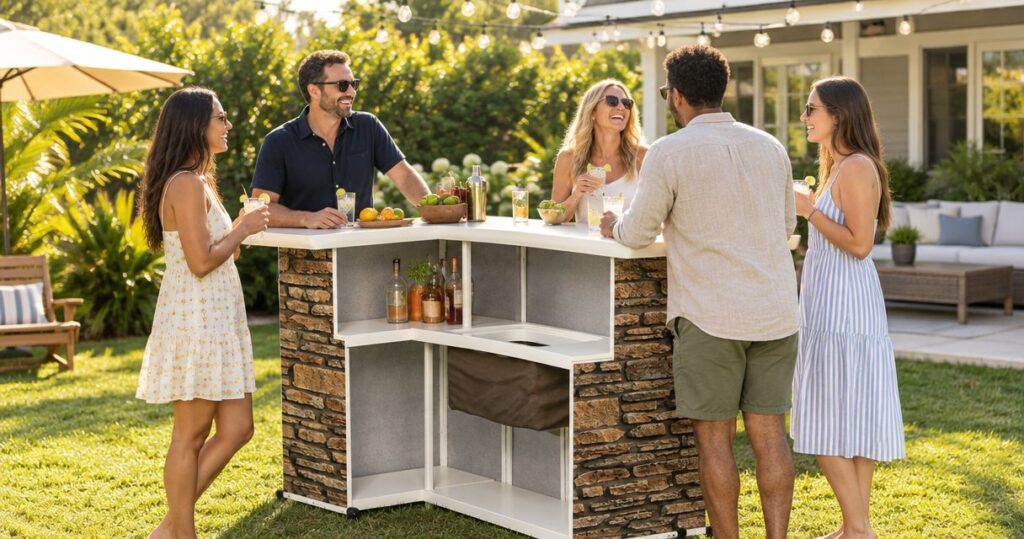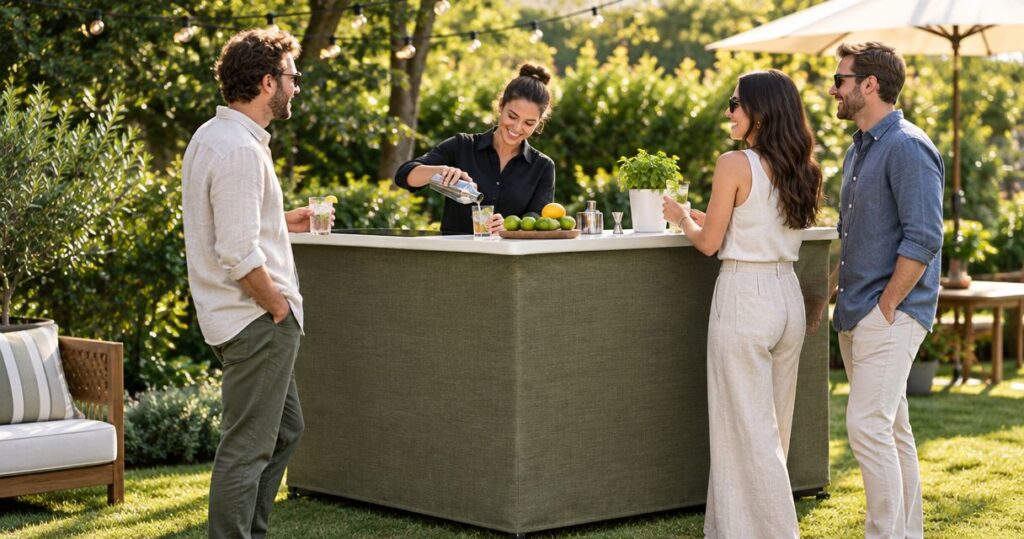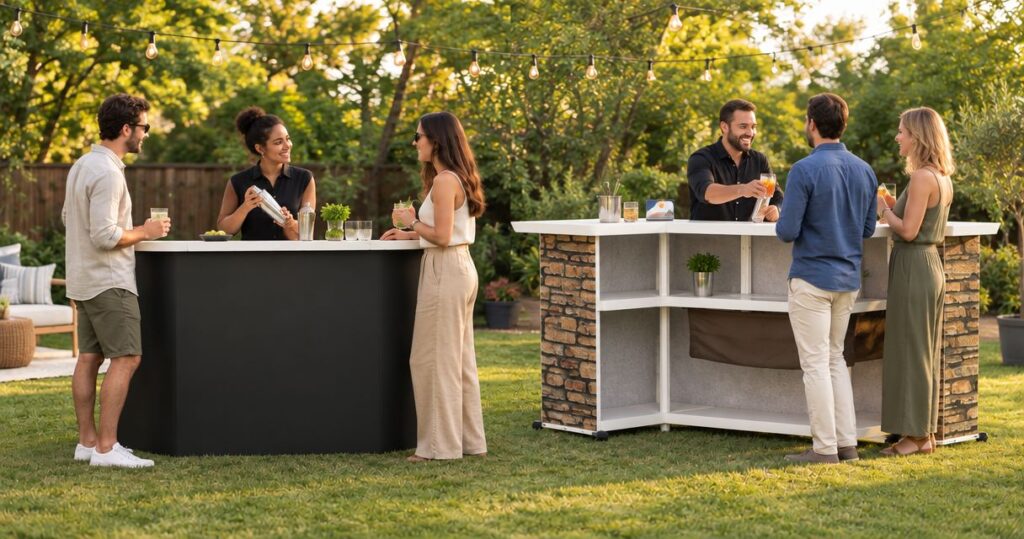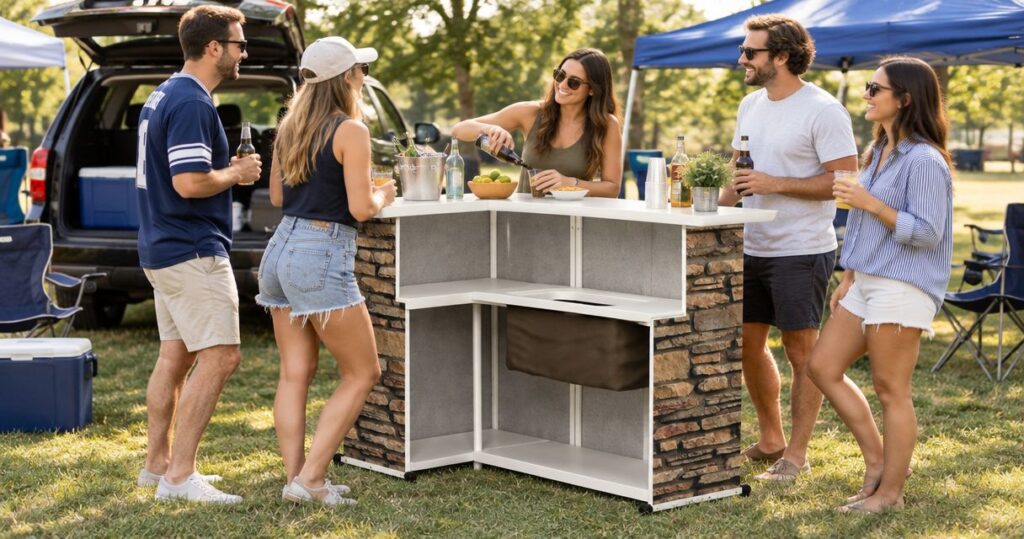
Portable bars need to be anchored or weighted outdoors when the manufacturer’s instructions or venue rules require it—not simply because they are outside. Use only a securing method approved for your specific bar, and stop serving if the bar shifts, rocks or becomes unstable; adding random weights is not a substitute for a suitable setup.
- Do portable bars need to be anchored outdoors? Follow the specific bar’s instructions and the venue’s requirements.
- Anchors and ballast are not interchangeable; use only the securing method approved for your bar and surface.
- Build a Bar suits hosts who want swappable fabric covers; design flexibility does not establish wind resistance.
- Stop using an unstable bar rather than improvising extra weights or tie-downs during the party.
Do portable bars need to be anchored or weighted down outdoors?
There is no universal anchoring rule or ballast amount for every portable bar. Your bar’s instructions, the ground beneath it and the event’s rules determine the appropriate setup. Start your 2026 shopping checklist with the portable outdoor bars for tailgating buyer’s checklist, then confirm the requirements for the exact model you choose.
| Setup approach | Best for | Benefit | Limitation |
|---|---|---|---|
| Manufacturer-approved ground anchoring | Permitted locations with suitable ground | Secures the bar through its intended attachment system | Requires suitable ground, permission and approved attachment points |
| Manufacturer-approved ballast | Surfaces where the specified ballast system is permitted | Avoids penetrating the ground | Weight, placement and attachment must follow the bar’s instructions |
| Relocating to a suitable spot | Sites that cannot support the required setup | Changes the location instead of improvising hardware | Shelter alone does not prove a bar is safe to use |
| Moving service indoors | Conditions outside the bar’s permitted use | Removes the outdoor setup from service | Requires an available indoor location and a revised party layout |
Anchoring attaches equipment to a suitable fixing point or ground system. Ballasting uses weight as part of a securing system. Neither approach earns a blanket recommendation: a method intended for another bar, tent or umbrella is not automatically appropriate for yours.
Why this matters
A backyard birthday and a parking-lot tailgate put different demands on the same serving station. A level-looking patio can still leave a foot unsupported, while a grassy spot can hide uneven or soft ground.
Guests also interact with the bar. They reach across it, set things down and sometimes lean against the counter. Choose a location where the bar stands correctly before you add drinks, decorations or guests.
When should you anchor a portable bar?
Anchor a portable bar when its instructions call for anchoring and the site permits the specified method. Confirm that the bar has designated attachment points and that the proposed hardware is suitable for that model.
Do not drive stakes into an unfamiliar lawn just because the surface is soft enough. Get permission and establish where underground utilities, irrigation and other buried services are located before any ground penetration.
For a 2026 tailgate, check the event’s current setup rules before packing. Permission to bring a portable bar does not automatically include permission to stake into the ground or attach equipment to nearby structures.
- Best for: A permitted site that meets the bar’s stated anchoring requirements.
- Advantage: You can follow a defined securing method rather than invent one.
- Limitation: You need suitable ground, approved hardware and permission to use it.
Never tie the bar to a fence, railing, vehicle or neighboring canopy without explicit approval for that arrangement. A convenient attachment point is not evidence that the complete setup is suitable.
When should you use weights instead?
Use weights only when the manufacturer specifies or approves a ballast method for the bar. Follow the instructions for the ballast type, attachment, position and required amount.
A heavy object beside a bar is not necessarily a securing system. Loose weights can shift, and anything placed around the serving area can create a trip hazard. A cooler, drinks case or storage bin does not become approved ballast simply because it feels heavy.
Hard surfaces deserve particular attention. You cannot assume that a method intended for grass works on a driveway, patio or parking space, and you should not drill into someone else’s surface to make it work.
- Best for: A suitable site where the bar’s approved ballast arrangement is allowed.
- Advantage: The specified system does not require ground penetration.
- Limitation: Ballast still needs correct attachment and placement; it is not permission to keep serving in unsuitable weather.
If the instructions do not describe a ballast arrangement, ask the manufacturer before buying accessories. Do not borrow a weight recommendation from an unrelated product listing.
Why outdoor securing requirements vary
The same outdoor location is not suitable for every bar. These factors explain why a universal instruction such as “just add sandbags” is inadequate:
- Bar design: Follow the specific frame, support and attachment instructions rather than advice for a similar-looking model.
- Ground conditions: Firm, level pavement and soft, uneven grass present different support and securing problems.
- Weather exposure: Wind and gusts affect exposed equipment; a sheltered impression is not a wind rating.
- Covers and accessories: Fit fabric covers, signs and other additions only as directed. Do not assume an accessory is approved for outdoor conditions.
- Venue restrictions: The property owner or organizer can restrict staking, attachments, occupied space and outdoor operation.
- Serving layout: Keep guests and circulation routes clear of feet, ballast, stakes and lines.
Use those factors to choose the site before choosing decorations. If you cannot satisfy the bar’s setup requirements at the planned location, change the location or the serving plan.
How do you check a portable bar before guests arrive?
Make the safety check part of your 2026 party checklist, not something you remember after filling the counter. Set the bar up before bringing out glassware, bottles and serving supplies.
- Read instructions. Confirm permitted outdoor use, assembly steps, securing requirements and any stated operating restrictions.
- Check the site. Get venue permission, inspect the ground and leave space for serving and guest movement.
- Assemble correctly. Install the required parts and confirm that supports, braces and locks are engaged as directed.
- Secure as directed. Use the specified anchors or ballast without inventing attachment points or modifying the frame.
- Monitor conditions. Keep the setup under observation and stop serving if conditions or stability change.
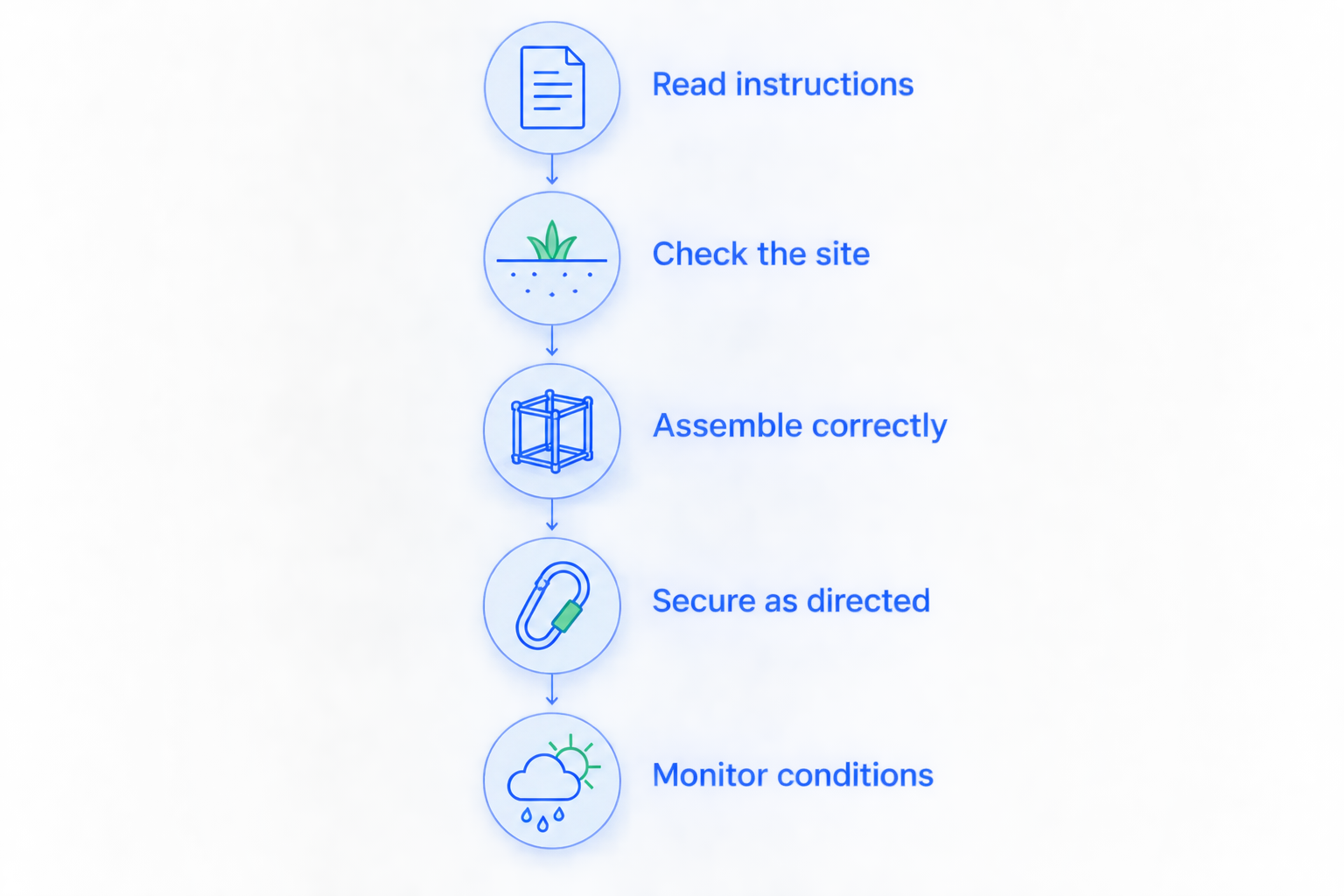
After assembly, check that the bar sits as intended without rocking. Do not conduct your own push, pull or wind test to create an unofficial safety rating.
Keep the manufacturer’s instructions accessible during the event. Whoever takes over serving should know the setup restrictions and when to stop using the bar—not just where the cups are stored.
Does an umbrella change the securing requirements?
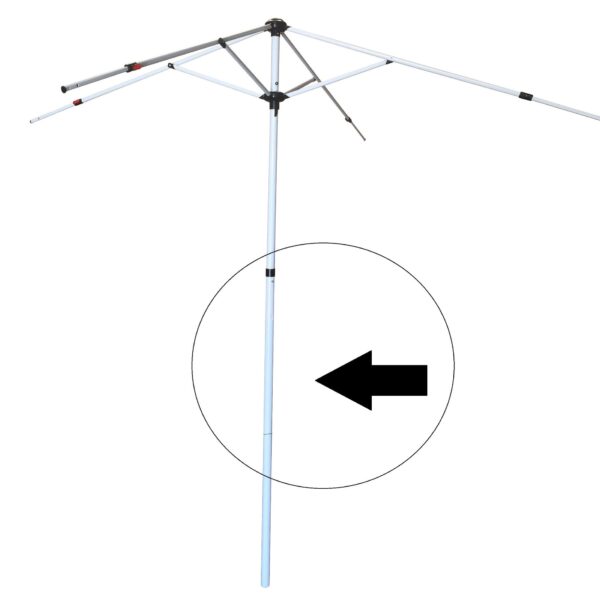
An umbrella adds another item whose outdoor-use instructions you must follow. Do not assume that securing the bar also secures the umbrella, or that an umbrella base makes the bar stable.
Check whether the exact bar-and-umbrella arrangement is approved before combining them. The guide to choosing a portable bar with an umbrella helps organize the buying questions, but the specific equipment instructions govern setup.
For your 2026 tailgate plan, decide where shade belongs before placing the serving station. Keep separate equipment separate unless the manufacturers explicitly approve the connection.
Avoid hanging extra signs, lights or decorations from an umbrella or bar frame without approval. A party theme is not a reason to add unapproved attachments.
Can you leave a portable bar outside when it gets windy?
Do not leave a portable bar operating outside its stated conditions of use. If the bar moves, rocks or loses stability, stop service and keep guests clear while you follow the manufacturer’s shutdown instructions.
A forecast is useful for planning, but it is not a substitute for watching conditions at the site. Do not wait for equipment to move before acting on an approaching storm or an event organizer’s instruction to close down.
Do not keep adding improvised weight to justify staying open. Move service to a suitable indoor location when available, or suspend it. Plan that alternative before guests arrive so the decision does not depend on finding space during bad weather.
Choose the party look separately from the securing method
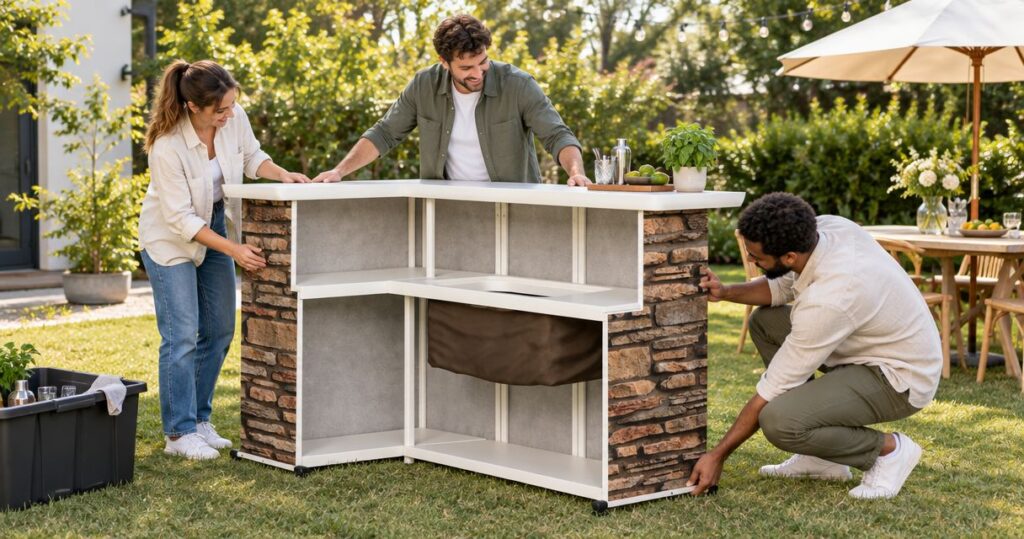
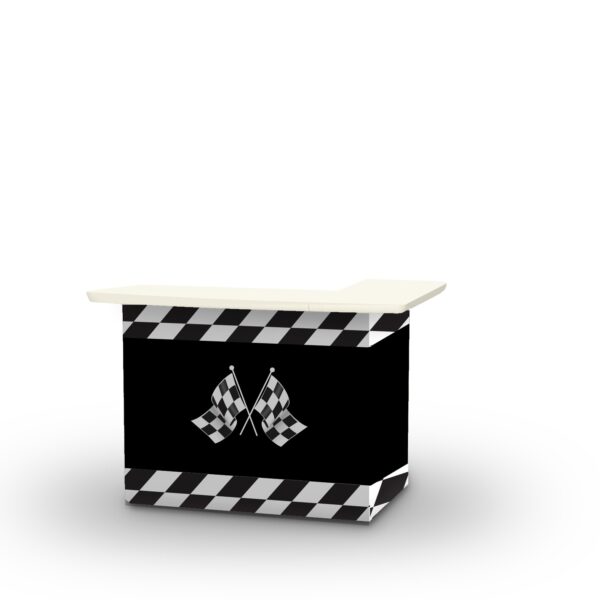
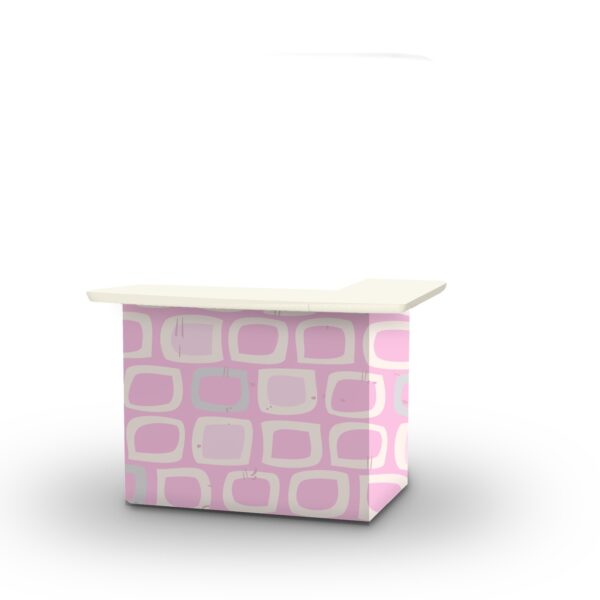
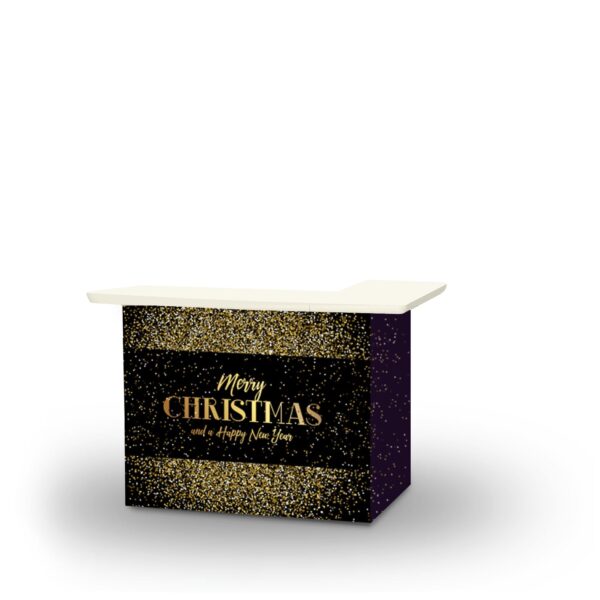
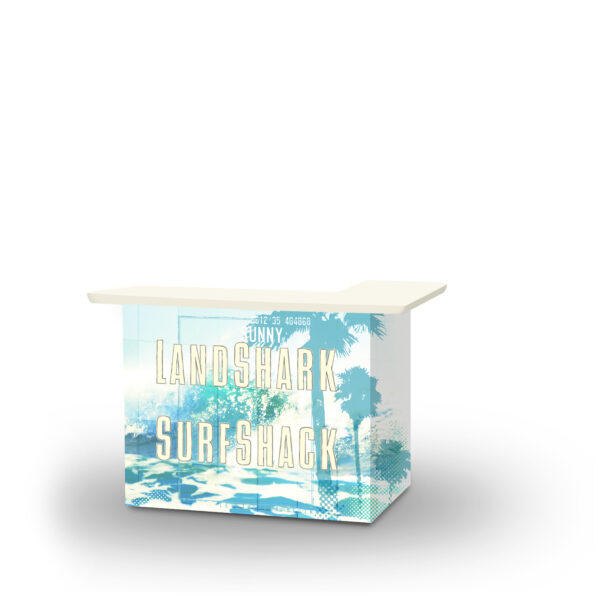
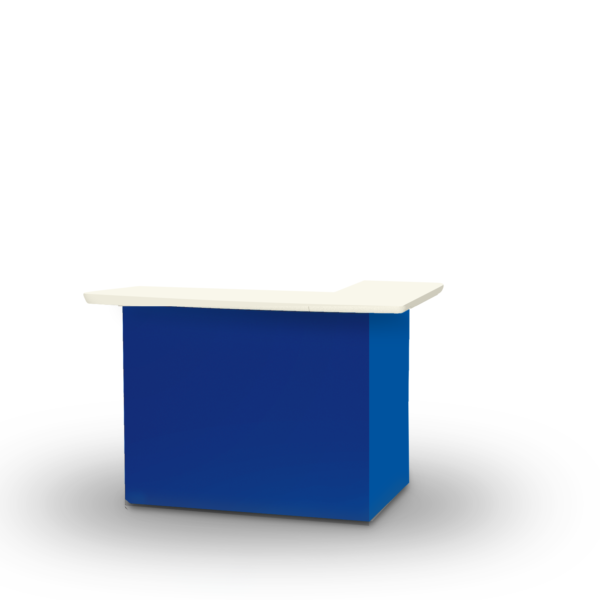
Build a Bar portable bar displays are best for hosts who want to change party designs with swappable fabric covers. That lets you plan a birthday look, a seasonal theme and a gameday setup around changing the cover rather than buying another bar display for each look.
The benefit is design flexibility. The boundary is outdoor suitability: a different cover does not establish a wind rating, approve an anchoring method or change the instructions for the underlying display.
For a 2026 purchase, ask Build a Bar about the exact display and cover combination you intend to use outdoors. Confirm assembly, permitted conditions and any approved securing accessories before choosing additional hardware.
A useful buying question is simple: can you satisfy the setup requirements at the places where you actually entertain? A display that matches the party still needs a suitable place to stand.
FAQ
Do portable bars need to be anchored outdoors every time?
Not every portable bar has the same outdoor anchoring requirement. Follow the exact model’s instructions and venue rules, and do not use a bar that cannot stand securely in the intended location.
How much weight should I put on an outdoor portable bar?
Use only the ballast amount and arrangement specified or approved for your exact bar. Do not estimate from another product or assume that drinks, coolers or loose weights count as ballast.
Can I use tent weights to hold down a portable bar?
Use tent weights only if the bar’s manufacturer approves that specific arrangement. Compatibility depends on the attachment method and placement, not simply the weight of the object.
Can I stake a portable bar into my lawn?
Stake a portable bar into a lawn only when the bar’s instructions permit it and the site is suitable. Obtain permission and establish the location of underground services before driving stakes.
Is a patio safer than grass for a portable bar?
A patio is not automatically safer than grass. The surface must support the bar correctly and allow its approved securing method without creating hazards for guests.
Does a fabric cover make an outdoor bar windproof?
A fabric cover does not establish that a portable bar is windproof. Follow the manufacturer’s instructions for the complete bar-and-cover arrangement and any stated weather restrictions.
Is Build a Bar suitable for changing party themes?
Build a Bar uses swappable fabric covers for changing the display’s design. That suits different party themes, while outdoor setup and securing still require model-specific instructions.
One last thing
Plan where the bar goes when outdoor service stops. Keep that route clear of chairs, coolers and party supplies, and identify who will help clear the serving area.
The useful backup is not a mystery bag of extra weights. It is a serving plan you can change without asking guests to stand beside unstable equipment.
Related guides
- How to set up a collapsible bar for your first party
- How to store a portable outdoor bar between parties
- Is a portable home bar with interchangeable covers worth it?