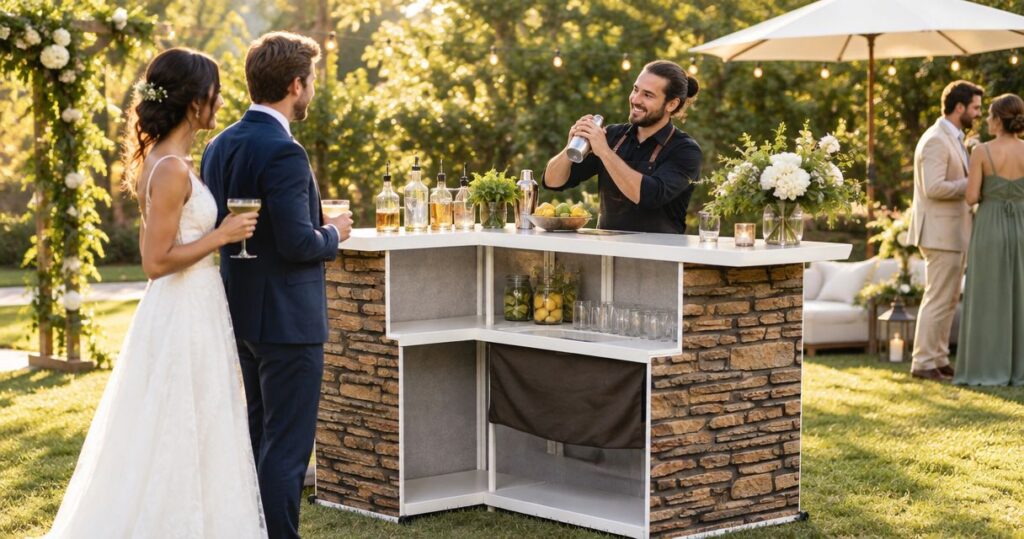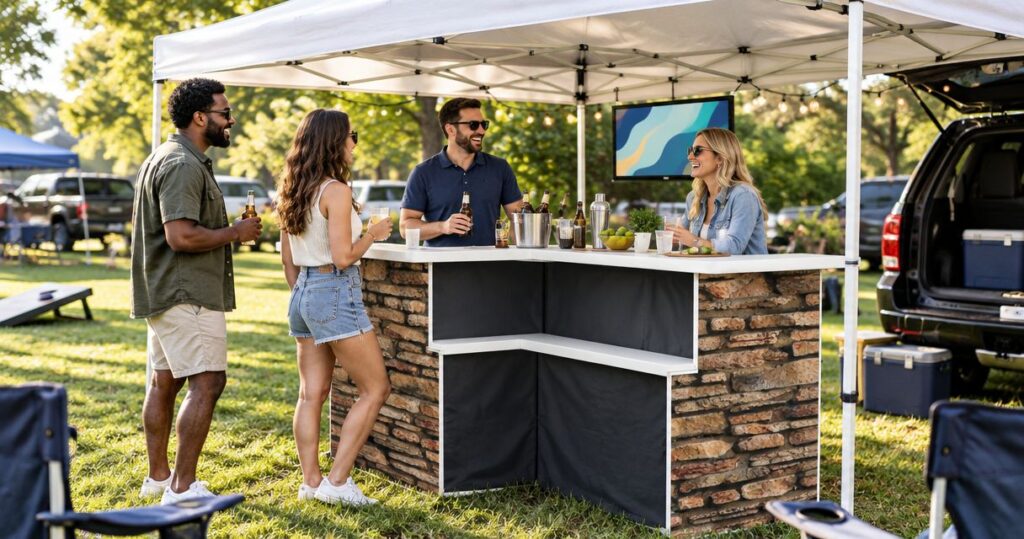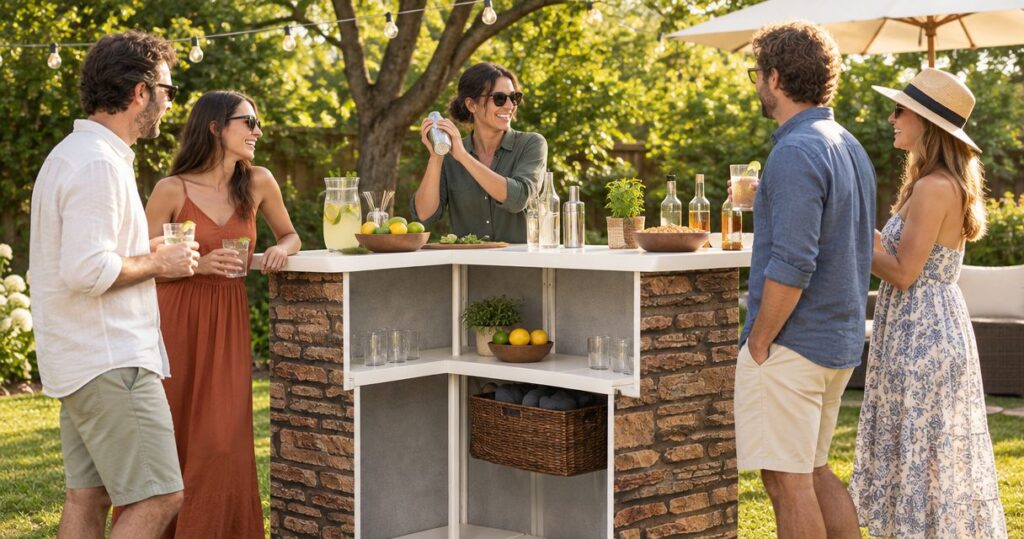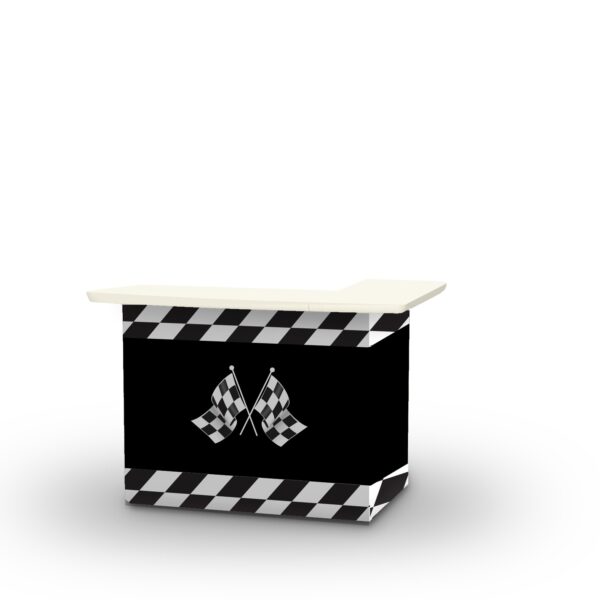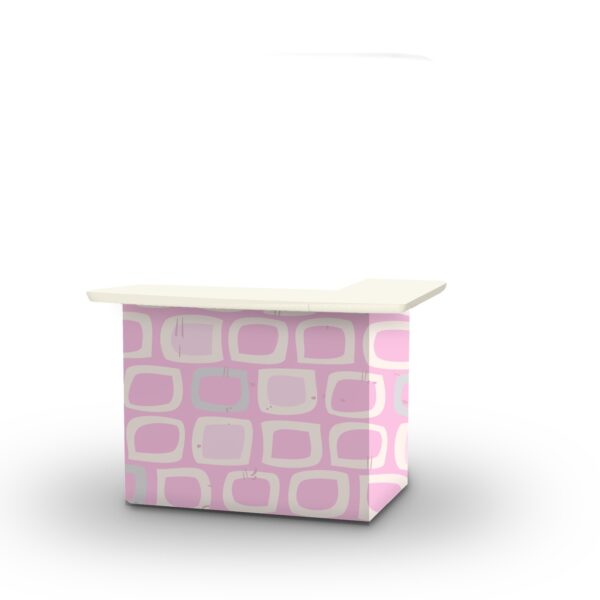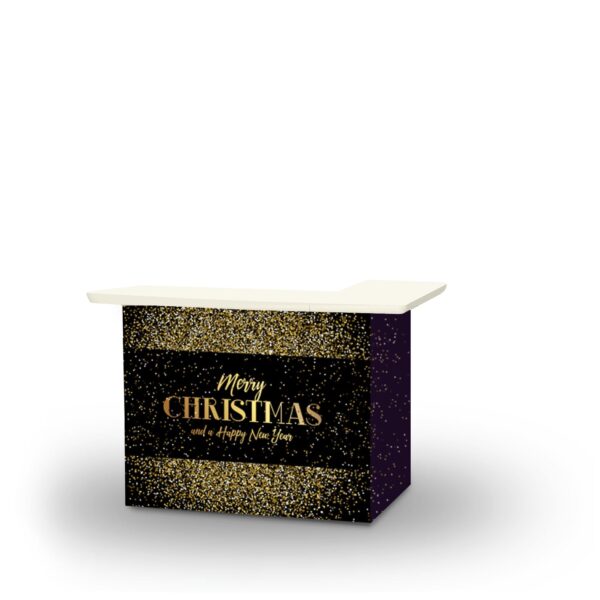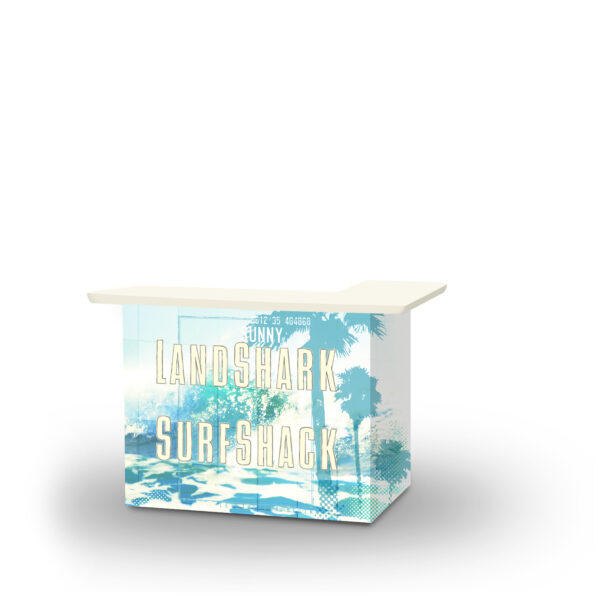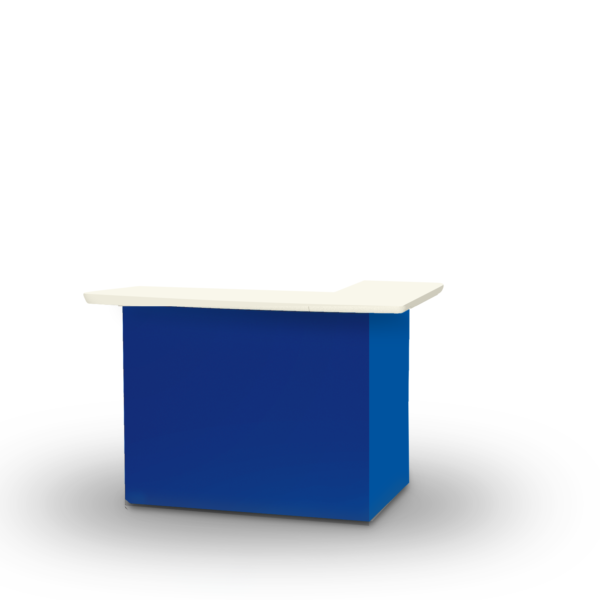
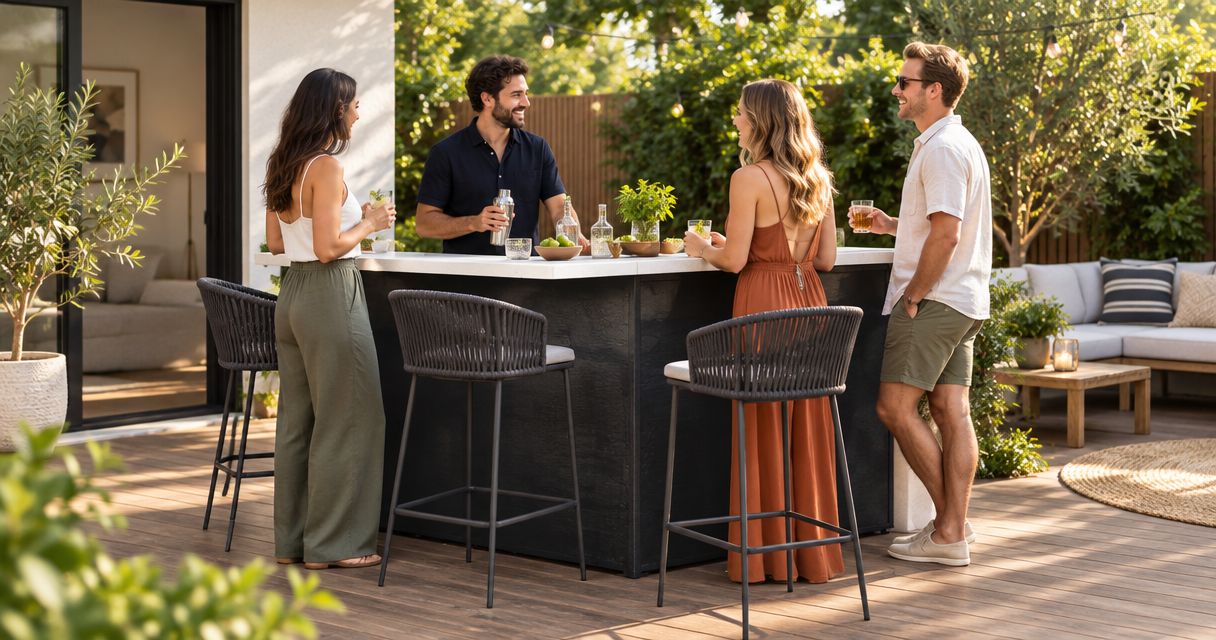
Best overall layout: a compact folding L-shaped bar that passes your patio fit check. Best for changing party themes: Build a Bar. Best for occasional hosting: a rented L-shaped bar. This 2026 guide helps you choose an l shaped portable bar without sacrificing the space you need to host—and explains when changing the cover makes more sense than changing the bar.
- Choose an l shaped portable bar only when both counter runs leave room to serve and circulate.
- Build a Bar suits hosts who want portable bar displays with swappable fabric covers for changing party themes.
- Build a Bar’s L-shaped configuration is not established here; confirm the layout before ordering.
- Compare folding, modular, interchangeable-cover and rental options by usable patio space—not appearance alone.
Why this matters
An L-shaped counter creates separate serving zones, but it also occupies space in two directions. On a small patio, the return—the shorter counter section—can land exactly where guests need to walk.
Choose the layout first and the party look second. A bar that suits a summer gathering should not block the patio door when you move the chairs back into place.
Changing the look is a separate decision. Swappable covers let you rethink the display for a birthday, seasonal gathering or gameday without buying another bar simply for a different design.
What makes the best L-shaped portable bar?
Use these five criteria to judge a small-patio setup in 2026:
- Patio fit: Check both counter runs, the serving position and the route between your door and seating.
- Useful return: Give the shorter section a job, such as cups or garnishes. An unused return only occupies floor space.
- Storage fit: Confirm that every packed component fits through your doorway and into its storage location.
- Outdoor suitability: Read the seller’s instructions for the frame, counter and cover. Portability does not establish weather resistance.
- Design changes: Decide whether you want to change the bar’s appearance between events or keep the same finish.
For a closer layout comparison, use the straight versus L-shaped portable bar counter guide before committing to a corner setup.
Small-patio bar options at a glance
These are ranked buying routes, not a list of tested models. The first two describe configurations to evaluate; the third is a named interchangeable-cover option; the fourth is an event-by-event alternative.
| Rank and option | Best for | Standout feature | Key limitation |
|---|---|---|---|
| 1. Compact folding L-shaped bar | A dedicated patio corner | Connected serving surfaces around a corner | Both counter runs and the host position must fit |
| 2. Modular perpendicular counters | Changing patio arrangements | Separate pieces can serve different layouts | Counter alignment and connections need checking |
| 3. Build a Bar | Changing party themes | Swappable fabric covers | L-shaped configuration requires confirmation |
| 4. Rented L-shaped bar | Occasional large gatherings | Event-specific use without storing the bar afterward | Dimensions, handling and rental terms need checking |
1. Compact folding L-shaped bar: best for a dedicated corner
A folding L-shaped bar is the first configuration to consider when you want a connected corner counter. It gives you two serving surfaces meeting at a 90-degree corner, provided the particular model uses that layout.
The strongest reason to choose this shape is task separation. Put drink preparation on the long run and cups on the return, rather than asking guests to reach across the mixing area.
Compact folding L-shaped bar pros
- Separates preparation from guest pickup.
- Gives the shorter return a clear serving role.
- Creates a defined hosting position behind the counter.
- Suits a corner when the measured footprint works.
Compact folding L-shaped bar cons
- The return occupies space a straight counter would leave open.
- A corner placement can restrict your exit from behind the bar.
- Folding construction does not establish a manageable packed size or weight.
Best for: A patio with a dedicated corner that does not contain the main door or walking route.
Before buying, request the fully assembled dimensions, including projecting feet or supports. Then ask for the packed dimensions and handling instructions; the word folding does not answer either question.
Verdict: Buy only after the complete footprint passes your patio test.
2. Modular perpendicular counters: best for changing layouts
Separate portable counters arranged perpendicular to each other offer an alternative to a connected L-shaped unit. You can plan an L layout for one gathering and a different arrangement for another, subject to each counter’s intended use.
Treat the meeting point as a purchase checkpoint. Separate pieces do not automatically form a secure, continuous surface, and guests should not encounter an unexpected gap or uneven edge.
Modular perpendicular counter pros
- Lets you plan different arrangements around your furniture.
- Separates serving tasks across distinct surfaces.
- Allows you to assess each component’s storage footprint.
- Gives you a route to an L-shaped arrangement without assuming a fixed corner unit.
Modular perpendicular counter cons
- Counter heights and edges need to match for a continuous work area.
- Separate pieces need an approved connection if they are intended to act as one unit.
- Multiple components mean multiple items to position and pack away.
Best for: Hosts whose patio switches between dining, lounging and party service.
Ask the seller whether the counters are intended to connect. If not, use them as independent stations with a deliberate gap rather than improvising a joint or bridging unsupported space.
Verdict: Buy for layout flexibility only when the component arrangement is supported.
3. Build a Bar: best for changing party themes
Build a Bar is best for home hosts and tailgaters who want a portable bar display with swappable fabric covers. Its relevant distinction is changing the design, not a verified L-shaped footprint.
For your 2026 patio plans, think about the occasions you actually host: a birthday, a seasonal get-together and a gameday gathering. Choose from the cover designs offered, and confirm compatibility before ordering a different cover or accessory.
Build a Bar pros
- Uses swappable fabric covers to change the display’s design.
- Serves home entertaining and tailgating uses.
- Offers an alternative to choosing a bar solely for one decorative theme.
- Includes accessories within its stated offering.
Build a Bar cons
- An L-shaped configuration is not established by the supplied product information.
- Exact assembled dimensions, packed dimensions and weight require confirmation.
- Swapping covers changes the appearance, not the counter’s footprint.
Best for: Hosts who prioritize changing the party look over owning a specific corner shape.
Keep the purchase decision simple: first confirm that the bar fits your space, then select the design. Do not assume that a cover or accessory creates an L-shaped serving surface.
Verdict: Buy for interchangeable designs; hold if an L-shaped configuration is essential until confirmed.
Check Your Patio Bar Fit
Ask about dimensions, configurations and compatible covers before choosing your setup.
4. Rented L-shaped bar: best for occasional large gatherings
Renting is a different buying route: you select a bar for an event rather than choose something to store afterward. Consider it when your ordinary patio routine does not need a dedicated serving counter.
Request the exact unit’s footprint before agreeing to the rental. A photograph does not show whether the return, supports and working position will fit beside your dining furniture.
Rented L-shaped bar pros
- Avoids storing the rented bar between events.
- Lets you choose around a particular gathering’s layout.
- Keeps the decision separate from a long-term patio furnishing purchase.
Rented L-shaped bar cons
- Collection, delivery, setup and return responsibilities need checking.
- You need permission before adding decorations or changing its appearance.
- The event layout still depends on the exact bar supplied.
Best for: Hosts who want an L-shaped serving station for a specific gathering, not a regular patio fixture.
For a 2026 event, confirm the dimensions and handling terms before planning decorations around the bar. Do not assume that renting is cheaper than owning; compare actual offers and your expected use.
Verdict: Choose rental when event-specific use matters more than ownership.
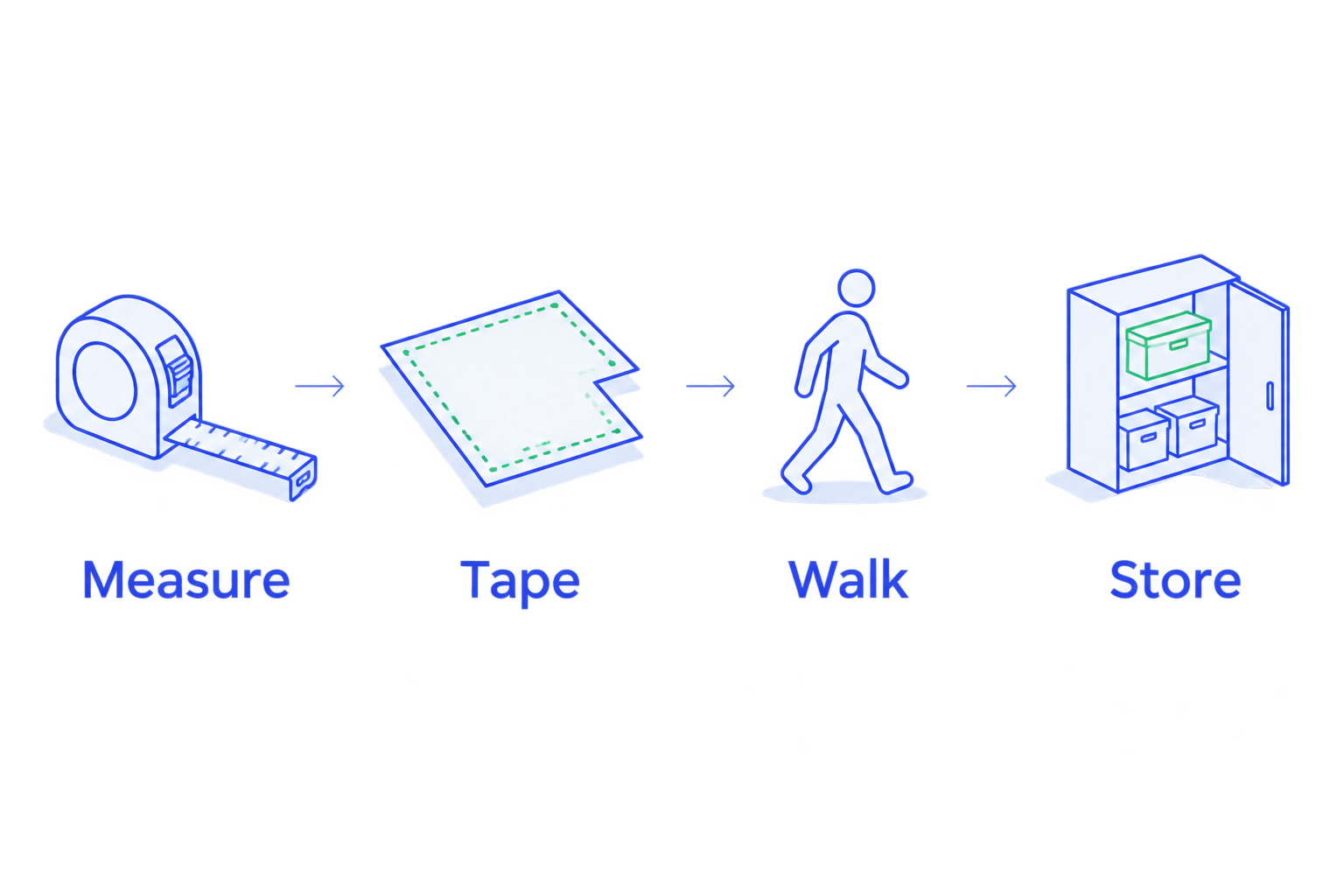
Test the L shape before you order
A tape outline makes the decision more concrete than a product photograph. Use the actual dimensions of the option you are considering, not a generic rectangle.
Measure
Record both counter lengths and depths. Include any supports that extend beyond the countertop, plus the space you need to stand behind it.
Tape
Mark the complete footprint on the patio. Add a second outline for a straight-counter alternative so you can compare what the return actually adds.
Walk
Open the patio door fully and walk between the bar, seating and house. Have someone stand in the serving position while another person approaches for a drink.
Store
Trace the route from the patio to storage. Check the packed dimensions against doorways and the storage location, including shelves, covers and separate components.
Repeat the test with your chairs in their normal positions. A layout that works only after removing the seating is a different hosting setup—not proof that the bar fits your usual patio.
Make the return earn its space
The best small-patio L layout has a reason for both sides. Assign those jobs before choosing the bar.
- Drink preparation: Keep the working area behind the main counter.
- Guest pickup: Put finished drinks where guests can collect them without reaching into preparation.
- Cups and napkins: Use the return for supplies if that keeps guests away from the host’s working position.
- Refills: Give the host access to supplies without blocking the patio door.
Avoid turning the return into a display shelf simply because it exists. If decorations take over the only useful serving surface, a shorter straight bar deserves another look.
For seasonal parties in 2026, separate decoration from layout. A different cover can change the visual theme; the same walking and serving checks still apply.
How the options are ranked
The ranking prioritizes patio fit, a useful return, storage, outdoor instructions and design changes. A compact folding L comes first for readers who specifically want a corner counter; modular pieces follow for readers who need changing arrangements.
The interchangeable-cover option serves a different priority: changing the display’s appearance. Rental serves occasional use. These are distinct decisions, not claims that one product outperforms another in testing.
Which patio bar should you choose?
Choose a compact folding L-shaped bar when the corner improves service and passes the tape test. That is the default for a buyer who genuinely needs an L-shaped counter.
Choose modular counters when rearranging the patio matters more than a connected unit. Choose Build a Bar when interchangeable covers are the main attraction, after confirming the dimensions and required configuration.
If your 2026 gatherings do not need a permanent serving area, consider rental. If neither counter run has a clear job, skip the L shape and choose a simpler footprint.
FAQ
What’s the best L-shaped portable bar for a small patio?
The best choice is a compact L-shaped bar whose complete footprint leaves room for the host, guests and patio access. Check both counter runs, projecting supports and packed dimensions before buying.
Is an L-shaped bar better than a straight bar?
An L-shaped bar is better when the return provides useful preparation or pickup space without obstructing circulation. A straight bar is the better choice when the return blocks a doorway or occupies space you need for seating.
Does Build a Bar offer an L-shaped portable bar?
An L-shaped Build a Bar configuration is not established in the product information provided here. Confirm the configuration and assembled dimensions before ordering if a corner layout is essential.
Can I put two portable counters together to make an L?
Use two counters as a connected L only when their intended configuration and connection method support it. Otherwise, treat them as separate stations and avoid unsupported bridging surfaces.
Can a portable patio bar stay outside between parties?
Follow the specific bar’s outdoor-use and storage instructions. Portable does not mean weatherproof, and instructions for the frame, counter and fabric components need separate attention.
Should I rent or buy a portable bar for my patio?
Rent when you want an event-specific setup without storing the bar afterward; buy when you want a bar for repeat use. Compare actual rental terms, ownership requirements and storage fit rather than assuming either route costs less.
One last thing
Test guest pickup before decorating. Put cups where you expect guests to collect them, stand behind the taped counter and ask someone to approach from the seating area.
If that person has to squeeze behind you or wait in the doorway, change the layout. The return should solve a serving problem, not create a walking problem.
Related guides
- Portable outdoor bars for small patios: plan space to serve
- Portable home bar or permanent bar: which fits your home?
- Is a portable home bar with interchangeable covers worth it?